
Why regular repainting matters for LA homeowners

TL;DR:
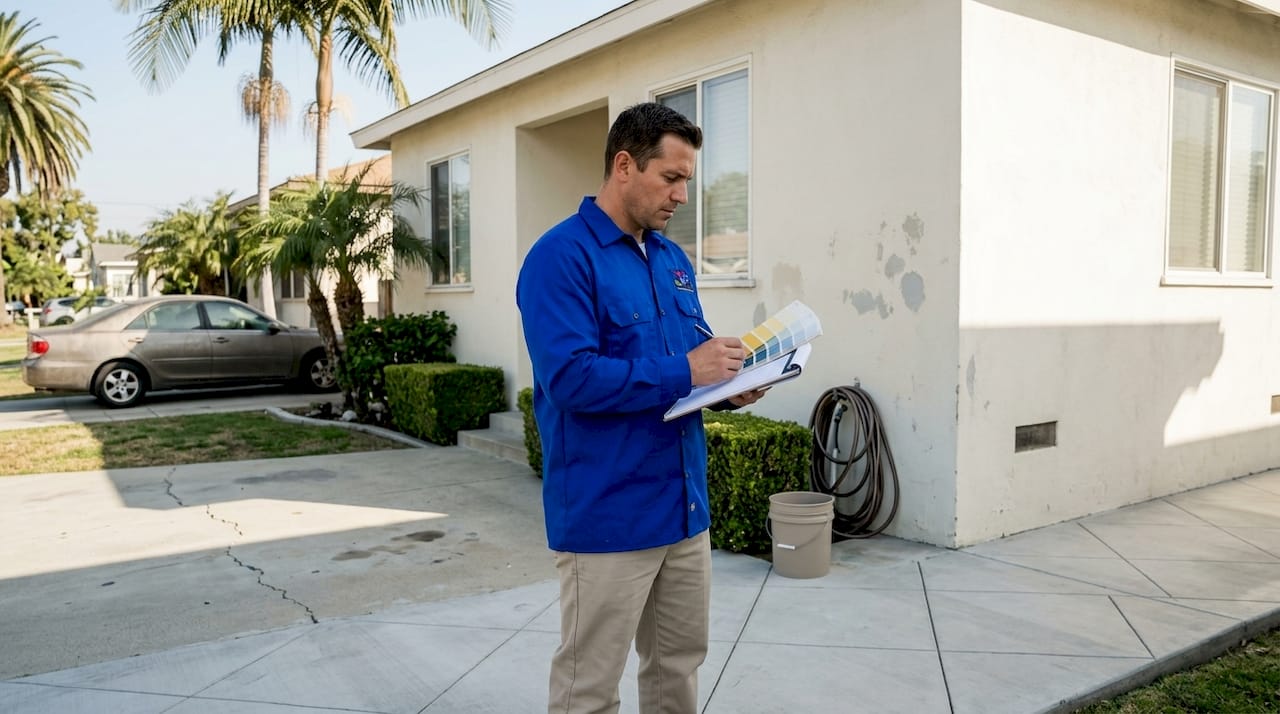
Los Angeles homes require repainting every 4 to 7 years due to harsh UV, salt air, smog, and seasonal rains that accelerate paint deterioration. Regular repainting preserves curb appeal, property value, and protects against moisture, mold, and pests, saving costly repairs over time. Proactive inspections and professional painting ensure longer-lasting results suited to LA’s challenging climate conditions.
Your Los Angeles home can lose years of paint life in just one brutal summer. The combination of intense UV radiation, marine air, and the city’s notorious smog means exterior paint breaks down much faster here than in most parts of the country. Many homeowners assume a fresh coat should last a decade, but in LA, weather impacts exterior painting so aggressively that waiting that long can turn a cosmetic issue into a structural one. This guide walks you through why, when, and how to repaint smart.
Table of Contents
Key Takeaways
Point | Details |
Local climate demands attention | Los Angeles weather rapidly degrades paint, requiring more frequent repainting. |
Maintain value and appeal | Regular repainting preserves your home’s curb appeal and boosts property value. |
Repainting is preventive maintenance | Timely paint jobs protect against costly repairs caused by hidden damage. |
Schedule strategically | Plan for repainting every 4-7 years and watch for signs like fading or cracks. |
Professional painters deliver lasting results | Hiring experts ensures quality, efficiency, and optimal protection of your investment. |
The effects of Los Angeles climate on your home’s exterior
Now that you know why repainting is a common concern in LA, let’s look more closely at how the region’s distinct climate shapes your maintenance routine.
Los Angeles sits in a Mediterranean climate zone, which sounds pleasant until you consider what it actually means for your home’s surfaces. Long, dry summers push UV exposure to extreme levels. Ultraviolet radiation breaks down the chemical bonds in paint film, causing color to fade and surfaces to crack. This process happens whether you live in Pasadena, the Pacific Palisades, or anywhere in between.
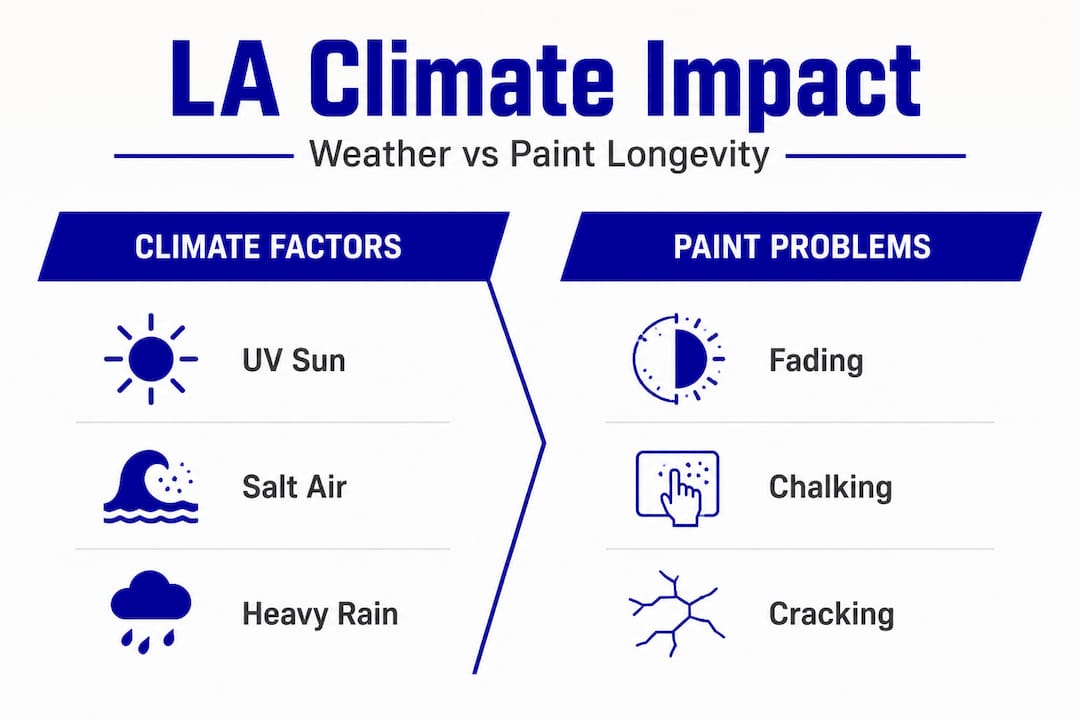
Beyond the sun, LA homes deal with a cocktail of environmental stressors. Homes near the coast absorb salt-laden air that corrodes paint from the outside in. Inland neighborhoods contend with smog particles that settle into the paint surface and accelerate oxidation. Even the region’s famous “dry season” isn’t entirely kind: occasional strong Santa Ana winds carry dust and debris that scour paint surfaces like fine sandpaper over time.
Then come the rains. When they finally arrive after months of dry heat, they hit already-stressed paint. Cracked or chalky paint absorbs moisture quickly, letting water sneak behind the paint film. That moisture causes the paint to bubble, peel, and eventually separate from the surface beneath. Left unchecked, water intrusion leads to wood rot, mold growth, and repairs that cost many times more than a simple repaint.
The hard reality is that LA weather and paint longevity don’t mix well. While homeowners in the Midwest or Pacific Northwest might comfortably wait 10 to 15 years between exterior repaints, LA homes frequently need attention every 4 to 7 years. That’s not a sales pitch. That’s physics.
Climate factor | Effect on paint | Expected impact |
Intense UV radiation | Fading, chalking, cracking | Reduces paint life by 30 to 50% |
Salt air (coastal areas) | Corrosion and blistering | Cuts lifespan by 2 to 3 years |
Smog and pollutants | Surface oxidation | Dulls color, weakens adhesion |
Seasonal heavy rains | Moisture penetration | Leads to peeling and mold |
Santa Ana winds | Abrasion from airborne debris | Thins paint film unevenly |
Pro Tip: Walk around your home every spring and fall with fresh eyes. Look for chalky residue when you rub your hand across the siding, hairline cracks along trim edges, and any spots where the paint looks noticeably lighter than the rest. These are early warning signs that appear well before the paint starts to peel. Catching them early lets you plan a repaint on your schedule, not the weather’s.
Following exterior painting tips specific to LA conditions can also help you choose materials that hold up longer between cycles.
How regular repainting preserves property value and curb appeal
With LA’s climate taking a toll on your exterior, maintaining value becomes a top priority. Let’s see how repainting ties directly to your home’s financial and social standing.
LA real estate is fiercely competitive. A home that looks well-maintained from the street signals something important to buyers, appraisers, and even neighbors: the owner cares and keeps up with the property. That signal translates directly into dollars. Curb appeal and value are tightly linked, with well-timed repainting directly contributing to higher property values and quicker sales.
Consider two homes sitting side by side on the same block in Silver Lake. One has crisp, clean paint applied three years ago. The other hasn’t been repainted in eleven years, the color is faded, the trim is cracking, and there are visible patches of bare wood near the foundation. Even if everything inside those homes is identical, buyers will perceive the neglected home as requiring major work. They’ll offer less. They’ll negotiate harder. Some won’t make an offer at all.
The financial impact isn’t subtle. Studies in the real estate industry consistently show that homes with strong curb appeal sell faster and for more money than comparable homes that look worn. Professional repainting before a sale is one of the highest-return investments a homeowner can make. Owners increase property value through increased market value and faster sales when they keep exterior surfaces in excellent condition.
“A fresh exterior paint job is often the first thing a buyer notices and the last thing they forget. In a market as visual and competitive as Los Angeles, that first impression carries serious financial weight.”
Here’s a quick comparison to make this concrete:
Scenario | Time since last repaint | Estimated buyer interest | Likely sale outcome |
Regularly maintained home | 3 to 5 years | High | Quicker sale, closer to asking price |
Moderately neglected home | 7 to 9 years | Medium | Longer on market, price negotiations |
Significantly neglected home | 10 or more years | Low | Reduced offers, inspection concerns |
Beyond the numbers at sale time, regular repainting delivers several benefits that don’t show up in appraisal reports but absolutely protect your investment:
Rot prevention: Fresh paint seals wood and stucco against moisture, delaying expensive rot repair.
Pest deterrence: Intact paint surfaces leave fewer entry points for termites and other wood-boring insects common in LA.
Mold and mildew control: A solid paint barrier prevents the moisture accumulation that leads to mold growth behind siding.
Lasting first impressions: Every neighbor, visitor, and prospective buyer forms an opinion within seconds of seeing your home.
Structural longevity: Paint is the first layer of defense for your siding, trim, and fascia. When it fails, the materials beneath it age much faster.
How often should you repaint? Setting the right schedule
Once you understand what’s at stake, the next step is knowing precisely when to act for maximum benefit.
The answer isn’t a one-size-fits-all number. According to painting maintenance in Los Angeles, homes in LA may require repainting as frequently as every 4 to 7 years due to harsh sunlight and weather. But that range can shift depending on several variables specific to your property.
Stucco exteriors, the most common in LA, tend to hold paint reasonably well but are porous and soak up moisture during rain. Wood siding degrades faster and may need attention on the lower end of that 4 to 7 year range. Fiber cement siding is more durable and may push toward the 7-year mark. Homes facing south or west take on the most direct sun and typically age faster than those with north-facing or tree-shaded exposures.
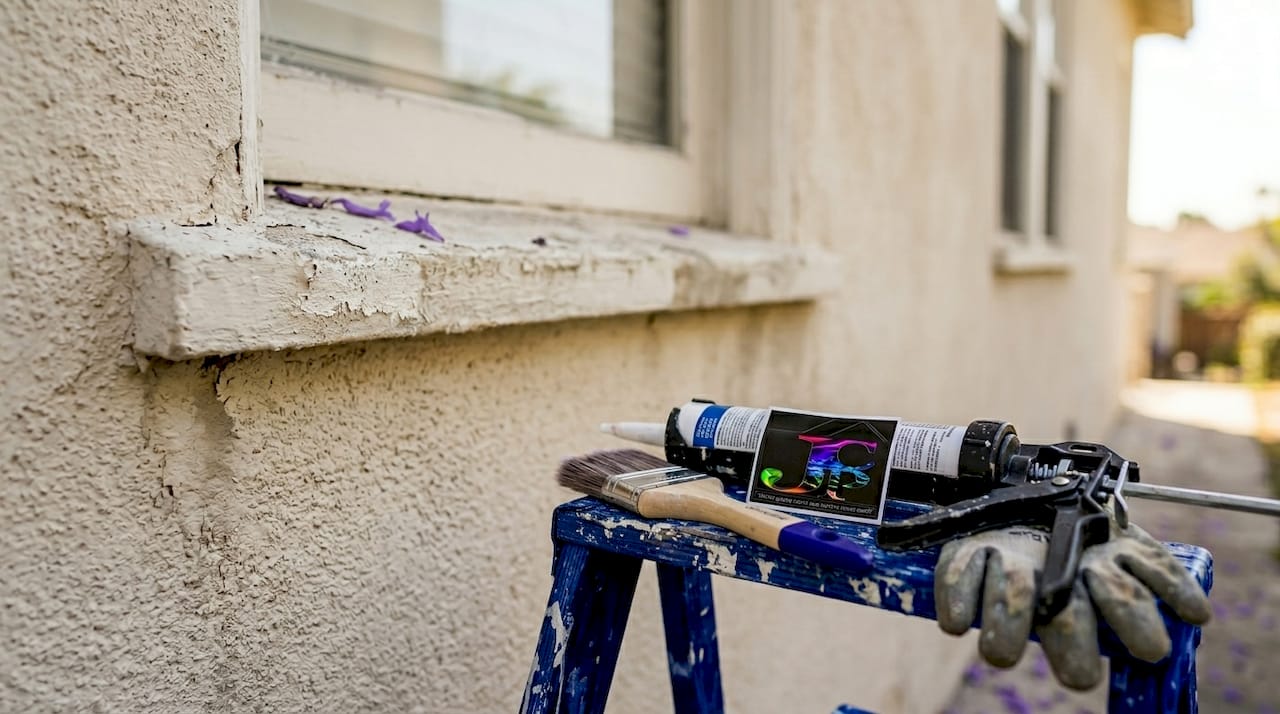
The paint quality used in the previous job also matters enormously. Cheap, low-grade exterior paint might start showing wear within two to three years in LA conditions. Premium exterior paints formulated with UV inhibitors and mold-resistant additives can significantly extend your repainting cycle.
Following smart LA painting tips can help you choose the right products and approaches for your specific home.
Knowing the general timeline is helpful, but you also need to recognize the specific warning signs. Here are the clearest indicators that your home needs repainting now:
Fading color: If your exterior looks noticeably lighter or duller than it did a few years ago, UV damage is well underway.
Chalking: Run your palm across the surface. A powdery residue means the paint’s binders are breaking down.
Cracking or flaking: Any visible cracks, even hairline ones, allow moisture behind the paint film.
Peeling: Especially near windows, doors, or the roofline, peeling means water is already getting in.
Visible mold or mildew: Dark streaks or patches on north-facing walls signal retained moisture and poor paint integrity.
Bare wood or stucco showing through: If you can see the substrate at any point, the paint has failed completely in those areas.
Pro Tip: Keep a simple home maintenance log. Write down the date of your last exterior repaint, the brand and type of paint used, and which contractor did the work. Then set a calendar reminder for 4 years out to schedule a professional inspection. This simple habit keeps you proactive instead of reactive.
Should you DIY or hire a professional?
Choosing the right approach makes the difference between a minor chore and a lasting investment; here’s how to decide.
For some homeowners, rolling up their sleeves and tackling the exterior feels like a satisfying weekend project. And honestly, for small accent walls, interior trim, or a single room, DIY can be a reasonable choice. But full exterior repainting in Los Angeles is a different challenge entirely.
Prepping an exterior surface properly requires pressure washing, sanding, priming bare spots, caulking gaps, and sometimes making minor repairs to wood or stucco before a single brush touches the wall. Skipping or rushing any of those steps produces paint that fails prematurely, often within one to two years. That means doing the whole job again sooner than you planned.
Surface prep alone can take as long as the actual painting on a typical LA home. Add to that the challenges of working at height on a two-story home, managing overspray in a neighborhood with tight lot spacing, and selecting the right product for your specific substrate and sun exposure, and the complexity adds up fast.
Professional painters offer expertise that genuinely enhances the lifespan and finish quality of paint jobs, especially in challenging climates like Los Angeles. This isn’t just a talking point. A well-prepared, professionally applied exterior paint job in LA typically outlasts a DIY attempt by two to four years, meaning fewer cycles over the life of the home.
Here are several practical reasons to work with a licensed professional:
Safety: Working on ladders and scaffolding on multi-story homes carries real risks without proper equipment and training.
Warranty: Many professional painting companies offer a warranty on labor, giving you recourse if problems develop.
Insurance: A licensed, insured contractor protects you from liability if someone is injured on your property during the job.
Expert product selection: Pros know which primers, paints, and sealers perform best on LA stucco and wood in specific microclimates.
Speed: A professional crew can complete in two to three days what might take a homeowner two to three weekends.
Pro Tip: Even skilled DIYers typically struggle to match a pro’s spray-applied finish on exterior stucco. The texture consistency that comes from professional equipment and technique dramatically affects how the final result looks and how long it holds up.
When you’re ready to find the right painter for your project, look for licensed, insured contractors with verifiable local experience in Los Angeles neighborhoods similar to yours.
What most homeowners get wrong about repainting in Los Angeles
Here’s the honest truth that rarely makes it into a painting blog: most homeowners in LA repaint too late. Not because they’re careless, but because they’re using the wrong trigger. They wait until the house looks bad. But by the time your home looks noticeably bad, the damage to the underlying surface has often been building for one to two years already.
Paint failure in LA usually starts invisibly. Microscopic cracks form in the paint film from repeated UV exposure. Moisture gets behind those cracks. Wood fibers begin to soften. Then one rainy season accelerates all of that and suddenly what seemed like a cosmetic job has turned into a repair job with a paint job on top. The cost jumps significantly once you’re patching wood rot, replacing trim boards, or treating mold.
LA’s environment demands a proactive approach to painting, not a reactive one. That means scheduling inspections before problems become visible and committing to a repainting cycle based on your home’s actual conditions and exposure, not just how it looks from the driveway.
We’ve seen this play out repeatedly with homes across Los Angeles. A homeowner who stays on a consistent 5 to 6 year repainting cycle spends less over 20 years than the homeowner who waits 12 years and then faces both structural repairs and a full repaint simultaneously. The math isn’t close.
The deeper mindset shift is treating your paint schedule the way you treat your car’s oil change. You don’t wait for the engine to make a terrible noise. You maintain it on a schedule because you know what neglect eventually costs. Your home’s exterior deserves exactly that same disciplined thinking, especially in a city as demanding as Los Angeles.
Bring your Los Angeles home back to life — stress-free
Turning everything you’ve just read into action starts with one simple step: getting eyes on your home from someone who knows what LA’s climate does to paint over time.
At Johnny’s Custom Painting, we’ve spent over 16 years working with homeowners across Los Angeles, and we bring that experience to every estimate and every brushstroke. Whether you want to browse our exterior home repainting projects, explore our interior painting projects, or simply schedule a free consultation, we make the process straightforward. We use premium, eco-friendly, low-VOC paints and handle every job from prep to final inspection. Reach out today and let’s protect your home before the next LA summer does its worst.
Frequently asked questions
How often should I repaint my home in Los Angeles?
Most LA homeowners should repaint every 4 to 7 years due to intense sun exposure, smog, and seasonal rains that break down paint faster than in most regions.
Does repainting increase home value?
Yes, repainting boosts curb appeal and can meaningfully increase your home’s perceived and actual market value, often making it one of the highest-return improvements before a sale.
What are signs that my house needs repainting?
Fading color, a chalky residue when you touch the surface, visible cracks, peeling, and mold streaks are all indicators that your paint is failing and your home needs attention, per LA painting maintenance guidance.
Is repainting necessary if my house still looks okay?
Yes, because paint can begin failing at the microscopic level well before visible signs appear, allowing moisture and UV damage to compromise the surface beneath.
Can repainting help with weather protection?
Absolutely. Quality exterior paint acts as a physical barrier against moisture, UV radiation, and the environmental pollutants that are particularly concentrated in the LA atmosphere.
Recommended
Comments