
Eco-friendly painting in LA: a step-by-step quality guide

TL;DR:
Proper surface preparation and correct product matching are essential for lasting, eco-friendly paint results.
LA regulations require low-VOC and super-compliant paints to meet strict air quality standards.
Sustainable painting in LA demands expertise, careful planning, and adherence to application and curing protocols.
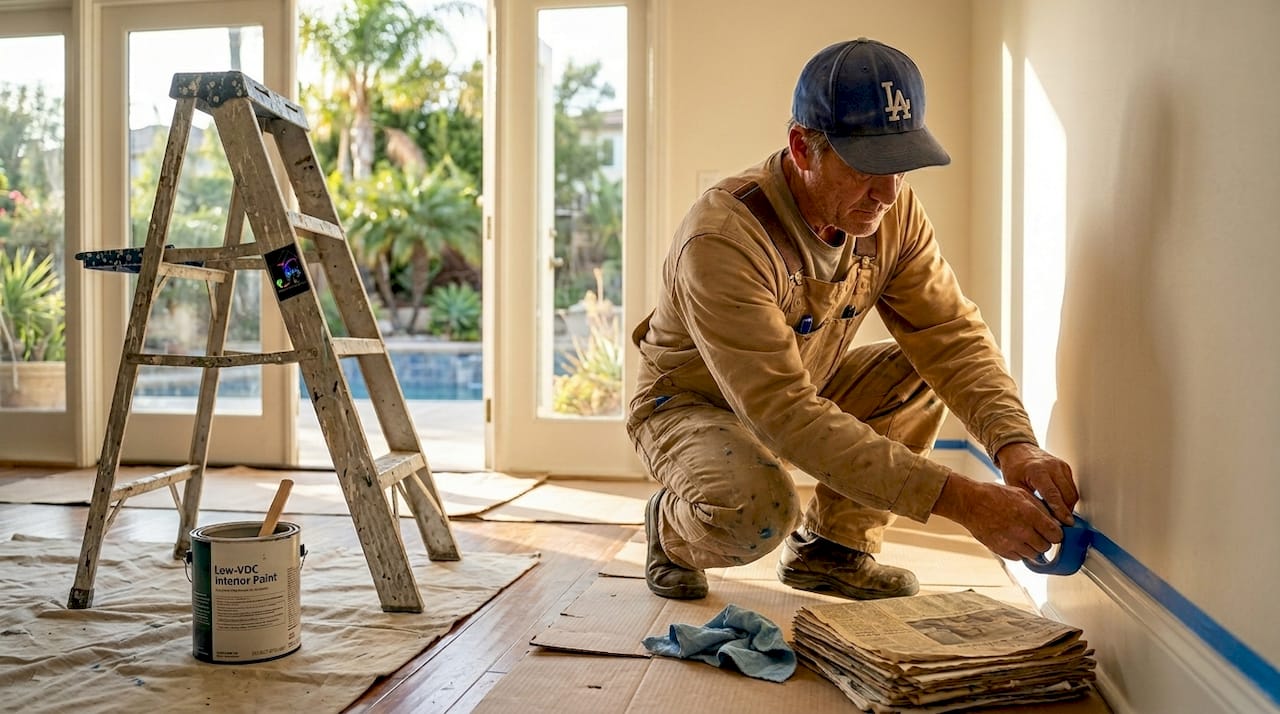
Many Los Angeles homeowners face the same frustrating situation: they want beautiful, long-lasting paint results but also need to protect their family’s health, meet strict local air quality regulations, and reduce their environmental footprint. That’s a lot to juggle in one painting project. Quality painting isn’t just about color selection. It’s about durability, indoor air safety, and choosing materials that won’t harm the environment. This guide walks you through a proven, step-by-step process to achieve a flawless, environmentally responsible paint finish in your LA home, from setting clear goals all the way through safe re-entry.
Table of Contents
Key Takeaways
Point | Details |
Clarify your project goals | Know your main priorities—beauty, durability, and environmental safety—before starting any painting job. |
Prep and compliance matter most | Thorough prep and verified compliance with LA’s low-VOC rules ensure longer-lasting, safe results. |
Ventilation is essential | Even with low-VOC paints, always ventilate spaces and allow proper drying to protect indoor air and well-being. |
Partner with pros | Expert guidance and transparent process steps guarantee both quality workmanship and eco-friendly outcomes. |
Define your painting goals and surface needs
Before you pick up a paint chip or call a contractor, take time to define exactly what you want this painting project to accomplish. Too many homeowners skip this planning phase and end up with results that look great for six months before peeling, fading, or showing wear that far exceeds the cost of the project. Setting clear objectives from the start saves you money, time, and frustration.
Start by asking yourself four key questions:
Visual appeal: What colors, sheen levels, and overall aesthetic are you going for? Are you updating a single room or refreshing the entire exterior of your home?
Durability: How much traffic, moisture, or sun exposure will the painted surface face? A south-facing stucco exterior in LA takes a beating from UV rays that interior walls never see.
Maintenance expectations: Do you want a finish you can wipe down easily, or are you fine with more frequent touch-ups? Flat sheens hide imperfections but are harder to clean. Satin and semi-gloss finishes are far more washable.
Eco-impact: Are you committed to using low-VOC (volatile organic compounds) or zero-VOC products? VOCs are chemical compounds that evaporate at room temperature and can degrade indoor air quality, contributing to health problems and outdoor smog.
Once you know what you want, match paint types to your specific surfaces. Drywall interiors work well with water-based latex paints. Stucco exteriors often need elastomeric coatings that can bridge small cracks as the material expands and contracts. Wood trim performs best with paints that offer excellent adhesion and flexibility. Cabinets need a harder, enamel-style finish that resists grease and daily contact. Skipping this matching step is one of the most common reasons paint jobs fail prematurely.
For eco-conscious homeowners, learning about VOC in paint explained early in your planning process is essential. The sustainable painting in LA landscape has changed significantly in recent years, and there are now excellent options that perform without compromising your indoor air or the environment.
When evaluating products, go beyond the marketing language. A can labeled “eco-friendly” or “natural” may still contain significant VOC levels. Industry guidance consistently recommends verifying VOC content through technical data sheets and pairing low-VOC selection with proper surface prep and ventilation for the best indoor-air outcomes. That means asking your contractor or supplier for the actual product data sheet, not just a brochure.
Pro Tip: Request the technical data sheet for every paint product before it’s applied. Compare the grams-per-liter VOC content directly instead of trusting label wording like “low odor” or “green formula,” which have no standardized legal definition.
Prep surfaces thoroughly for lasting results
Once you’ve defined your project objectives, the next critical step is preparing the surfaces to ensure your results last. Surface preparation is honestly the most underrated part of any paint job. A premium paint applied to a poorly prepped surface will fail faster than a mid-grade paint applied to a properly cleaned and repaired surface. The connection between prep work and longevity is that direct.
Here’s a step-by-step approach to proper surface preparation:
Inspect and assess. Walk every surface you plan to paint. Look for cracks, holes, water damage, rust stains, and areas where existing paint is flaking or bubbling. Document what you find so repairs can be completed systematically.
Remove failing paint. Old, flaking paint must come off before anything new goes on. Leaving it in place creates a weak layer between your new coat and the substrate. Use scrapers and low-dust sanding methods to minimize airborne particles.
Repair imperfections. Fill holes, cracks, and gouges with appropriate patching compound. For stucco, use a product designed specifically for stucco repair. For drywall, lightweight joint compound works well. Allow full drying time before moving to the next step.
Clean thoroughly. Dust, mold, mildew, oils, and chalking residue all reduce paint adhesion. Wash surfaces with eco-friendly cleaning agents that won’t leave chemical residues behind. Trisodium phosphate alternatives are now widely available and perform well without the environmental drawbacks of older products.
Sand for adhesion. Light sanding creates a texture that gives paint something to grip. Use low-dust sanding pads or wet sanding where possible to reduce particulate matter in the air. This is especially important for lead-paint-era homes, where disturbing old paint requires additional safety precautions.
Prime when needed. Fresh drywall, repaired patches, bare wood, and stain-prone surfaces almost always benefit from a coat of primer. A quality primer seals the surface and creates a uniform base that helps your topcoat look better and last longer.
Good surface prep techniques can literally double the lifespan of your paint job. That’s not an exaggeration. Skipping prep might save a few hours upfront, but repainting a surface prematurely wastes both money and resources. From an environmental perspective, reducing how often a surface needs repainting is itself a form of eco-friendly painting maintenance.
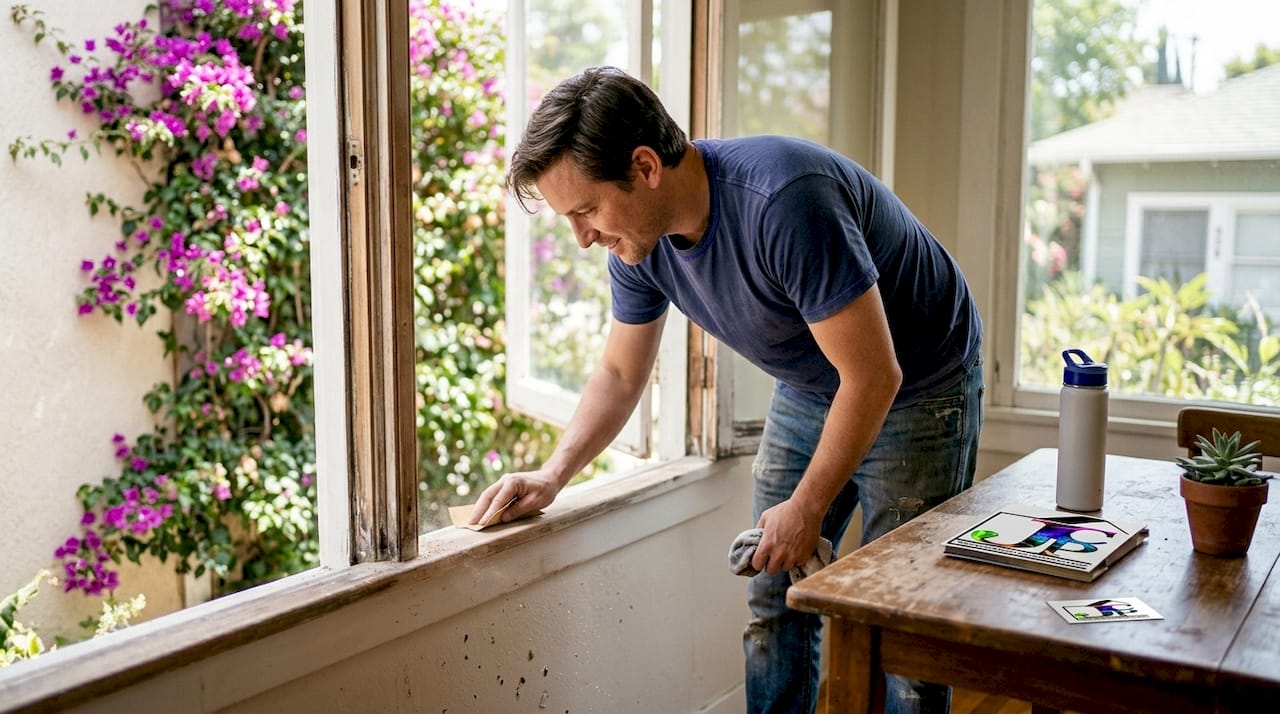
Pro Tip: The rule of thumb used by experienced painters is that prep work should take roughly the same amount of time as the actual painting. If someone quotes you a job that skips directly to applying color, that’s a red flag worth questioning.
Industry guidance is clear that proper surface preparation works hand in hand with low-VOC paint selection to deliver the best possible indoor air outcomes. A perfectly chosen eco-friendly paint applied to a dirty or compromised surface will underperform on every metric.
Choose compliant, low-VOC paints for LA regulations
With prep complete, your paint choice can make or break quality and compliance. In Los Angeles, you’re not just choosing based on aesthetics and preference. You’re navigating one of the strictest air quality regulatory environments in the country, governed by the South Coast Air Quality Management District, commonly called SCAQMD.
SCAQMD Rule 1113 sets specific VOC content limits for architectural coatings sold and used in Southern California. These limits vary by coating category. For example, flat interior coatings have different thresholds than primers, wood coatings, or specialty finishes. Contractors and homeowners who use non-compliant products risk fines and contribute to the region’s air quality problems.
Here’s a comparison of common paint categories and their VOC status:
Paint category | Standard VOC level | Low-VOC level | Super-compliant level |
Interior flat | Up to 150 g/L | Under 50 g/L | Under 10 g/L |
Interior non-flat | Up to 150 g/L | Under 50 g/L | Under 10 g/L |
Exterior flat | Up to 250 g/L | Under 50 g/L | Under 10 g/L |
Primer/sealer | Up to 200 g/L | Under 100 g/L | Under 10 g/L |
Cabinet/trim enamel | Up to 250 g/L | Under 100 g/L | Under 10 g/L |
Products labeled “super-compliant” contain less than 10 grams per liter of VOCs. These are the gold standard for both regulatory compliance and indoor air health in LA. Many major paint brands now offer super-compliant lines, and professional painters who prioritize eco-friendly work will routinely specify them.
Learning what is low VOC paint and comparing the full range of LA low-VOC paint options available in your area is worth the time investment before your project starts.
One important nuance that catches many homeowners off guard:
Even paints marketed as “zero-VOC” may still release trace emissions after tinting. Colorants added to a zero-VOC base can introduce additional compounds. Always review the final tinted product’s technical data sheet, not just the base formula, before assuming complete compliance.
This guidance, consistent with recommendations from paint and indoor air resources, underscores why checking technical data matters at every stage, not just when selecting the base product.
Ensure proper application and healthy curing
After selecting your paint, correct application and safe curing maximizes both quality and safety. Even the best low-VOC product can deliver disappointing results if applied incorrectly, and it can still affect indoor air quality during and immediately after application if you don’t manage ventilation carefully.
Follow these steps for proper application:
Choose the right tools. Roller nap thickness should match surface texture. Smooth drywall needs a short nap (3/8 inch), while rough stucco needs a thick nap (3/4 inch or more). Use quality brushes for trim work to avoid brush marks and drips.
Check environmental conditions. LA’s dry climate is generally paint-friendly, but you still need to avoid painting in direct midday sun on hot exteriors. Ideal conditions are between 50 and 85 degrees Fahrenheit with humidity below 85 percent.
Apply in even coats. Don’t try to achieve full coverage in one heavy coat. Thin, even coats dry faster, adhere better, and level out more smoothly. Two coats almost always outperform one thick coat.
Allow proper dry time between coats. Rushing the second coat over a wet or tacky first coat traps moisture and leads to peeling, poor adhesion, and an uneven finish.
Ventilate throughout and after. Open windows and use fans to move air during painting and for at least 48 to 72 hours after the final coat.
Here’s a practical reference for typical drying and re-entry windows with common low-VOC paint types used in LA:
Paint type | Touch dry | Recoat time | Safe re-entry | Full cure |
Interior latex (low-VOC) | 1 hour | 2 to 4 hours | 24 to 48 hours | 30 days |
Interior zero-VOC | 30 to 60 min | 2 hours | 24 hours | 30 days |
Exterior latex (low-VOC) | 1 to 2 hours | 4 hours | 24 hours | 30 to 60 days |
Cabinet enamel (low-VOC) | 2 hours | 4 to 6 hours | 48 to 72 hours | 30 to 60 days |
Reviewing painting safety in LA before your project begins helps you plan the timeline around your household’s needs. If you have young children, elderly family members, or anyone with respiratory sensitivities, planning re-entry carefully is non-negotiable.
Even eco-friendly products require precautions. Guidance from indoor air quality sources is consistent: low-VOC paints still need adequate ventilation and appropriate scheduling to manage odors and emissions during and after application. For more detail on technique, reviewing how to approach applying low-VOC paint correctly in LA conditions can make a meaningful difference in your results.
Why shortcuts with eco-friendly painting often backfire in LA
Here’s something we’ve seen repeatedly over 16 years of working on Los Angeles homes: the homeowners who have the worst outcomes are usually the ones who interpreted “eco-friendly” as meaning “easy” or “forgiving.” They assume that because a paint is labeled natural or low-emission, the whole job becomes simpler. That assumption costs them.
LA’s specific conditions create real challenges. The intense sun degrades poorly prepared surfaces faster than in milder climates. The dry air can make paint skin over before it bonds properly if you’re not paying attention. And SCAQMD regulations mean that using the wrong product isn’t just an aesthetic problem; it can be a compliance issue with real consequences.
Eco-friendly painting requires more expertise, not less. It demands careful product verification, meticulous prep work, correct application conditions, and proper curing timelines. Skipping any one of those steps routinely leads to peeling, odors, premature wear, or regulatory exposure. The shortcuts that seem to save time during a project almost always create problems that cost more to fix later.
Partner with painters who can show you their process in writing, provide regulatory documentation for the products they use, and offer clear post-job support. Top LA painting experiences come from contractors who treat eco-friendly as a professional standard, not a marketing checkbox.
Connect with trusted LA painters for your next project
Choosing the right partner is your final step. Let’s make it a winning one.
At Johnny’s Custom Painting, we’ve spent over 16 years building a reputation for quality craftsmanship and genuine eco-conscious practices across Los Angeles. We use licensed, verified low-VOC and zero-VOC products, and we document every step of the process so you know exactly what’s going on your walls.
Our portfolio covers everything from detailed exterior residential work to high-standard commercial painting results, so you can see the quality of our results before committing. If you’re ready to move forward, visit Johnny’s Custom Painting to request a free estimate and connect with our team. We make the process straightforward, transparent, and built around your specific goals.
Frequently asked questions
What does VOC mean and why does it matter for LA painting?
VOC stands for volatile organic compounds, which are chemicals in paint that evaporate into the air and can harm indoor air quality. In LA, SCAQMD Rule 1113 sets strict category-specific gram-per-liter limits on VOC content in architectural coatings, making compliance a legal requirement, not just a preference.
How can I verify if my paint is really low-VOC?
Always ask for the technical data sheet or VOC specification label, since product documentation gives the actual measured VOC content rather than the general marketing language on the can.
How long should I wait before re-entering after painting with low-VOC products?
Plan to wait at least 48 to 72 hours while keeping the space well ventilated, because even low-VOC paints continue to off-gas during the curing process and ventilation is essential for indoor air safety.
What’s the biggest mistake homeowners make with eco-friendly painting?
The most damaging mistake is skipping surface preparation or ignoring curing and ventilation instructions, since both shortcuts undermine the durability of the paint job and the health benefits that eco-friendly products are supposed to deliver.
Recommended
Comments