
Property Painting Maintenance Guide: Extend Lifespan in LA

TL;DR:
Proper surface preparation and high-quality paint are essential for long-lasting exterior paint in LA.
Regular inspections, cleaning, and timely touch-ups help extend paint durability and prevent costly repairs.
Professional assistance is recommended for major repairs, second-story work, or extensive damage to ensure lasting results.
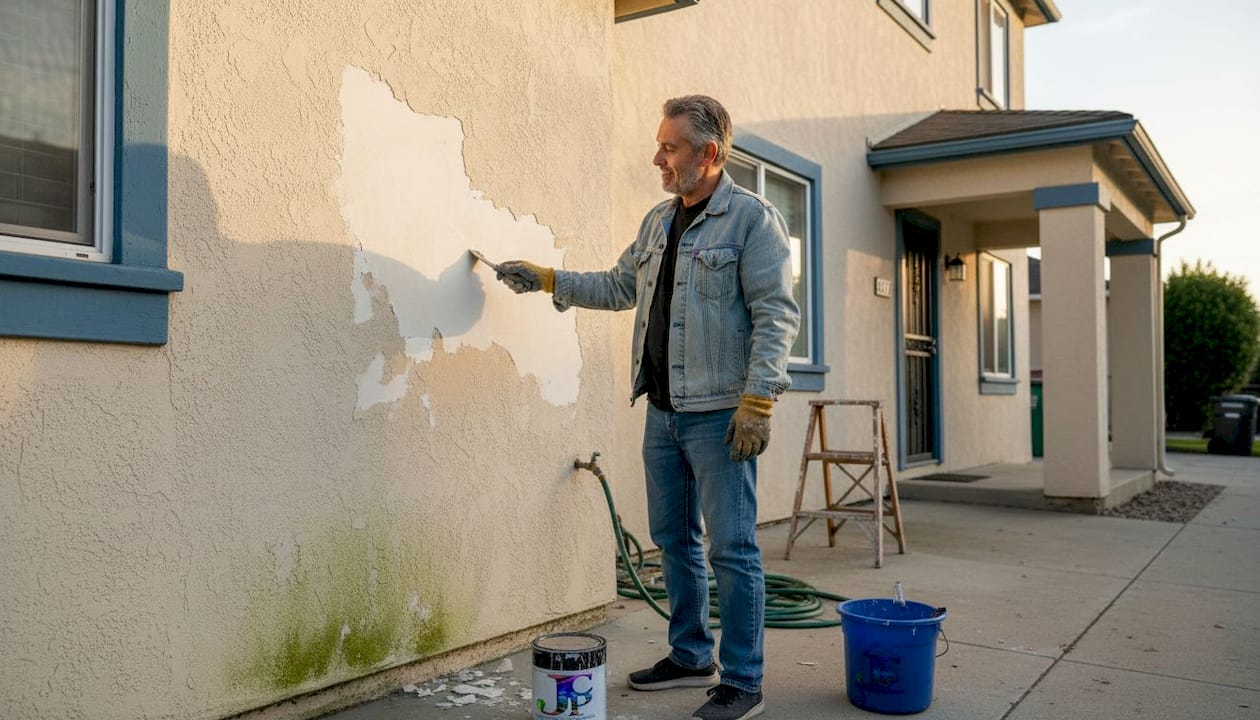
Faded, peeling paint does more than make your property look tired. In Los Angeles, it signals deeper problems brewing beneath the surface. Sun exposure, coastal moisture, smog, and seasonal heat swings put exterior paint under constant stress. Left unchecked, that stress turns into cracked stucco, water intrusion, and repair bills that dwarf what regular maintenance would have cost. This guide walks you through every practical step, from choosing the right materials to building a seasonal routine, so your property’s paint lasts longer and stays sharp. Whether you handle it yourself or decide to bring in a pro, the approach you take today protects your investment for years.
Table of Contents
What you need: Tools, materials, and paint types for LA exteriors
Surface preparation: Cleaning, inspection, and minor repairs
Step-by-step maintenance routine: Inspections, cleaning, and touch-ups
Ensuring longevity: Protecting and maintaining paint year after year
The truth about property painting maintenance in Los Angeles
Key Takeaways
Point | Details |
Proper paint selection | Use UV- and mildew-resistant acrylic latex for longevity in LA’s climate. |
Thorough surface preparation | Cleaning and priming surfaces prevent moisture issues and peeling paint. |
Consistent maintenance | Regular inspections, cleaning, and prompt touch-ups extend the life of your paint job. |
Know your limits | DIY is great for routine upkeep but hire professionals for repairs and complex painting needs. |
Protect your investment | Ongoing attention preserves curb appeal and prevents costly paint failures. |
What you need: Tools, materials, and paint types for LA exteriors
Now that you know what’s at stake, let’s look at exactly what you’ll need before any painting maintenance begins.
Choosing the right paint is not just a preference. It directly determines how long your exterior holds up under LA’s relentless sun and occasional moisture swings. Acrylic latex paint is UV- and mildew-resistant, making it the go-to option for stucco and wood surfaces throughout Los Angeles. Elastomeric paint is a solid choice for cracked stucco, but it must be applied over a properly primed surface to allow moisture to escape. Seal in trapped moisture and you are asking for blistering and bubbling down the road.
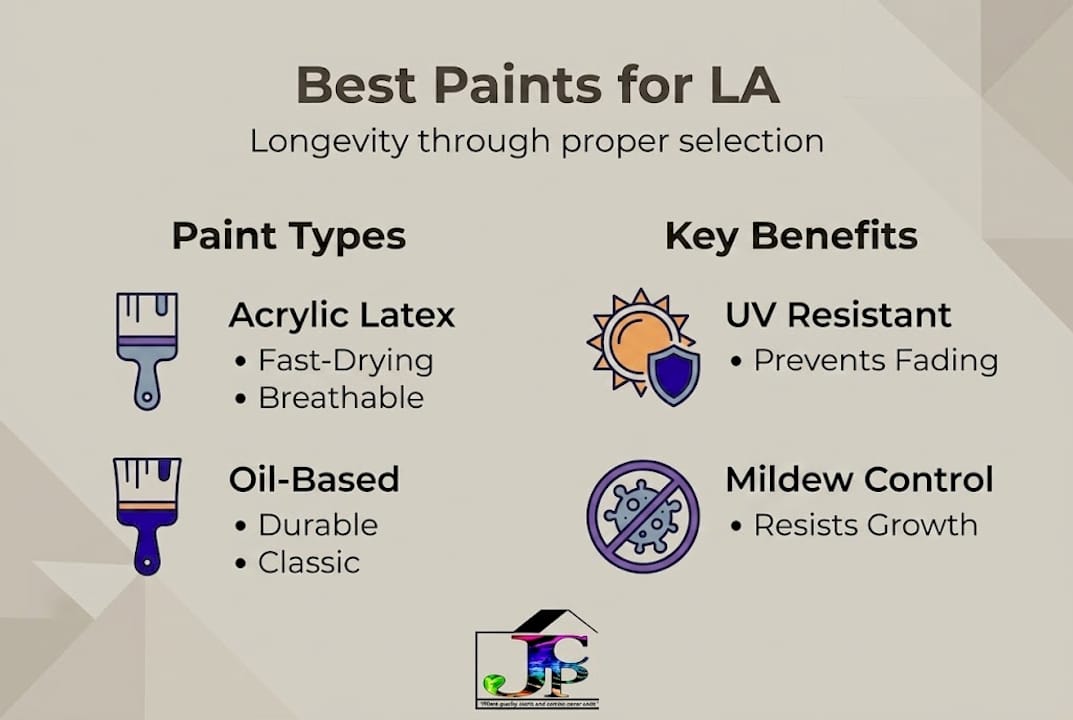
Before you touch a brush, gather everything listed below.
Essential tools and materials:
2-inch angled brush and 9-inch roller with appropriate nap
Extension pole and sturdy ladder (with non-slip feet)
Drop cloths and painter’s tape
Pressure washer or garden hose with a spray nozzle
Caulk gun with exterior-grade caulk
Sandpaper (80 and 120 grit)
Safety goggles, gloves, and dust mask
Primer suited to your surface (masonry, wood, or metal)
For a deeper look at how each option performs locally, the guide on exterior paint types in LA breaks down formulas by surface and exposure level. If you are environmentally conscious, the page covering low-VOC paint options is worth reading before you buy.
Paint type | Best for | Key benefit |
100% acrylic latex | Stucco, wood siding | UV and mildew resistance |
Elastomeric | Cracked stucco (primed) | Bridges hairline cracks |
Low-VOC acrylic | All surfaces, eco-conscious | Low odor, safer indoors |
Pro Tip: Buy paint in one batch from the same dye lot. Color can vary slightly between batches, and patchy results are difficult to fix once dry.
Surface preparation: Cleaning, inspection, and minor repairs
With your tools and top-quality paint ready, it’s time to prepare your surfaces the right way for results that last.
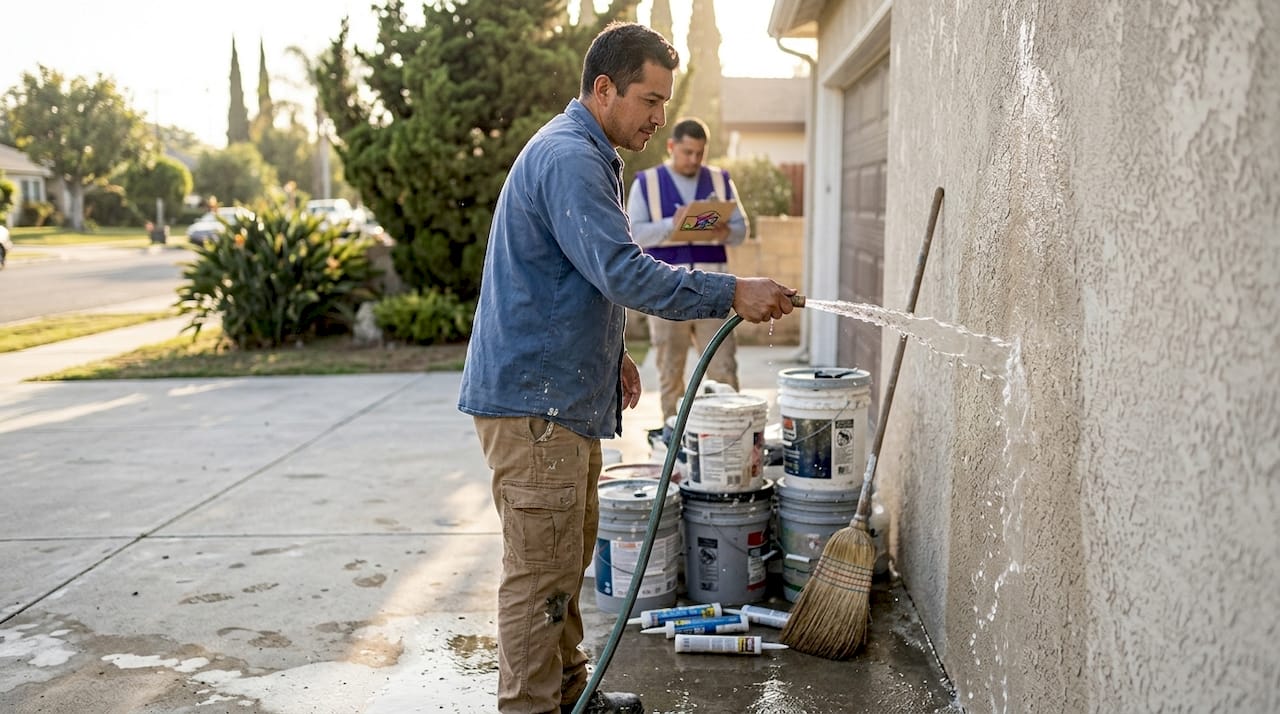
Poor prep is the single biggest reason paint fails early. Painting over dirt, mildew, or unstable surfaces wastes your time and money. The good news is that solid prep work is straightforward when you follow the steps in order.
Step-by-step surface prep:
Wash all surfaces with a garden hose or pressure washer set to low. Work from top to bottom.
Mix a mild bleach solution (1 part bleach to 3 parts water) and scrub any mildew or algae spots with a stiff brush.
Allow surfaces to dry completely, at least 24 to 48 hours before doing anything else.
Inspect every inch of the surface. Look for cracks, bubbling, peeling, and rot.
Scrape away loose paint with a paint scraper. Sand rough edges smooth.
Patch small cracks with exterior spackling compound. Fill larger gaps with caulk.
Prime all bare or patched areas before applying finish paint.
For stubborn spots or painted masonry, the guide on removing paint from brick offers safe, natural removal methods that won’t damage your surface. Once cleaned, these surface preparation tips can help you dial in your technique for maximum adhesion.
A flawless surface preparation process also means understanding your limits. Small cracks and peeling patches are solid DIY territory. Large stucco separations, wood rot, or widespread mold call for a professional assessment.
“Elastomeric paint should only be used on primed surfaces to prevent moisture trapping.”
Approach | Result |
Quick rinse only | Poor adhesion, early peeling |
Thorough prep (wash, scrape, prime) | Strong bond, years of durability |
Pro Tip: Do your prep work in the morning when surfaces are cool. Hot LA afternoons cause patches and caulk to dry too fast, which leads to cracking.
Step-by-step maintenance routine: Inspections, cleaning, and touch-ups
Once surfaces are properly prepared and painted, maintenance is simple when you follow a clear, consistent routine.
Think of your exterior paint like a car. You wouldn’t skip oil changes and then wonder why the engine failed. Regular inspections and cleanings catch small problems before they become expensive ones.
Seasonal inspection schedule:
Spring: Check for any winter moisture damage. Look for bubbling or staining along rooflines and window frames.
Summer: Inspect sun-exposed walls and south-facing surfaces for fading and chalking.
Fall: After fire season and wind events, check for debris damage and hairline cracks.
Winter: Look for moisture infiltration around doors, vents, and trim after rain.
What to watch for during every inspection:
Edges and corners where caulk tends to crack first
Trim boards and window sills exposed to direct sun
Areas near sprinklers or downspouts where water pools
Any spot where two materials meet (wood to stucco, metal to masonry)
For safe washing, use a garden hose on low pressure or a soft-bristle brush with mild detergent. Avoid blasting water directly into gaps or seams. Touch-ups are most effective when caught early. Fresh paint applied to a clean, primed spot is nearly invisible. Wait too long and the color mismatch becomes obvious.
Understanding how weather affects painting in LA helps you time your maintenance smartly. The guidance on paint fading issues explains exactly why certain walls fade faster than others. A practical tips for regular maintenance resource confirms that consistent upkeep significantly extends the life of any exterior finish.
When you see peeling, deep cracks, or water stains spreading, those are signs to stop the DIY work. Complex repairs or full repaints require professionals for true, lasting durability.
Troubleshooting and when to hire a professional
A solid routine helps, but sometimes bigger issues or safety concerns mean it’s time for expert help.
Not every paint problem is a DIY fix. Some signs point to issues that go beyond the surface, and catching them early saves you real money.
Common LA paint problems and their causes:
Blistering: Moisture trapped beneath the paint film. Usually caused by painting over damp surfaces or sealing with non-breathable coatings.
Fading: UV degradation, especially on south- and west-facing walls. A common LA problem that accelerates with cheap, low-pigment paints.
Mildew: Thrives in shaded, humid spots. Often mistaken for dirt. Does not wash off with plain water.
Chalking: A powdery residue on older paint surfaces. Normal aging, but heavy chalking means the paint film has broken down.
Pro Tip: Rub a dark cloth along your wall. A white, powdery streak means chalking is present. You’ll need to clean and prime before any touch-up paint will stick.
Red flags that mean it’s time to call a pro:
Work on anything above the first story
Stucco that moves or sounds hollow when you tap it
Wood rot behind siding or trim
Recurring mold that keeps coming back after cleaning
Any full repaint project
Pros handle ladder work, stucco repairs, and full repaints to ensure surface adhesion and long-term durability. The benefits of hiring pros go beyond a clean finish. A professional can spot hidden water damage, failing caulk, and substrate issues before they turn into structural problems.
“A professional assessment often costs far less than repairing damage caused by deferred maintenance or an incorrect DIY repair.”
For a detailed breakdown of how different finishes hold up over time, the resource on paint durability in LA is a useful reference when you’re deciding whether to repair or repaint.
Ensuring longevity: Protecting and maintaining paint year after year
Ongoing vigilance and a few preventative moves will make your paint truly stand the test of time.
A great paint job in LA can last 7 to 10 years with proper care. Most properties that fall short of that mark skip one key step: consistent monitoring after the job is done. Proper prep and material choice are central to paint longevity, but ongoing care is what actually delivers on that promise.
Best practices for year-round protection:
Trim back landscaping and trees that press against painted surfaces
Redirect sprinklers away from walls and wood trim
Keep gutters clear so water doesn’t run down siding
Address any caulk failures within the same season they appear
Plan touch-up painting for spring or fall when temperatures are mild
When you’re deciding whether to spot-repair or fully repaint, use this simple decision guide.
Situation | Recommended action |
Isolated fading or small chips | Touch-up with matched paint |
More than 30% of surface showing wear | Full repaint recommended |
Recurring moisture stains | Diagnose source before repainting |
Paint older than 8 to 10 years | Schedule full repaint and prep |
For the best selecting paint for LA homes process, match your product to the specific surface and direction it faces. Budget tip: spreading your repaint over 2 to 3 years by section, one elevation at a time, softens the cost without letting any one wall deteriorate too far.
The truth about property painting maintenance in Los Angeles
Here is something most guides won’t say plainly: LA is genuinely one of the hardest climates in the country for exterior paint. It’s not just the sun, though the UV index here is brutal. It’s the combination of dry heat, coastal air salt, smog deposits, and then periodic heavy rain after months of drought. That cycle stresses paint films in ways that even quality products struggle to fully resist without the right prep underneath.
After 16 years of work on LA properties, the pattern we see most is homeowners spending well on the final coat while underinvesting in surface prep. A premium paint applied over chalky, unprepared stucco will fail almost as fast as a budget product. The foundation is everything.
DIY maintenance absolutely saves money, and we encourage it for cleaning, inspection, and small fixes. But knowing your limits matters just as much as picking up a brush. Overconfident DIY repairs on stucco, second-story trim, or surfaces with hidden moisture can make problems significantly worse and more expensive to correct later. For real-world painting advice from people who work on LA properties every week, the edge cases and nuances are worth understanding before you start.
The homeowners who get the most out of their paint investments are not the ones who DIY everything. They are the ones who stay consistent with routine care and recognize early when a job has grown beyond their tools or experience.
Professional help for lasting results in Los Angeles
If you’re ready to stop worrying about paint problems and want guaranteed results, here’s where expert help pays off.
At Johnny’s Custom Painting, we’ve spent over 16 years solving exactly the paint challenges LA properties face. From UV-battered stucco to moisture-stressed wood siding, our team handles every step with licensed, insured professionals who know this climate firsthand.
Whether your property needs a targeted repair or a full transformation, we offer free estimates for both residential exterior painting and commercial exterior painting. We use premium, low-VOC paints and back every project with a commitment to quality that LA property owners can count on. Contact us today to schedule your consultation and find out exactly what your property needs.
Frequently asked questions
How often should I repaint my property in Los Angeles?
Most LA exteriors need repainting every 5 to 8 years, though consistent maintenance can push that timeline further. Proper prep and material choice are the biggest factors in how long any finish lasts.
What is the best paint for Los Angeles weather?
100% acrylic latex paint that is UV- and mildew-resistant is the top choice for LA’s sun exposure and seasonal humidity. It holds color and resists biological growth far better than oil-based alternatives.
Can I do painting maintenance myself or should I always hire a pro?
DIY works well for cleaning, patching small areas, and touch-ups. For anything involving ladders, stucco repair, or full repaints, a professional delivers better safety and more durable results.
What’s the most common painting maintenance mistake in Los Angeles?
Skipping or rushing surface prep is the most frequent and costly error. Without proper adhesion through priming and prep, even premium paint will peel within a year or two.
How can I tell if my property’s paint is failing?
Fading, cracking, peeling, chalky residue, and moisture stains are the clearest warning signs. These indicate that UV-resistant and mildew-resistant protection has broken down and repairs or repainting are needed soon.
Recommended
Comments