
Workflow for Painting Apartment Buildings That Works

TL;DR:
Managing painting projects across apartment buildings requires thorough planning of scope, approvals, and scheduling to prevent delays and cost overruns. Proper surface preparation, role specialization, and strategic sequencing are essential for long-lasting, high-quality results. Coordinated final inspections and maintenance schedules help preserve the investment and reduce future painting costs.
Managing a painting project across an apartment building is nothing like painting a single-family home. You’re coordinating multiple units, working around occupied spaces, managing tenant schedules, and trying to keep costs from spiraling before the final coat dries. A clear workflow for painting apartment buildings makes the difference between a project that finishes on time and on budget versus one that drags on, generates complaints, and leaves patchy results throughout the property. This guide walks you through every phase, from initial planning to final inspection, with the specifics that actually matter on a real job site.
Table of Contents
Key takeaways
Point | Details |
Plan before you paint | Scope assessment, approvals, and scheduling must happen weeks before the first brush touches a wall. |
Prep work determines quality | Surface cleaning, repairs, and priming directly affect how long the paint job lasts. |
Assign roles on the crew | Dividing tasks by specialty speeds up the job and reduces costly mistakes. |
Inspect as you go | Quality checkpoints at each phase catch problems before they become expensive fixes. |
Maintenance extends paint life | Scheduling touch-ups on a set cycle protects the building and reduces per-unit painting costs over time. |
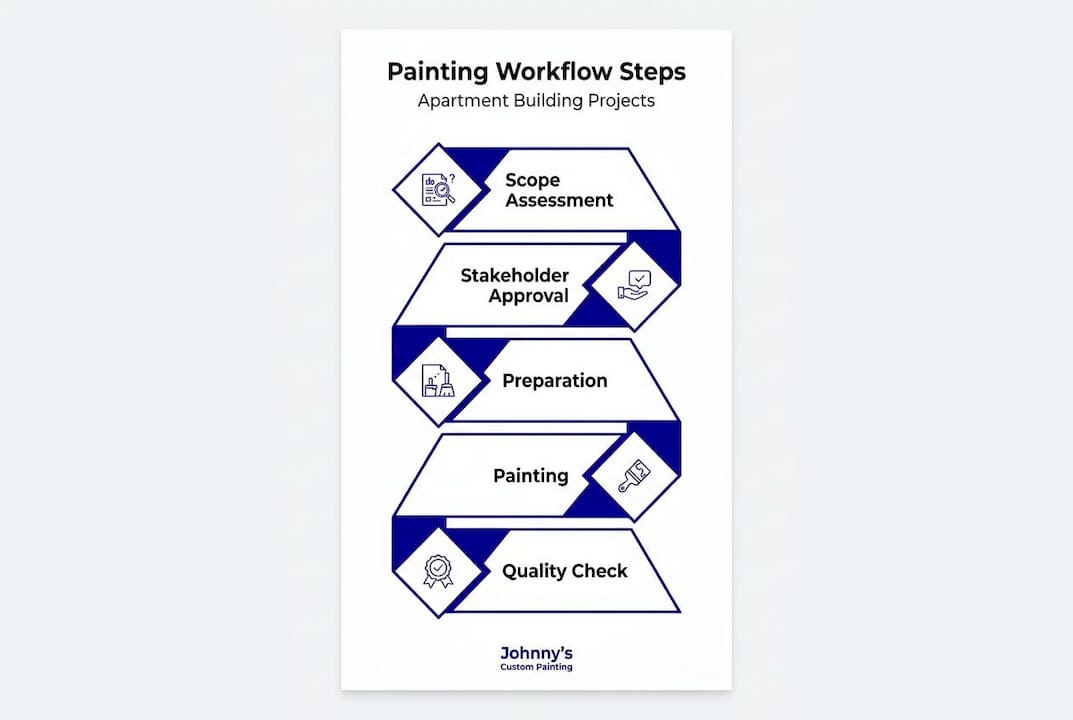
The workflow for painting apartment buildings starts with planning
Most painting problems trace back to decisions made before anyone picked up a brush. Rushed planning is the top reason projects go over schedule.
Assess the building scope first
Walk the entire property before writing a single line on your project plan. Identify every surface type: stucco, wood siding, drywall, concrete block, and metal railings all require different prep methods and paint formulas. Note which areas are high traffic, which are exposed to direct sunlight, and which have moisture issues that may need remediation before painting starts.
Document every unit that needs interior work, and note the current condition of walls, ceilings, and trim. This baseline assessment prevents the common scenario where crews show up to Unit 14 only to find the bathroom walls need drywall repairs that nobody planned for.
Get approvals and align stakeholders
If your building has an HOA, exterior color changes almost always require board approval. Get that process started early since HOA approval cycles can take weeks. For tenant-occupied units, written notice periods are often legally required. Check your local regulations on this. In California, for example, landlords typically need to provide advance notice before entering a unit for non-emergency work.
Flexible scheduling around tenant needs is not optional. It is one of the biggest drivers of whether a painting project earns cooperation or complaints.
Choose the right paint and tools
Paint selection for multi-unit residential buildings is not just about color. You need products that balance durability, washability, and coverage rate since labor is your biggest cost driver. For interiors, flat or eggshell finishes work in bedrooms and living spaces, while semi-gloss holds up better in kitchens, bathrooms, and high-traffic hallways. For exteriors, the right color selection requires evaluating the surrounding environment, trim colors, and natural lighting conditions together, not as separate decisions.
Confirm paint quantities per unit using square footage measurements, not estimates
Stock primers separately for bare wood, patched drywall, and masonry surfaces
Order at least 10% more material than calculated to cover touch-ups and unforeseen repairs
Verify that all selected products comply with local VOC regulations
Pro Tip: Request paint samples in 8-by-10-inch patches on actual walls inside the building rather than evaluating color swatches alone. Colors shift significantly under fluorescent corridor lighting versus natural light from windows.
For scheduling painting timelines in a city like Los Angeles, factor in seasonal weather patterns that affect exterior drying times.
Surface preparation workflow
Surface prep is not the exciting part of the apartment building painting process. It is, however, the part that determines whether your paint lasts five years or peels in eighteen months.
Here is the standard preparation sequence for multi-unit properties:
Power wash all exterior surfaces. Power washing before painting removes accumulated dirt, mold, and loose paint that would otherwise cause new paint to fail within months. Use a pressure setting appropriate to the surface material. Stucco tolerates lower pressure than concrete.
Clean interior walls. Washing walls with warm water and mild soap removes grease, residue, and surface contamination that prevent proper adhesion. This step is skipped far too often in multi-unit projects where crews are rushing.
Scrape and sand deteriorated surfaces. Any exterior area with cracked or peeling paint needs thorough scraping and sanding. Painting over failing surfaces just locks in a future problem.
Repair cracks, holes, and damaged drywall. Every gap or gouge needs to be filled, allowed to cure fully, and sanded smooth before any primer or paint goes on. On interior surfaces, this includes nail holes, baseboards that have pulled from walls, and any water-damaged ceiling sections.
Apply primer where needed. New drywall, patched areas, raw wood, and previously unpainted masonry all require a dedicated primer coat. Skipping primer on these surfaces is one of the most common reasons paint peels prematurely.
Mask fixtures, trim, and flooring. Masking edges protects surfaces that should not receive paint. For high-volume multi-unit projects, experienced painters often cut in freehand rather than taping every edge, which can save significant time on straight, consistent surfaces.
Prep step | Interior units | Exterior surfaces |
Power washing | Not applicable | Required on all surfaces |
Wall washing | Required before painting | Required where accessible |
Crack and hole repair | Required in all units | Required on all facades |
Primer application | Patched areas and new drywall | All bare masonry and wood |
Masking | Windows, trim, outlets | Windows, railings, signage |
For a detailed look at exterior prep techniques that apply specifically to apartment buildings, the process differs from single-family homes in scope and sequencing.
Pro Tip: For high exterior walls, using a lift system rather than standard ladders significantly improves both safety and paint coverage quality. Contractors who own this equipment can mobilize faster and work more consistently at elevation.
Coordinating the painting process
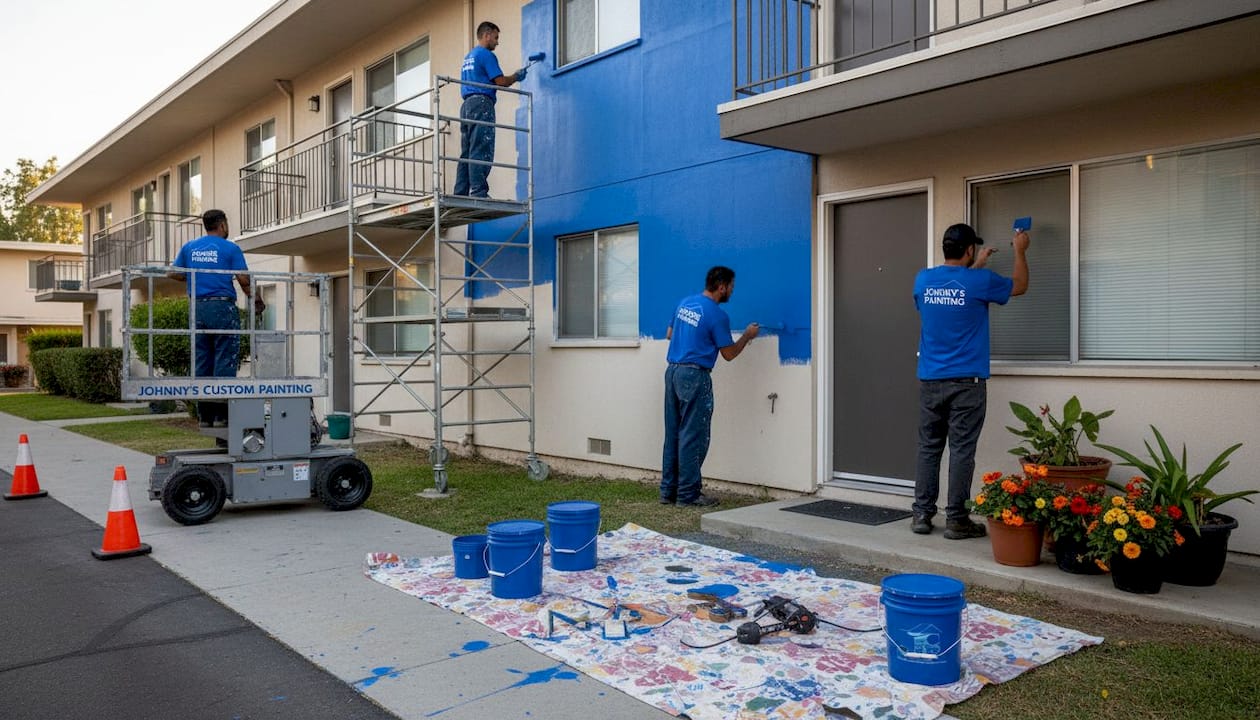
This is where an efficient painting workflow separates professional results from amateur outcomes. The apartment building painting process at scale requires role specialization, not everyone doing everything.
Divide the crew by task
Assigning specific roles to crew members produces faster results than rotating everyone through every task. A typical structured crew for apartment work looks like this:
Lead painters handle edgework, cut-ins along ceilings, door frames, and window surrounds where precision matters most
Roller painters cover large wall and ceiling surfaces rapidly after leads establish clean edges
Trim specialists handle baseboards, door casings, and crown molding with semi-gloss or gloss finishes
Prep and cleanup crew move ahead of and behind the painting team, prepping the next unit and cleaning the completed one
This division keeps every person working at what they do fastest. It prevents the bottleneck that happens when a single painter tries to prep, cut in, roll, and clean up all at once.
Sequence the work intelligently
For interiors, work top-down within each unit: ceilings first, walls second, trim last. For exteriors, work from the top floor down so drips and overspray from upper levels do not contaminate freshly painted lower sections. Move unit by unit in a logical sequence that does not force crews to cross back through wet areas.
Match your application method to the surface
Application method | Best use case | Trade-offs |
Brush | Trim, detail work, tight corners | Slow, high quality |
Roller | Large flat wall and ceiling areas | Fast, smooth finish |
Airless sprayer | Exterior siding, large open surfaces | Very fast, requires masking everything |
For paint application methods on apartment buildings, the combination of spray for exterior field areas and brush or roll for detailed work typically delivers the best balance of speed and quality.
Build in quality checkpoints
Consistent inspection throughout the workflow reduces costly rework. Assign a lead painter or project manager to inspect each unit before it is signed off. Catching a missed second coat in Unit 4 during active work costs almost nothing. Catching it after the crew has moved on to the next building costs a return trip.
Final checks, cleanup, and long-term maintenance
The painting work being done does not mean the project is complete. This phase protects your investment and sets up the property for years of lower maintenance costs.
Conduct a unit-by-unit walkthrough. Use consistent lighting and a standardized checklist. Look for holidays in coverage, uneven sheen, missed areas near outlets and switch plates, and any drips or runs in the finish.
Document a punch list. Any deficiency found in the walkthrough goes on a written list with the unit number, location, and nature of the issue. Address everything before final sign-off.
Complete site cleanup. Remove all masking materials, drop cloths, and equipment. Properly dispose of paint waste according to local regulations since latex and oil-based paints are handled differently. Minimize runoff during cleanup to avoid environmental violations.
Communicate with tenants. Let residents know which areas are freshly painted and need drying time. This prevents accidental damage and demonstrates professional courtesy that reduces future friction.
Set up a maintenance schedule. Apartment interiors need repainting every 3 to 5 years and exteriors every 5 to 7 years depending on environmental exposure. Building that into your property management calendar as a recurring event costs far less than reactive repainting after surfaces deteriorate.
Keep records of paint brands, colors, and sheen levels used in each area for future touch-ups
Store leftover paint labeled by location for quick spot repairs between full repaints
Schedule annual visual inspections of exterior surfaces to catch deterioration before it requires full repainting
Pro Tip: A property painting maintenance guide specific to your climate can extend exterior paint life by one to two years, which adds up significantly across a multi-unit building.
What I’ve learned from painting apartment buildings
After years of working on multi-unit properties in Los Angeles, the pattern I see most often is this: property managers underinvest in planning and then overpay during execution to compensate.
Rushing into painting because a unit just turned over or because the exterior looks bad in photos is the single most expensive way to run a painting project. I have seen jobs where skipping a proper prep phase meant a crew returned to repaint exterior sections six months later at full cost. That kind of outcome is entirely avoidable.
The scheduling piece matters more than most people expect. I have found that phased execution works better than trying to paint every unit simultaneously. It reduces tenant disruption, lets crews focus their attention, and creates natural quality checkpoints at the end of each phase. It also gives you the ability to adjust materials or methods based on what you find in early units before you are committed across the whole building.
The other underrated factor is crew role specialization. When everyone does everything, everyone does everything at average speed. When you put your best cutter on all the edgework for twenty units, that person gets faster with every unit. The compounding efficiency is real.
My honest advice: treat preparation time and coordination planning as equal in priority to the actual painting. The brush and roller time is the easy part once you’ve set everything else up correctly.
— Jonathan
Ready to take this off your plate?

Running an apartment building painting project well takes coordination that most property management teams do not have bandwidth to manage alone. Johnnyscustompainting has been handling multi-unit residential and commercial painting projects across Los Angeles for over 16 years. The team specializes in exterior residential projects for apartment buildings of all sizes, with phased scheduling built around your tenant access requirements. Whether you need interior refreshes across occupied units or a full exterior overhaul, you can view completed projects and request a free estimate at Johnnyscustompainting.com. You’ll get an honest scope assessment, transparent pricing, and a crew that shows up prepared.
FAQ
What is the first step in an apartment building painting workflow?
The first step is a full property assessment that documents surface types, existing paint conditions, and unit-by-unit repair needs. This baseline determines material quantities, crew size, and scheduling before any painting begins.
How long does it take to paint an apartment building?
Timeline depends on the number of units, surface conditions, and whether the project is interior, exterior, or both. A structured phased approach with specialized crew roles is the most reliable way to stay on schedule.
How often should apartment buildings be repainted?
Interiors need repainting every 3 to 5 years and exteriors every 5 to 7 years, depending on environmental conditions and the quality of the previous paint job.
What is the best way to minimize tenant disruption during painting?
Phased scheduling that addresses one section or floor at a time, combined with advance written notice to tenants, significantly reduces inconvenience during the apartment building painting process.
Should apartment buildings use a sprayer or roller for exterior painting?
Airless sprayers cover large exterior surfaces fastest, but they require thorough masking of windows, railings, and adjacent surfaces. Most professional crews use a combination of spray for field areas and brush or roller for detail and trim work.
Recommended
Comments