
How to Evaluate Paint Quality for Durable Results
- Jonathan Hernandez
- Apr 18
- 9 min read

TL;DR:
Quality paint must match the specific surface, environment, and finish for durability in LA.
Independent ratings and real-world testing are essential for evaluating paint performance before purchase.
Using the wrong type or finishing paint inappropriately leads to early failure and higher long-term costs.
Choosing paint should be simple. You pick a color, roll it on, and enjoy the results for years. But too many homeowners in Los Angeles know the real story: a paint that looks flawless in week one starts fading, chipping, or staining by month six. The frustration is real, and the cost of repainting early is significant. Knowing how to evaluate paint quality before committing to a full project saves you money, time, and a lot of headaches. This article walks you through paint types, key performance features, practical evaluation steps, and the most common mistakes to avoid so you can make a confident, informed choice.
Table of Contents
Key Takeaways
Point | Details |
Match paint to location | Choose paints and finishes suited to LA’s climate and the specific room or exterior. |
Rely on trusted ratings | Use authoritative sources like Consumer Reports and MPI for unbiased paint quality information. |
Test before committing | Apply sample patches and check results in natural light to reveal true color and durability. |
Avoid common mistakes | Don’t trust price or brand alone—verify with real-world evidence and ratings. |
Understanding paint types and finishes
Before you can judge quality, you need to understand what you’re actually comparing. Not all paints are created for the same purpose, and using the wrong type on the wrong surface is one of the fastest ways to end up with a disappointing result.
Interior vs. exterior paint is the most fundamental distinction. Interior paints are formulated to resist scrubbing, staining, and the wear that comes from daily life indoors. Exterior paints, on the other hand, are built to handle UV exposure, moisture, temperature swings, and the specific challenges of exterior paint types found in LA’s climate. Using interior paint outside will cause it to break down far faster than it should. Using exterior paint inside can expose your family to higher levels of chemicals not designed for enclosed spaces.
Los Angeles adds another layer of complexity. The region’s mix of intense sun, coastal humidity in areas like Santa Monica, and dry heat inland means paint needs to perform across a range of conditions. UV resistance and mildew protection are not optional extras here. They’re baseline requirements.
Finish type is the second major factor. Here’s a quick breakdown:
Finish | Sheen level | Best for |
Flat/matte | None | Ceilings, low-traffic walls |
Eggshell | Very low | Living rooms, bedrooms |
Satin | Medium | Kitchens, hallways, kids’ rooms |
Semi-gloss | High | Trim, doors, bathrooms |
Gloss | Very high | Cabinets, high-wear surfaces |
The right paint finishes for LA homes depend on the specific room and how much traffic it sees. Higher sheen finishes are easier to clean but show surface imperfections more clearly. Flat finishes hide wall flaws well but are harder to wipe down.
Coverage is another number worth understanding. Most quality paints cover 350 to 400 square feet per gallon on a properly prepared surface. Economy paints often fall short of that, requiring extra coats and driving up your actual cost per square foot. As performance benchmarks show, finish choice directly affects both appearance and long-term maintenance needs.
Use flat or eggshell for low-traffic areas where you want a softer look
Choose satin or semi-gloss for kitchens, bathrooms, and hallways
Always match exterior paint to your specific microclimate in LA
Verify coverage claims on the label before assuming one coat will do
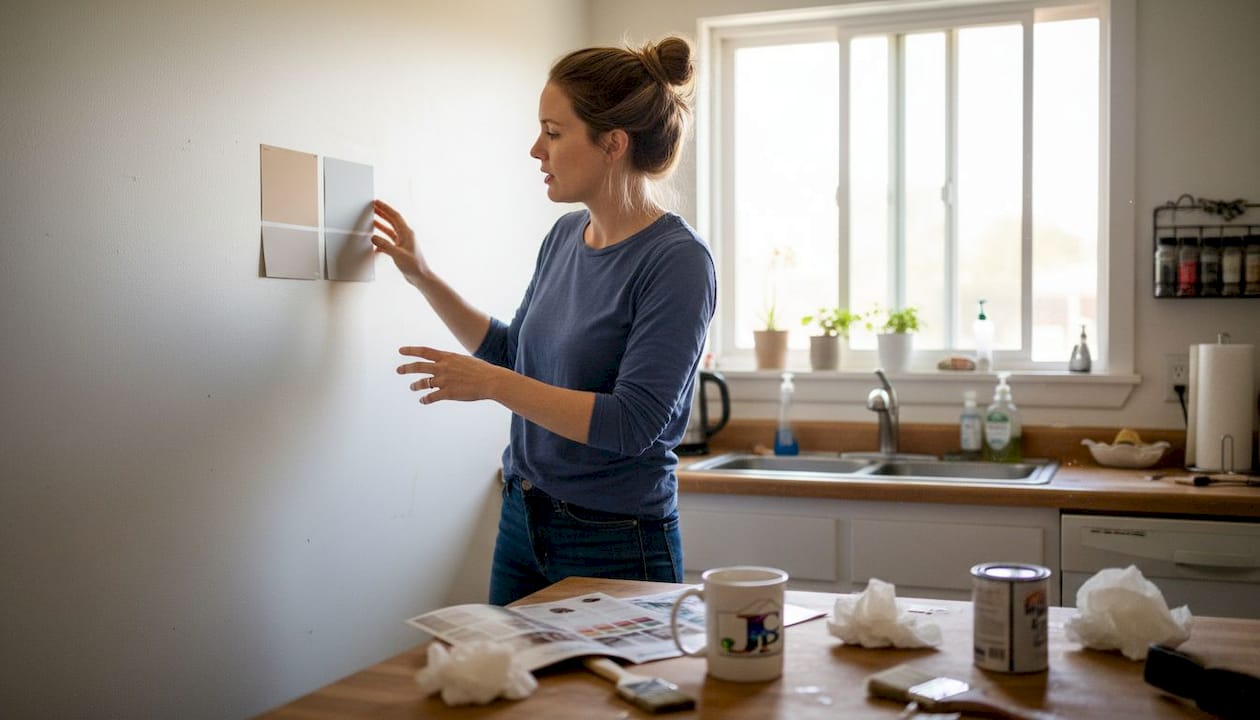
Pro Tip: Always buy a sample quart and apply two coats on a small section of wall before committing to gallons. Natural light in your specific room tells you far more than any store display.
Key performance features to evaluate
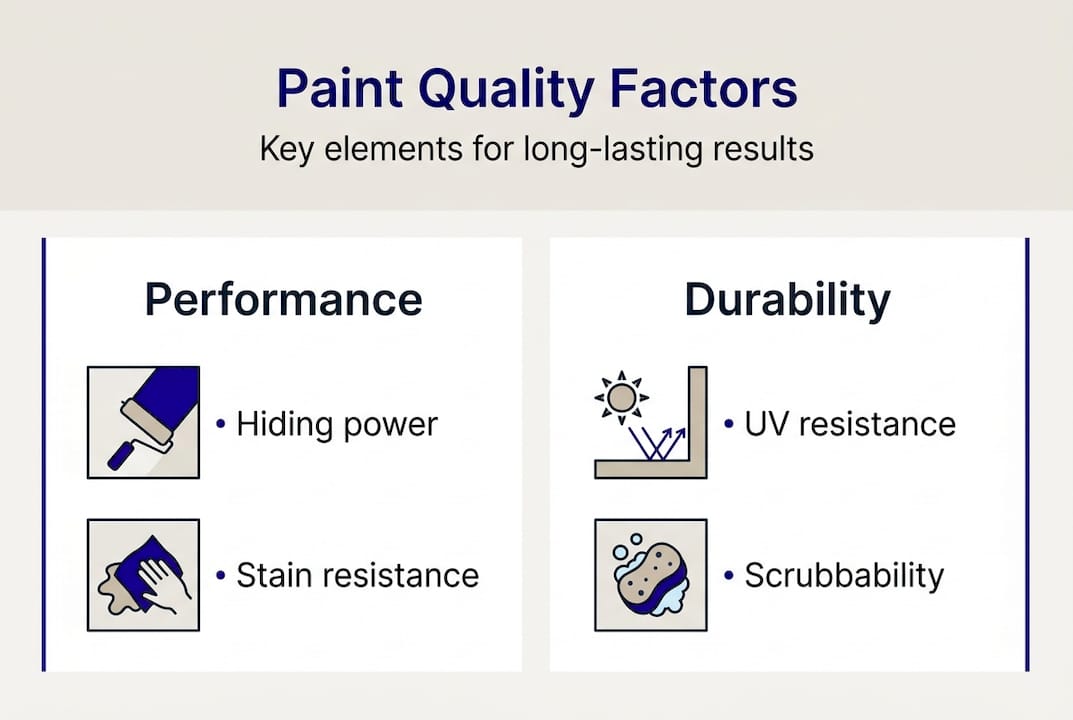
Once you understand the different paints and finishes, it’s time to learn exactly which features set the highest-quality paints apart. Four factors matter most: hiding power, stain and scrub resistance, durability, and weather suitability.
Hiding power, also called opacity, measures how well a paint covers the color underneath it. A paint with strong hiding power can cover a dark wall in fewer coats. Weak hiding power means more coats, more labor, and more cost. This is one of the clearest dividing lines between budget and premium products.
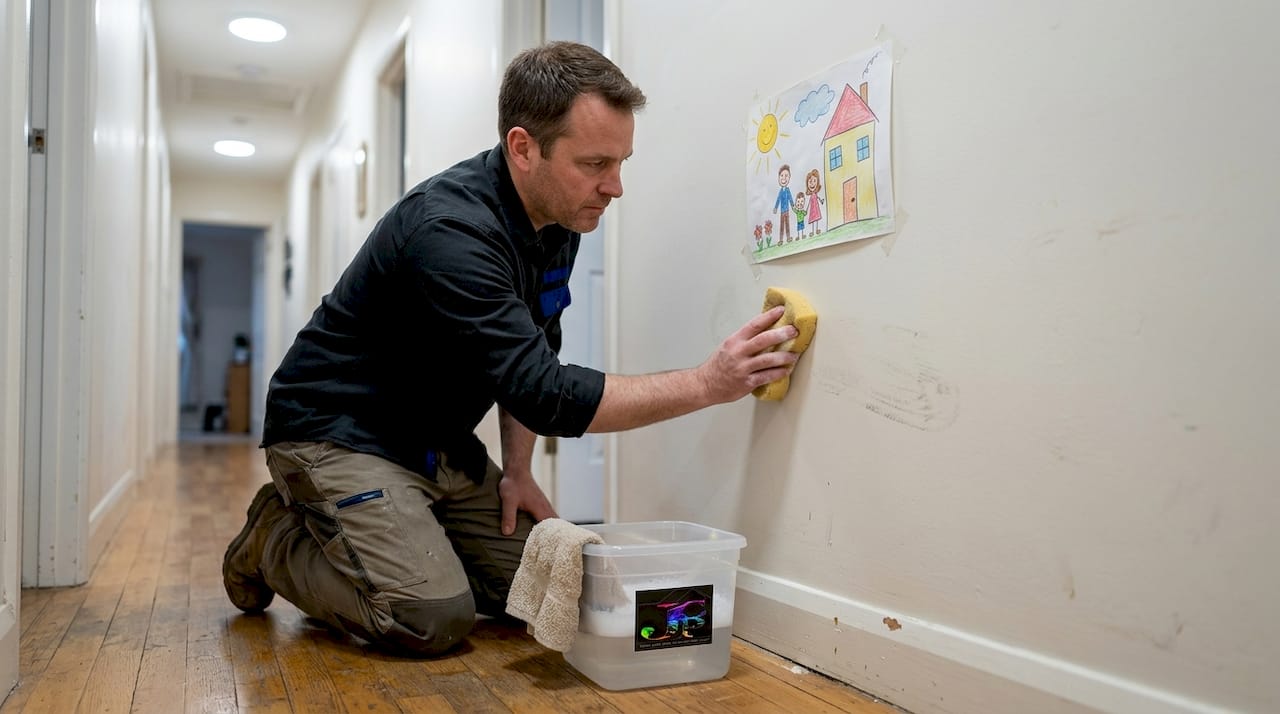
Stain resistance and scrubbability matter enormously in high-traffic spaces. Think about kitchen walls, hallways, or any room with kids or pets. The Consumer Reports paint guide evaluates hiding power, scrubbability, stain resistance, mildew resistance, and self-priming ability, making it one of the most reliable resources for comparing products side by side. Top-rated paints can withstand over 2,000 scrub cycles without losing their finish.
Durability is about how long the paint holds up under real conditions. For exterior applications in LA, that means UV resistance to prevent fading and flexibility to handle temperature changes without cracking. Quality exterior paints are rated for 10 to 15 years of performance. Interior paints should resist yellowing and maintain their color under artificial lighting over time. You can find detailed paint durability benchmarks to compare products before you buy.
Here’s a summary of what to look for by category:
Feature | What to look for | Why it matters |
Hiding power | High opacity rating | Fewer coats needed |
Scrubbability | 1,500+ scrub cycles | Survives daily cleaning |
Mildew resistance | Listed on label | Critical for coastal LA areas |
UV protection | Exterior-rated formula | Prevents fading in LA sun |
Coverage | 350-400 sq ft/gallon | Controls actual cost |
For commercial properties, the stakes are even higher. MPI standards provide a rigorous approved products list that commercial contractors rely on to verify paint performance before specifying it for a project. If a paint is on the MPI list, it has passed independent lab testing.
Prioritize hiding power if you’re covering a dark or stained surface
Check scrubbability ratings for kitchens, bathrooms, and commercial spaces
Confirm mildew resistance for any coastal or high-humidity areas in LA
Look for UV protection on all exterior applications
Verify coverage per gallon to accurately estimate your total material cost
Applying these interior painting tips alongside performance data gives you a much clearer picture of what you’re actually getting for your money.
How to assess paint quality before buying
Now that you know what features matter, let’s detail practical steps you can take to evaluate paint quality before you invest in gallons. The good news is you don’t need a lab to make a smart decision.
Start with the label. A quality paint label tells you a lot. Look for VOC content, coverage estimate, finish type, and whether it’s rated for interior, exterior, or both. Low-VOC paint is especially important for indoor applications in California, where air quality regulations are strict and indoor air health matters.
Use third-party ratings. The Consumer Reports paint ratings and the MPI Approved Products List are your two most reliable resources. Neither is influenced by manufacturer marketing budgets. As MPI.net notes, homeowners can’t run lab tests themselves, so relying on CR ratings, MPI lists, and manufacturer specs is the most practical path to verified quality.
Don’t let a beautiful color sway you into skipping the performance check. A paint that looks perfect in the store but fails in six months costs you twice.
Test patches at home. Buy a sample size and apply two coats on the actual wall surface you plan to paint. Check it in morning light, afternoon light, and under artificial lighting. This tells you how the color truly reads in your space and gives you a preview of coverage quality.
Try the alcohol swab test if you’re repainting over an existing surface. Rub a cotton ball soaked in rubbing alcohol over the old paint. If color comes off, it’s latex. If nothing comes off, it’s oil-based. This matters because applying latex over oil without proper prep causes peeling.
Read the full label before buying, not just the color chip
Cross-reference the product against Consumer Reports or MPI ratings
Buy a sample and test it in your actual space under real lighting
Perform the alcohol swab test on existing surfaces before repainting
Check for low-VOC options to protect indoor air quality
Pro Tip: Never rely on the store display lighting to judge a color. Paint colors shift dramatically between fluorescent store lighting and the natural or warm light in your actual room.
Common pitfalls and mistakes when choosing paint
To make sure all your evaluation pays off, be aware of these classic mistakes and what to do differently. Even well-intentioned buyers fall into these traps regularly.
Buying on price alone is the most common error. It feels logical to assume a higher price means better quality, but that’s not always true. Equally, grabbing the cheapest option almost always leads to poor coverage and early failure. As performance data consistently shows, economy paints often have poor coverage, while some mid-range options outperform premium-priced competitors when tested head to head.
Mismatching finish to surface creates maintenance headaches that last for years. Flat paint in a kitchen or bathroom will absorb grease and moisture, making it nearly impossible to clean without damaging the surface. Gloss paint on a textured ceiling will highlight every imperfection.
Skipping third-party ratings and relying on packaging claims alone is one of the most expensive mistakes a homeowner can make.
Never assume “self-priming” means you can skip surface prep entirely
Don’t ignore regional requirements: LA’s UV intensity demands UV-resistant formulas outside
Avoid applying new paint over incompatible old paint without testing first
Don’t skip reading buying mistakes documented by independent testers
Never choose a finish based on aesthetics alone without considering how the room is used
Falling for self-priming claims without verification is another trap. Some paints do combine primer and paint effectively, but many use this as a marketing term without the performance to back it up. Always check independent ratings before trusting that claim.
Forgetting LA’s specific weather demands is a mistake that shows up months later. The combination of intense UV, occasional marine layer, and dry Santa Ana winds means paint needs to be chosen with the local environment in mind, not just the interior color palette. These painting tips for LA homeowners cover the regional factors that affect long-term performance.
Pro Tip: When in doubt about compatibility between old and new paint, ask a professional. A quick consultation can save you from a full strip-and-repaint job later.
Our take: What really matters when evaluating paint quality
Stepping back, here’s what years of paint evaluation and countless LA projects have taught us. Marketing is loud. Lab data is quiet. But lab data is what you want on your walls.
We’ve seen homeowners spend top dollar on a paint with beautiful branding and mediocre performance. We’ve also seen budget-conscious buyers choose a well-rated mid-range product that held up beautifully for over a decade. The difference was never the price tag. It was always the decision to check independent ratings and match the product to the actual conditions of the space.
LA’s environment is genuinely demanding. The UV exposure here fades colors faster than most people expect. Coastal humidity creates mildew conditions that average paints aren’t built to handle. Choosing paint without accounting for those factors is a shortcut that costs more in the long run.
We also believe that comparing paint brands using verified data, rather than reputation alone, is the single most powerful shift a homeowner can make. Quality paint, properly applied to a well-prepared surface, is the foundation of a result that lasts. Everything else is secondary.
Need reliable paint quality? We can help
At Johnny’s Custom Painting, we apply the same evaluation framework described in this article to every project we take on in Los Angeles. We source premium, low-VOC paints matched to each surface, finish, and environment. We don’t cut corners on prep, and we don’t recommend products we haven’t vetted.
If you want to see what that standard looks like in practice, browse our interior residential projects or take a look at our exterior residential results. For commercial property managers, our exterior commercial work shows the level of finish we deliver at scale. Ready to get started? Contact us for a free estimate and let’s talk about the right paint solution for your property.
Frequently asked questions
What is the best way to check paint durability before buying?
Rely on third-party ratings like Consumer Reports or the MPI Approved Products List, and test a sample patch in real-world conditions at home. Top paints achieve over 2,000 scrub cycles and 10 to 15 years of exterior life under independent testing.
How do I know if paint is low-VOC and safe for indoor use?
Check the product label for a low-VOC designation and confirm it meets California’s indoor air quality standards. Authoritative guides and low-VOC certification checks make this easy to verify before you buy.
What are common signs of poor-quality paint?
Patchy coverage after two coats, early fading, chipping within the first year, and staining that won’t wipe clean are all red flags. Economy paints frequently fail stain and scrub resistance tests that quality products pass easily.
Why does the finish type matter when evaluating paint?
Finish affects both how well paint hides surface flaws and how easily it can be cleaned after application. For high-traffic areas, satin or gloss finishes offer far better durability and cleanability than flat or matte options.
Recommended
Comments