
Lead-safe painting: Your guide to safe, eco-friendly LA projects

TL;DR:
Lead-safe painting involves specific practices to prevent lead dust spread during renovation of pre-1978 homes.
Certified contractors must follow EPA and California regulations, including containment, cleaning, and proper disposal.
Lead-safe work manages dust but does not permanently remove lead hazards, which require specialized abatement.
If you think a fresh coat of paint is always harmless, you’re not alone. But in Los Angeles, where a large share of homes were built before 1978, that assumption can put your family at real risk. Disturbing old paint without the right precautions releases lead dust, which is invisible, odorless, and linked to serious health problems, especially in children under six. This guide breaks down exactly what lead-safe painting means, what the law requires in California, who can legally do the work, and how eco-friendly paint choices fit into the picture. By the end, you’ll know how to protect your family and stay compliant.
Table of Contents
Key Takeaways
Point | Details |
Lead-safe painting basics | Lead-safe painting uses EPA-approved methods to minimize lead exposure during home projects. |
Certification matters | Only EPA and CDPH-certified professionals can legally handle lead-related painting in Los Angeles. |
DIY rules | Homeowners can paint in their own homes if they strictly follow lead-safe rules, but large jobs require certified help. |
Eco-friendly not lead-free | Low-VOC paints improve air quality but must follow lead-safe procedures—eco doesn’t mean lead-safe by default. |
Permanent vs. temporary fixes | Lead-safe painting contains lead hazards but abatement permanently removes them, depending on project needs. |
What is lead-safe painting?
Lead-safe painting is not a product or a brand. It’s a set of practices designed to keep lead dust from spreading when you paint, repair, or renovate a home that may contain lead-based paint. The EPA’s RRP program establishes the specific methods contractors must follow to minimize lead dust exposure during painting, repair, or renovation in pre-1978 homes.
Why does 1978 matter? That’s the year the federal government banned lead-based paint in residential housing. Any home built before that cutoff is presumed to contain it until testing proves otherwise. In Los Angeles, that covers an enormous portion of the housing stock, from Craftsman bungalows in Pasadena to mid-century apartment buildings in Silver Lake.
The health stakes are serious. Lead exposure causes irreversible neurological damage in children, and adults aren’t immune either. Elevated blood lead levels are linked to high blood pressure, kidney damage, and cognitive decline. The tricky part is that lead paint in good condition is relatively stable. The danger spikes the moment someone sands, scrapes, or cuts through it.
Here’s what makes lead-safe painting different from ordinary painting:
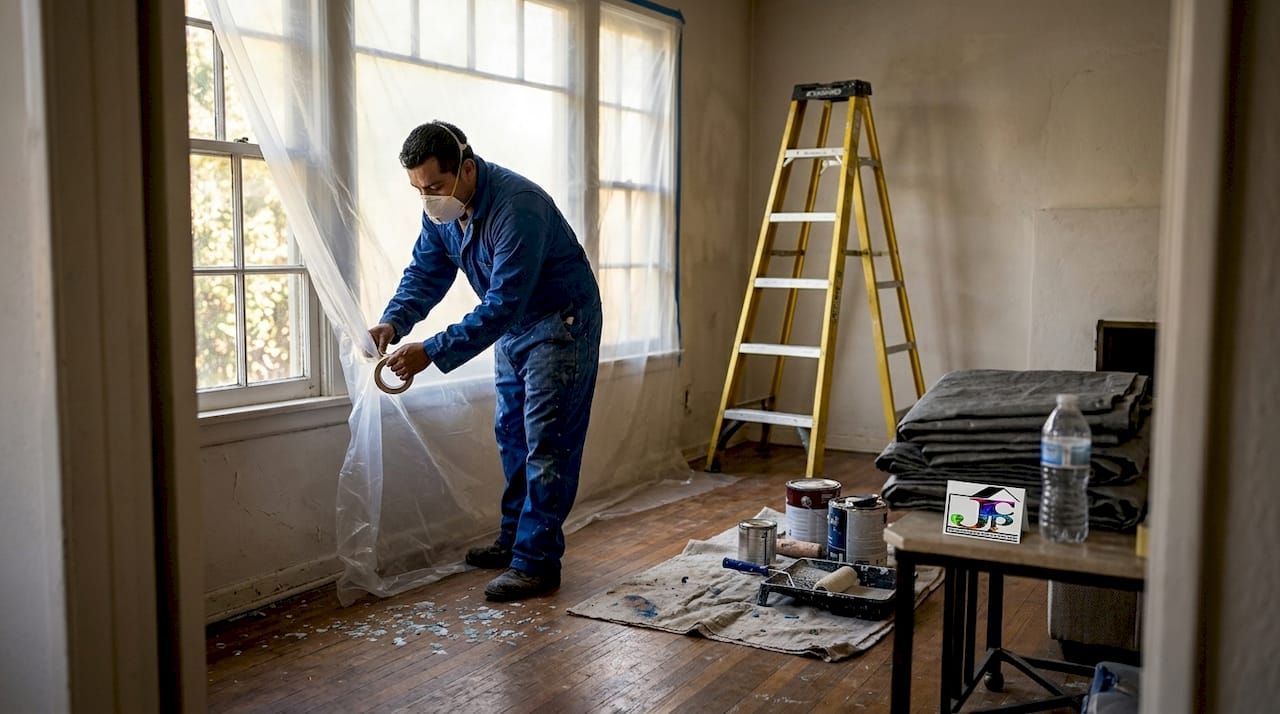
Containment first: The work area is sealed before any tools touch the surface.
Controlled dust: Methods that generate high dust are prohibited.
Thorough cleanup: Specific cleaning steps must happen in a specific order.
Documentation: Homeowners receive written notice before work begins.
Verification: Post-work cleaning is confirmed before the space is reopened.
“The goal isn’t to remove lead from your home. It’s to prevent lead dust from becoming airborne or spreading to living areas during renovation work.”
For additional painting safety tips specific to LA homes, it’s worth reviewing what certified contractors check before they ever open a can of paint.
Ignoring these rules carries real consequences. The EPA can fine contractors tens of thousands of dollars per violation. Homeowners who hire uncertified workers can face liability too, particularly if a child in the home tests positive for elevated blood lead levels afterward.
Core lead-safe work practices and rules
Knowing the concept is one thing. Understanding what lead-safe work actually looks like on a job site is another. The lead-safe work practices required by the EPA include pre-work notification with an EPA pamphlet, containment with 6-mil plastic sheeting, prohibiting high-dust methods like dry sanding or heat guns over 1100°F, continuous cleaning with HEPA vacuums and wet wiping, and post-work cleaning verification using wet disposable cloths.
Here’s the sequence a certified contractor follows:
Notify the homeowner and provide the EPA’s “Renovate Right” pamphlet before work begins.
Seal the work area using 6-mil plastic sheeting over floors, furniture, and HVAC vents.
Post warning signs to keep non-workers, especially children and pregnant women, out of the area.
Avoid prohibited methods including dry sanding, dry scraping (except near electrical outlets), and heat guns above 1100°F.
Clean as you go using HEPA vacuums and wet wiping techniques throughout the job.
Perform post-work cleaning verification by wiping surfaces with a wet disposable cloth and checking for visible dust or debris.
Dispose of waste properly in sealed plastic bags according to local regulations.
Pro Tip: The 6-square-foot rule matters. Interior work disturbing more than 6 sq ft per room, or exterior work disturbing more than 20 sq ft, triggers full RRP compliance. Small touch-ups below those thresholds may be exempt, but when in doubt, treat it as regulated work.
Here’s a quick reference for what’s allowed and what’s not:
Method | Allowed under RRP? |
Wet sanding | Yes |
HEPA vacuum sanding | Yes |
Dry sanding | No |
Heat guns under 1100°F | Yes (with care) |
Heat guns over 1100°F | No |
Open-flame burning | No |
Power washing without containment | No |
For a deeper look at how these steps connect to overall job safety, the LA painting safety guide covers surface prep and protective measures in more detail. And once lead-safe prep is complete, choosing the right finish matters too. Reviewing low-VOC paint application methods helps you get the healthiest possible result after the safe work is done.
Who can perform lead-safe painting in Los Angeles?
This is where California raises the bar beyond federal minimums. Under federal law, firms performing RRP work must be EPA Lead-Safe Certified. But in California, the rules are stricter. The CDPH-certified lead professionals standard under Title 17 of the California Code of Regulations applies to lead-related construction work, which includes many painting and renovation projects in pre-1978 homes.
Here’s how the two certification levels compare:
Certification | Issuing body | Required for |
EPA Lead-Safe Certified Firm | U.S. EPA | RRP work nationwide |
CDPH Lead Contractor | California CDPH | Lead-related construction in CA |
CDPH Lead Inspector/Assessor | California CDPH | Testing and risk assessment |
Fines for violations are not a slap on the wrist. Penalties can reach $37,000 or more per violation, and California regulators take enforcement seriously. That’s not a number most homeowners want to risk.
So what does this mean for you practically? Here’s what to verify before hiring anyone:
Ask for their EPA firm certification number and look it up in the EPA’s online search tool.
Request CDPH credentials if the work qualifies as lead-related construction under California law.
Check that individual workers are trained, not just the company.
Get documentation in writing before work begins, including the notification form and pamphlet receipt.
Confirm their waste disposal plan for lead-containing materials.
What about doing it yourself? Homeowners can legally perform lead-safe work in their own primary residence under federal rules. But this exemption does not apply to rental properties or childcare facilities. And the exemption doesn’t eliminate the need to follow safe practices. Hiring licensed painters who carry proper credentials removes the guesswork entirely.
Working with insured painting contractors also protects you financially if something goes wrong. And before any work starts, reviewing LA painting contracts helps you understand what should be spelled out in writing.
Lead-safe vs. lead abatement: What’s the difference?
Many homeowners use these terms interchangeably. They shouldn’t. The distinction is significant, both legally and practically.
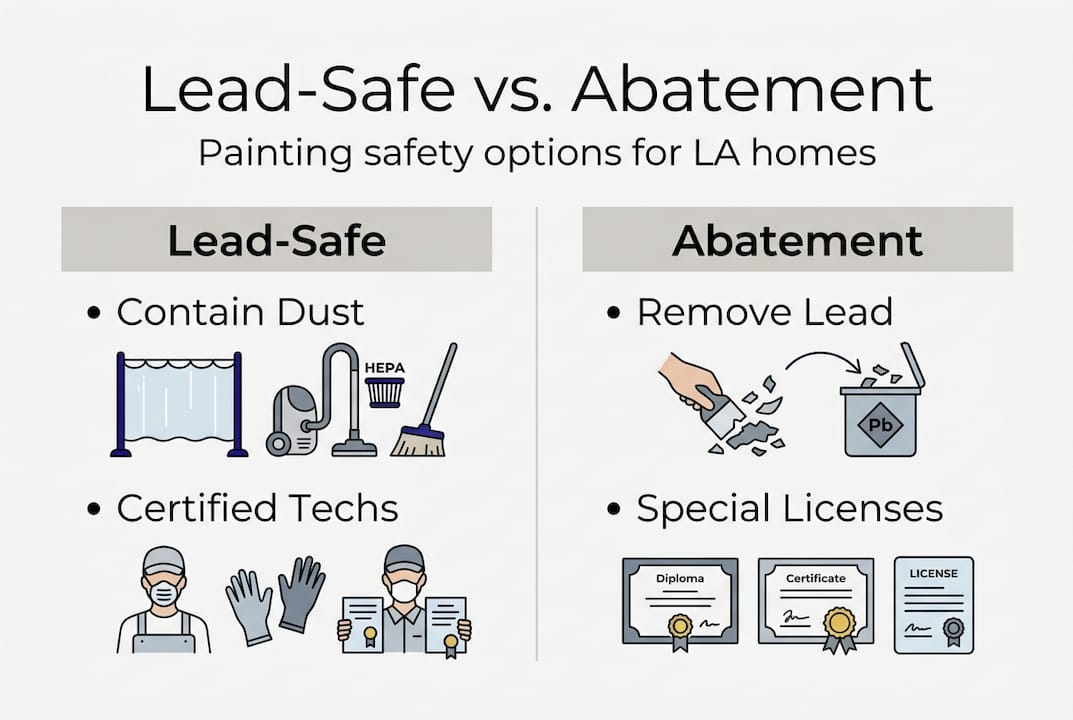
Lead-safe work (RRP) contains and manages lead dust during renovation without permanently removing the hazard. Abatement permanently eliminates lead hazards through full removal, enclosure, or encapsulation, and it requires certified abatement professionals. Abatement is mandated for HUD-assisted housing and situations involving severe lead hazards.
Here’s a side-by-side comparison:
Factor | Lead-safe (RRP) | Lead abatement |
Goal | Manage dust during work | Permanently eliminate hazard |
Who performs it | EPA/CDPH certified firm | Certified abatement contractor |
When required | Pre-1978 renovation/repair | HUD housing, severe hazards |
Cost | Lower | Significantly higher |
Duration of protection | During and after work only | Long-term or permanent |
Typical trigger | Painting, repair projects | Court orders, hazard assessments |
Pro Tip: Encapsulation, which means covering lead paint with a specially formulated coating rather than removing it, is sometimes presented as an eco-friendly middle ground. It can be a valid interim solution, but it’s not permanent. Paint can chip, peel, or wear over time. Encapsulation works best when the underlying paint is in stable condition and monitored regularly.
For private homeowners who aren’t dealing with HUD housing or court-ordered abatement, lead-safe RRP practices are usually what applies. Understanding the painting contractor roles involved in each type of project helps you ask the right questions. The EPA also offers a practical resource on lead-safe home steps that’s worth bookmarking.
A fresh perspective: What most LA homeowners miss about lead-safe painting
After 16 years of working in Los Angeles homes, we’ve noticed a consistent pattern. Homeowners focus on the paint color and finish. They almost never ask about what’s underneath.
The most overlooked step in any pre-1978 project is pre-work testing. Most people skip it because they assume it’s expensive or unnecessary. But testing your home before renovation gives you real data, not assumptions, and can actually reduce project costs by clarifying exactly where lead is present.
Another widespread misconception: eco-friendly paints solve the lead problem. They don’t. Low-VOC and zero-VOC paints are genuinely better for indoor air quality after low-VOC paint after lead-safe prep is complete. But they have no effect on lead dust generated during surface preparation. The sequence matters. Lead-safe prep first, then the healthiest paint you can find.
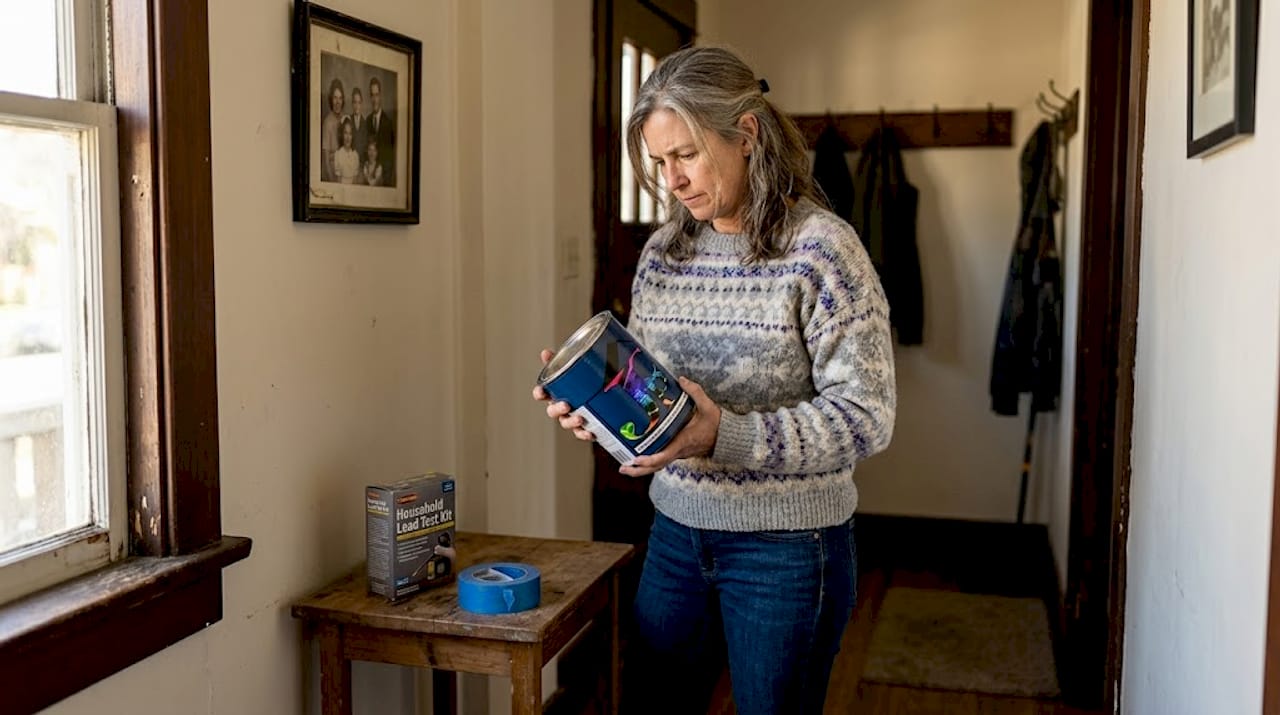
Finally, lead-safe doesn’t mean lead-free. Your home may still contain lead paint after a certified renovation. The work just ensures it wasn’t disturbed unsafely. Ongoing awareness, especially if you have young children, is part of responsible homeownership in Los Angeles.
Safer, smarter painting in Los Angeles: Get the help you need
Navigating lead-safe requirements while trying to refresh your home shouldn’t feel overwhelming. At Johnny’s Custom Painting, we bring 16 years of Los Angeles experience to every project, with a commitment to certified, compliant, and eco-friendly results.
Whether you’re updating interior rooms or refreshing your home’s exterior, our team handles the prep, the compliance, and the cleanup so you don’t have to. Browse our interior residential painting portfolio to see the quality we deliver, or explore our exterior residential painting work for curb appeal transformations. Ready to start? Contact us for a free estimate and let’s talk about what your home needs.
Frequently asked questions
How do I know if my LA home needs lead-safe painting?
If your home was built before 1978, presume lead-based paint is present and use certified professionals or lead-safe practices for any renovation or repair work.
What should I ask a painting contractor about lead safety?
Ask for their EPA or CDPH certification number, proof of worker training, and a written description of their containment, cleaning, and notification procedures.
Can I do lead-safe painting myself?
Homeowners can paint in their own primary residence, and minor repairs under 6 sq ft per room are exempt from full RRP regulations, but following safe practices is still strongly recommended.
Is lead-safe painting the same as abatement?
No. Lead-safe painting manages dust during work, while abatement permanently removes or encloses lead hazards and requires stricter, separate certification.
Are eco-friendly paints linked to lead safety?
Eco-friendly, low-VOC paints improve indoor air quality but don’t address lead hazards in existing surfaces. Lead-safe prep must happen before applying any new paint, regardless of its formula.
Recommended
Comments