
HOA Painting Guidelines: A Los Angeles Homeowner's Guide

TL;DR:
HOA painting rules include approved color palettes, finishes, and timing requirements specific to each community.
Proper application, documentation, and professional presentation are crucial to avoid delays, rejections, or violations.
Working with experienced local painters helps ensure compliance and smooth approval process in Los Angeles HOA communities.
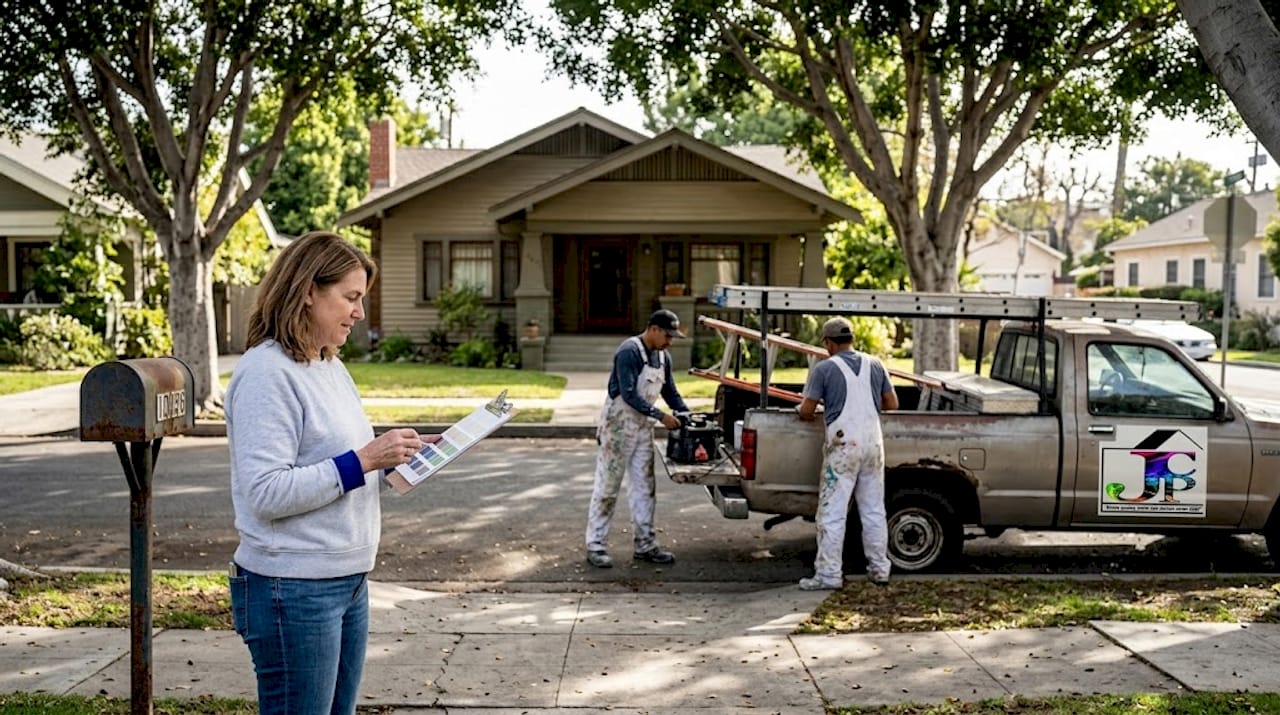
Repainting your home in a Los Angeles HOA community sounds simple until you realize how many rules stand between you and your new color. Get it wrong and you could face fines, a forced repaint, or even a lien on your property. Get it right and your home looks great, holds its value, and stays in good standing with your community. This guide walks you through everything you need to know: the criteria HOAs use, the most common mistakes homeowners make, how to pick the right paint, and how to move through the approval process without unnecessary delays.
Table of Contents
Key Takeaways
Point | Details |
Know your HOA rules | Read your HOA’s criteria before beginning any painting project to avoid costly mistakes. |
Prepare a complete application | Include all details and follow required steps for faster, smoother approvals. |
Choose HOA-approved materials | Select paints and finishes from your HOA’s approved list for durability and compliance. |
Follow key timelines | Expect written decisions from your HOA within 45 days and plan your project accordingly. |
Understand your HOA’s painting criteria
Every HOA operates under its own set of rules, but most share the same basic categories of painting standards. Before you buy a single paint chip, you need to know exactly what your HOA permits.
Here are the main criteria most Los Angeles HOAs regulate:
Approved color palettes: Most HOAs maintain a list of pre-approved exterior colors. Some allow custom colors if they match the neighborhood’s overall tone.
Paint finishes: Flat, eggshell, satin, and semi-gloss each have different visual effects. Many HOAs specify which finishes are acceptable for walls, trim, and doors.
Required or recommended brands: Some HOAs specify paint brands known for durability and consistency.
Timing and frequency: Certain communities require repaints on a set schedule or restrict when exterior work can take place.
The most important documents to review are your CC&Rs (Covenants, Conditions, and Restrictions) and your HOA’s Architectural Guidelines. These are the governing documents that spell out what is and isn’t allowed. You can usually request these from your HOA management company or find them through your county recorder’s office.
“In California, under the Davis-Stirling Act (Civil Code §4765), HOAs must provide a written decision on architectural applications within 45 days, and standards must be reasonable and consistently applied.”
This matters because it gives you legal standing if your HOA drags its feet or applies rules unevenly. California law protects you, but only if you follow the proper process.
Los Angeles adds another layer of complexity. Older neighborhoods may fall under historic preservation guidelines that restrict color choices further. Coastal properties may face weatherproofing requirements that influence which paint products are acceptable. If your home sits in a community with significant sun exposure, fade-resistant formulas may be required rather than just recommended.
Before submitting anything, work with LA painter requirements to understand what licensed contractors must carry and disclose. Also, review a solid painting contracts guide before signing with any contractor so you know what to expect from start to finish.
Common pitfalls and application mistakes
Knowing the rules is one thing. Avoiding the most common errors is another. HOA architectural review boards see the same mistakes repeatedly, and these mistakes cost homeowners time, money, and frustration.
The most frequent HOA application mistakes include:
Incomplete applications: Missing color swatches, vague project descriptions, or no contractor information.
Colors outside the approved palette: Even a close match that isn’t on the official list can trigger a rejection.
Poor harmony with neighboring homes: Even if your color is technically approved, a review board can reject it if it clashes badly with adjacent properties.
Non-approved finishes: Using a high-gloss finish on exterior walls when the HOA only allows satin is a common rejection reason.
Low-quality or non-durable paints: HOAs want materials that will last and maintain the community’s appearance over time.
Skipping the approval process entirely is the biggest mistake of all. Violations can lead to fines, forced repaints, and liens on your property. Some homeowners assume that if no one notices, nothing will happen. That’s rarely true, especially in tightly managed communities.

Pro Tip: Before submitting your application, walk your street and photograph two or three neighboring homes. Note their colors and finishes. Use this as a reference when selecting your own palette. Review boards respond well to applicants who show awareness of community aesthetics.
Choosing the right finish from the start saves a lot of headaches. A good paint finish guide can help you understand which sheens work best for different surfaces and climates. For exterior surfaces specifically, reviewing the best exterior paint LA options gives you a strong foundation before you commit to any product.
Approved paints and finishes: What to choose and why
Once you know what to avoid, you can focus on selecting paints and finishes that are most likely to sail through HOA review. In Los Angeles, certain qualities make a paint product stand out as HOA-friendly.
Here’s what HOAs typically look for:
Low-VOC or zero-VOC formulas: Environmentally responsible and often required in California due to air quality regulations.
Fade-resistant pigments: LA’s intense sun can bleach colors within a few years. HOAs prefer products that hold their tone longer.
Mold and mildew resistance: Coastal and canyon communities deal with moisture. Paint that resists biological growth stays cleaner and lasts longer.
Consistent sheen levels: Flat or low-sheen finishes on main walls, semi-gloss on trim and doors, is a widely accepted standard.
As noted, HOAs often reject non-approved or poor durability finishes, so product quality is not just an aesthetic choice. It’s a compliance issue.
Here’s a quick comparison of common exterior paint types and their HOA compatibility:
Paint type | HOA approval rate | Durability | Maintenance level |
Flat/matte | Moderate | Low | High |
Eggshell | High | Moderate | Moderate |
Satin | Very high | High | Low |
Semi-gloss | High (trim only) | Very high | Low |
High-gloss | Low (walls) | Very high | Very low |
Pro Tip: When in doubt, go with a satin finish on exterior walls. It’s the most universally accepted finish in Los Angeles HOA communities and holds up well against UV exposure and coastal humidity.
For detailed guidance on matching finishes to specific surfaces, the approved paint finishes resource breaks it down clearly. And if you want to compare products rated for Southern California conditions, the paint types for LA overview is a practical starting point.
Step-by-step: The HOA painting application process
With the right paint selected, the next challenge is navigating the approval process itself. This is where many homeowners stumble, not because the process is complicated, but because they skip steps or underestimate the time involved.
Follow this checklist to move through the process smoothly:
Read your CC&Rs and Architectural Guidelines in full. Highlight anything related to exterior painting.
Choose your colors and finishes from the HOA’s approved list. Get physical paint chips, not just digital swatches.
Hire a licensed contractor and get a written proposal that includes product names, finish types, and application methods.
Complete the Architectural Review Request (ARR) form provided by your HOA. Attach color samples, contractor details, and a project timeline.
Submit your application to the HOA management office or board. Keep a dated copy for your records.
Wait for the written decision. HOAs must provide a written decision within 45 days under California law.
Address any conditions or revisions requested by the board before starting work.
Schedule a final inspection if your HOA requires one after project completion.
Here’s a quick reference table for the key steps:
Step | Documents required | Typical review time |
Submit ARR | Color samples, contractor proposal | Up to 45 days |
Revision response | Updated samples or contractor notes | 10 to 15 days |
Final inspection | Completion photos or in-person review | 5 to 10 days |
For more hands-on advice about managing the project once approval comes through, the pro painting tips resource covers what to expect during the actual work phase.
One lesson LA homeowners miss about HOA painting rules
After years of working in Los Angeles HOA communities, one pattern stands out clearly. Homeowners who struggle most with compliance aren’t the ones who break the rules on purpose. They’re the ones who assume the rules are more rigid than they actually are.
Many HOA guidelines include language like “similar in character” or “compatible with the neighborhood.” That language creates room for negotiation, but only if you approach the board professionally and with a well-prepared application. A contractor who knows HOA work in LA can present color choices in a way that frames them as community-enhancing rather than disruptive. That framing matters more than most people realize.
On the flip side, trying to bypass the system or push through a borderline choice without proper documentation almost always backfires. Boards remember applicants who caused problems, and future requests get scrutinized more closely.
The best outcomes come from ongoing communication, professional presentation, and using painters who understand painting safety tips and HOA-specific protocols. Personal style and compliance are not opposites. With the right approach, you can have both.
Need help with HOA-approved painting in Los Angeles?
Navigating HOA painting rules while trying to get a quality result is a lot to manage on your own. That’s where having a local professional makes a real difference.
At Johnny’s Custom Painting, we’ve spent over 16 years working with Los Angeles homeowners and property managers on HOA-compliant exterior projects. We know the approval process, the preferred products, and how to present your project to a review board in the strongest possible way. You can book a painter online to get started, explore flexible options through our hire a painter for a day service, or browse our exterior residential painting services to see completed HOA-compliant work across LA.
Frequently asked questions
What happens if I repaint my home without HOA approval?
You could face fines, be required to repaint at your own expense, or receive a legal lien on your property, as violations lead to fines, forced repaints, and liens. Acting without approval is rarely worth the risk.
How long does HOA painting approval take in California?
California law requires your HOA to issue a written decision within 45 days of receiving a complete application. If they miss this deadline, contact your HOA management company in writing.
Can I use any brand or type of paint for my HOA property?
No. You must use brands, colors, and finishes your HOA has approved, since HOAs often reject non-approved or poor durability finishes. Always confirm product choices before purchasing.
Do HOA painting rules apply to interiors as well as exteriors?
HOAs primarily regulate exterior colors and finishes, but some communities also control visible interior elements like window treatments or garage door colors. Always check your CC&Rs for any interior restrictions that may apply to your specific community.
Recommended
Comments