
A homeowner's guide to sustainable painting in LA

TL;DR:
Sustainable, zero-VOC paints meet LA’s strict air quality regulations without sacrificing quality.
Proper surface preparation and using compliant primers are essential for long-lasting eco-friendly paint jobs.
Regular maintenance and documentation ensure ongoing compliance and preserve home value in LA.
Wanting a beautiful, freshly painted home without harming your family’s health or breaking LA’s strict air quality rules is a real challenge. Many homeowners feel stuck between choosing paints that look great and choosing products that are safe and compliant. The good news: you don’t have to pick one over the other. Indoor air can be up to 5x more polluted than outdoor air when the wrong products are used indoors. This guide walks you through selecting, preparing, applying, and maintaining sustainable paints so your LA home looks stunning, stays healthy, and meets every local standard.
Table of Contents
Key Takeaways
Point | Details |
Meet LA regulations | Using low- or zero-VOC paints ensures your project is legally compliant and safe for your family. |
Prep determines success | Proper surface preparation is vital to achieve durable, beautiful, and sustainable results. |
Eco-paints rival traditional | Modern sustainable paints match or exceed the performance and appeal of conventional products. |
Maintenance preserves value | Regular inspections and careful cleaning help eco-friendly paint jobs last and increase home value. |
Understanding sustainable painting: Why it matters in Los Angeles
Los Angeles isn’t just any city when it comes to paint. The South Coast Air Quality Management District (SCAQMD) enforces some of the toughest standards in the country, and for good reason. Poor air quality is a public health issue here, and paint fumes are a measurable part of the problem. Eco-friendly painting benefits go well beyond just feeling good about your choices.
Volatile organic compounds, or VOCs, are chemicals that evaporate from paint as it dries. They irritate eyes, throats, and lungs. Long-term exposure is linked to more serious health effects. SCAQMD Rule 1113 limits architectural coatings to 50 grams per liter (g/L) of VOCs, and super-compliant products must come in under 10 g/L. That’s a strict bar, and it’s one you should actually want to meet.
The biggest myth holding homeowners back is that eco-friendly paints don’t perform as well. That used to be partially true a decade ago. Today, sustainable painting prioritizes low- or zero-VOC paints that protect health without sacrificing quality. In fact, eco-paints now match traditional paints for durability and color richness. The formulations have genuinely caught up.
From a resale perspective, sustainable choices pay off. LA buyers are increasingly eco-conscious, and a home painted with compliant, healthy products is a genuine selling point. LA homebuyer appeal is real, and documented in buyer preference surveys across Southern California.
Quick comparison: Conventional vs. eco-friendly paint
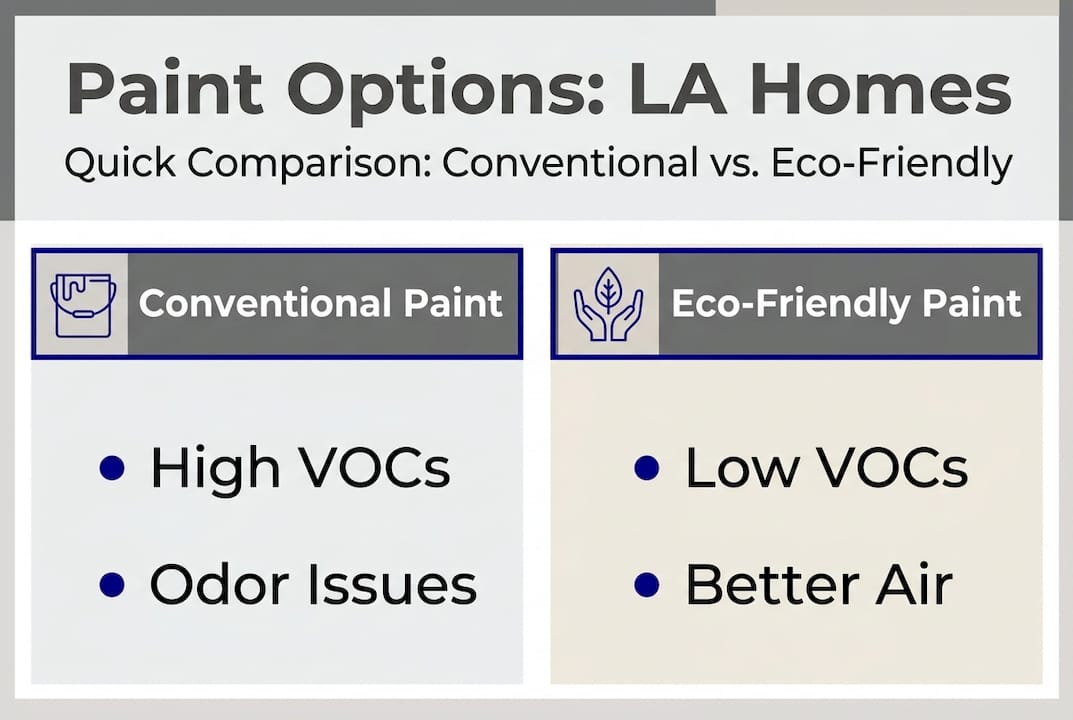
Feature | Conventional paint | Eco-friendly paint |
VOC content | 150-400 g/L | 0-50 g/L |
Indoor air impact | High | Low to none |
Durability | High | Equally high (modern formulas) |
SCAQMD compliant | Sometimes | Yes (zero-VOC always) |
Resale appeal in LA | Neutral | Positive |
Key benefits of making the switch:
Healthier indoor air, especially for kids and elderly family members
Full compliance with LA and state air quality regulations
No compromise on color selection or finish quality
Stronger appeal to eco-minded buyers if you sell
What you need: Tools, materials, and compliance checklist
Now that you understand why sustainable painting is crucial, let’s look at the exact materials and steps for staying compliant and successful.
Not every paint labeled “green” or “natural” meets LA’s standards. You need to look at the actual VOC content, including the tint. Many base paints are zero-VOC, but standard colorants can push them well above compliant levels. Benjamin Moore Natura and Sherwin-Williams Harmony are zero-VOC super-compliant paints that maintain their status even after tinting with their dedicated colorants. That’s a critical distinction.
SCAQMD Rule 1113 sets a 50 g/L VOC cap, but super-compliant coatings must be under 10 g/L. Choosing from the verified super-compliant list removes any guesswork. Explore your low-VOC paint options before you shop so you walk in knowing exactly what to ask for.
Recommended compliant paint brands for LA homes:
Brand | Product line | VOC level |
Benjamin Moore | Natura | 0 g/L |
Sherwin-Williams | Harmony | 0 g/L |
ECOS Paints | Interior wall paint | 0 g/L |
Behr | Premium Plus | <50 g/L |
Essential tools for sustainable application:
High-quality synthetic brushes (nylon or polyester for water-based paints)
Low-nap rollers for smooth walls, higher nap for textured surfaces
Drop cloths (canvas, not plastic, to avoid slipping)
Painter’s tape rated for clean removal
N95 respirator for sanding and prep work
Safety goggles and gloves
Compliance checklist before you start:
[ ] Confirm paint VOC level on the product data sheet
[ ] Verify tint is also zero-VOC or low-VOC
[ ] Check product is on SCAQMD’s super-compliant list
[ ] Confirm disposal plan for leftover paint (LA has specific rules)
[ ] Ventilation plan in place for application day
Pro Tip: Always ask for the product data sheet at the paint counter, not just the label. The label shows the base paint; the data sheet shows VOC content after tinting, which is what actually matters for compliance and air quality.
Preparation: Surfaces, primers, and common pitfalls
Once you have your compliant materials, proper preparation is the foundation for lasting results.
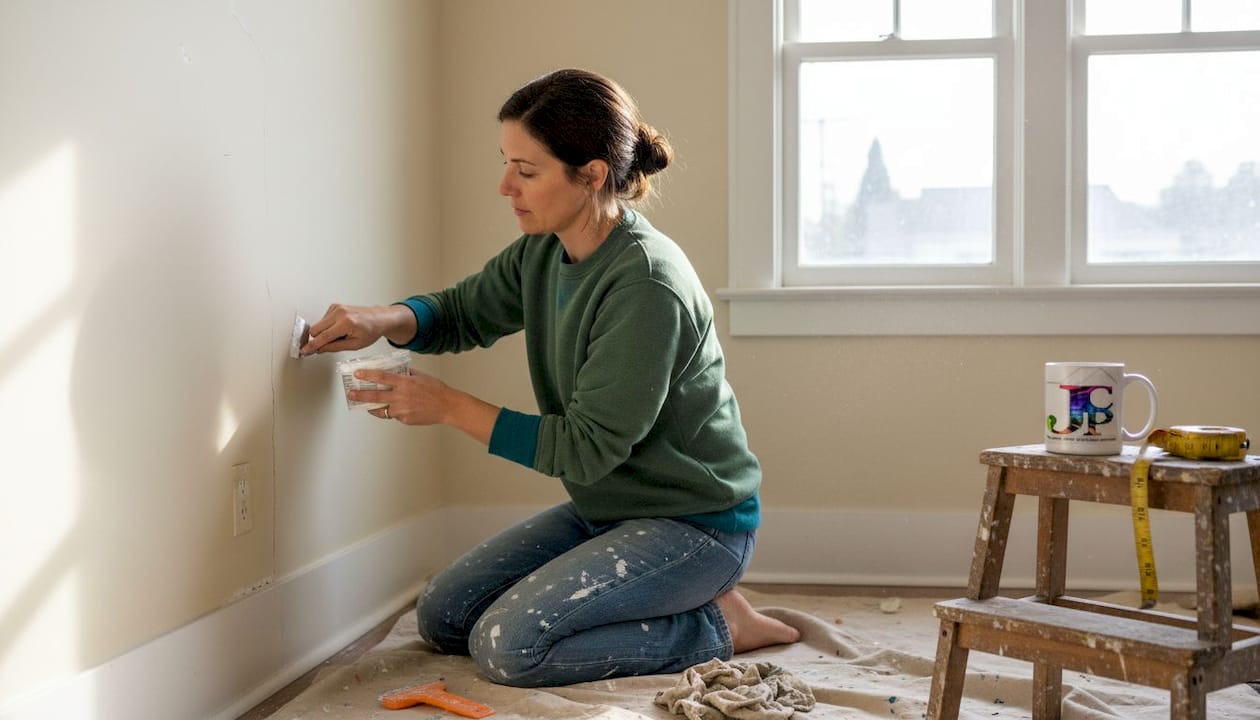
Proper surface prep plus low/zero-VOC primers yield the best results, full stop. Skipping this step is the single most common reason eco-friendly paint jobs fail. Low-VOC paints are slightly less forgiving than solvent-heavy conventional paints when applied to dirty or poorly primed surfaces. That means prep matters even more here.
Follow these steps in order for every room or exterior surface:
Clean the surface. Wash walls with a mild soap solution to remove grease, dust, and grime. For exteriors, use a pressure washer on low setting.
Repair damage. Fill cracks, holes, and gaps with a low-VOC patching compound. Let it cure completely.
Sand smooth. Lightly sand repaired areas and any glossy surfaces. This creates adhesion for the primer.
Prime correctly. Apply a zero-VOC or low-VOC primer suited to your surface type. Skipping primer on bare drywall or raw wood is a guaranteed problem.
Inspect before painting. Look for bubbling, peeling, or uneven texture. Fix anything you find now, not after the topcoat goes on.
Always ventilate and wear protection when prepping any surface. Open windows, run fans, and wear an N95 respirator and goggles, even with low-VOC products. Sanding dust is a hazard regardless of paint type.
Test adhesion if recoating over glossy finishes before committing to a full wall. Apply a small patch of your primer, let it dry 24 hours, then try to peel it off. If it lifts easily, you need a bonding primer first. This simple test saves you from a full repaint.
For painting prep advice specific to older LA homes, pay extra attention to surfaces that may have been painted with oil-based products decades ago. Water-based zero-VOC paints don’t bond well directly to oil without the right primer.
Pro Tip: Test paint adhesion with a small patch before full application, especially when you’re unsure of the old finish. A 12-inch test square tells you everything you need to know before you commit.
Application: Step-by-step for interiors and exteriors
With surfaces prepped, you can now apply your sustainable paints for best impact.
For interior rooms:
Open windows and set up cross-ventilation before opening any paint can.
Stir paint thoroughly. Don’t shake it, as shaking creates bubbles.
Cut in edges first with a brush along trim, ceilings, and corners.
Roll the main wall surface using a W or M pattern to distribute paint evenly.
Maintain a wet edge throughout. Working in small sections prevents lap marks.
Apply thin, even coats. Two thin coats always outperform one thick coat.
Allow full dry time between coats per the manufacturer’s instructions.
Thin, even coats with a maintained wet edge and proper ventilation are the three non-negotiables for a flawless finish with zero-VOC paint.
For LA exteriors (stucco, wood siding, trim):
Paint only when temperatures are between 50°F and 90°F, which is most of the year in LA.
Avoid painting in direct afternoon sun. Morning application gives better adhesion.
Low-VOC acrylics are best for exterior stucco and wood in LA’s climate. They breathe with the surface and resist UV degradation.
Apply primer to all bare wood and repaired stucco before topcoating.
Use two topcoats for full coverage and weather protection.
Zero-VOC paints cover 350 to 450 sq ft per gallon and many are self-priming, which saves material and time on lightly painted surfaces. For types of exterior paint suited to LA’s specific conditions, elastomeric and acrylic latex options are the most practical and compliant choices. Check the LA low-VOC paint guide for product-specific recommendations by surface type.
Verification and maintenance: How to ensure lasting sustainable results
After a successful eco-friendly paint job, ongoing maintenance and periodic checks ensure you get lasting benefits.
Sustainable painting requires annual maintenance and periodic inspection to stay in top shape. Paint degrades over time, especially on exteriors exposed to LA’s sun and occasional rain. A quick annual walkthrough catches problems before they become expensive.
Annual maintenance checklist:
Check item | What to look for | Action |
Exterior surfaces | Cracking, peeling, fading | Touch up or repaint |
Interior walls | Scuffs, stains, moisture damage | Spot clean or patch |
Trim and edges | Separation from surface | Re-caulk and repaint |
Paint documentation | VOC records for any future work | File and store |
When to take action:
Touch up small scuffs and chips within the first year using leftover paint stored in an airtight container
Repaint exterior surfaces every 5 to 7 years in LA’s climate, or sooner if you see widespread peeling
Call a professional contractor if you notice moisture behind paint or large areas of adhesion failure
Explore low-VOC options when it’s time to repaint so you maintain compliance with any updated SCAQMD standards
Green paints enhance home value and indoor air quality, which appeals directly to LA buyers. Keeping records of the products you used, including VOC levels and brand documentation, is a smart move for resale. Review your painting contract guidance if you hire a contractor for future work to make sure compliance is written into the agreement.
Our take: The real keys to sustainable painting success
Here’s what 16-plus years of painting LA homes has taught us: sustainable painting is a mindset, not just a product swap. The homeowners who get the best results are the ones who think about their home’s specific conditions, not just the label on the can.
The most common mistake we see is treating eco-friendly paint as a shortcut. Homeowners assume the paint will compensate for poor prep or skipped primer. It won’t. The second most common mistake is using zero-VOC base paint but standard tints, which defeats the purpose entirely.
For homes with young children or elderly residents, we strongly recommend zero-VOC paint with zero-VOC tints in every occupied room, no exceptions. The health case is clear, and the performance is there. If you’re unsure about your contractor’s credentials or their knowledge of SCAQMD requirements, ask directly. A qualified professional should be able to cite the regulation and name compliant products without hesitation. Read deeper eco-friendly paint insights to understand how the right approach protects both your family and your investment.
Ready for a sustainable transformation? Work with LA’s experts
If you want flawless, compliant, and sustainable results without the DIY learning curve, here’s how you can take action now. Johnny’s Custom Painting has spent over 16 years helping LA homeowners get beautiful, healthy results using the best eco-friendly products available.

Browse our interior residential painting portfolio to see real eco-friendly transformations across LA homes. Or explore our exterior residential painting work to see how compliant, quality craftsmanship holds up in Southern California’s climate. As your trusted Los Angeles painting contractor, we handle everything from product selection and surface prep to final inspection. Contact us today for a free estimate and let’s build a healthier, more beautiful home together.
Frequently asked questions
Which paints are considered truly zero-VOC for homes in Los Angeles?
Benjamin Moore Natura and Sherwin-Williams Harmony are recognized zero-VOC paints that meet LA’s SCAQMD super-compliant standards, even when tinted with their dedicated colorants. Confirm your choice against the super-compliant coatings list before purchasing.
Do I need zero-VOC paint for every room, or is low-VOC enough?
Zero-VOC is strongly recommended for bedrooms, nurseries, and main living areas; zero-VOC for occupied spaces is the expert standard, while low-VOC is usually sufficient for garages, exteriors, and unoccupied areas.
What is the most common mistake homeowners make with sustainable painting?
Skipping proper surface preparation is the leading cause of poor performance, especially when switching to eco-friendly paints. Proper surface prep with primers is essential for results that actually last.
How do LA’s local regulations affect what paints I can use?
LA requires architectural coatings to be under 50 g/L VOC per SCAQMD Rule 1113, but super-compliant paints must be under 10 g/L. Always verify your product against the official SCAQMD manufacturers list.
Can sustainable painting really boost my LA home’s resale value?
Yes. Sustainable painting appeals to LA buyers and is increasingly seen as a value-add in Southern California’s environmentally conscious real estate market.
Recommended
Comments