
How to hire the right painter in Los Angeles: step-by-step

TL;DR:
Proper preparation, clear scope, and detailed contracts are key to successful LA painting projects.
Verifying licenses, insurance, and EPA Lead RRP certification ensures safety and legal compliance.
Approaching hiring as a business decision and thorough inspections prevent costly mistakes.
Hiring a painter in Los Angeles sounds simple until you’re stuck with streaky walls, a contractor who vanished mid-job, or a bill that ballooned past your budget. The LA market is crowded with options, and not all of them are equal. Whether you own a single-family home in Pasadena or manage a multi-unit property in Koreatown, the difference between a great result and a costly headache almost always comes down to how carefully you hire. This guide walks you through every stage of the process, from scoping your project and shortlisting painters to reviewing contracts and verifying the final work.
Table of Contents
Key Takeaways
Point | Details |
Define project scope | Clarify all areas and requirements upfront to avoid surprises during hiring. |
Screen local painters | Shortlist painters based on certifications, references, and LA-specific experience. |
Interview and request proposals | Ask detailed questions about process, timeline, materials, and verify insurance and credentials. |
Finalize contracts carefully | Protect yourself with strong contracts and clear verification steps before payment. |
Connect with pros | Review portfolios and reach out to trusted painting contractors for your LA property. |
Preparing for the painting project
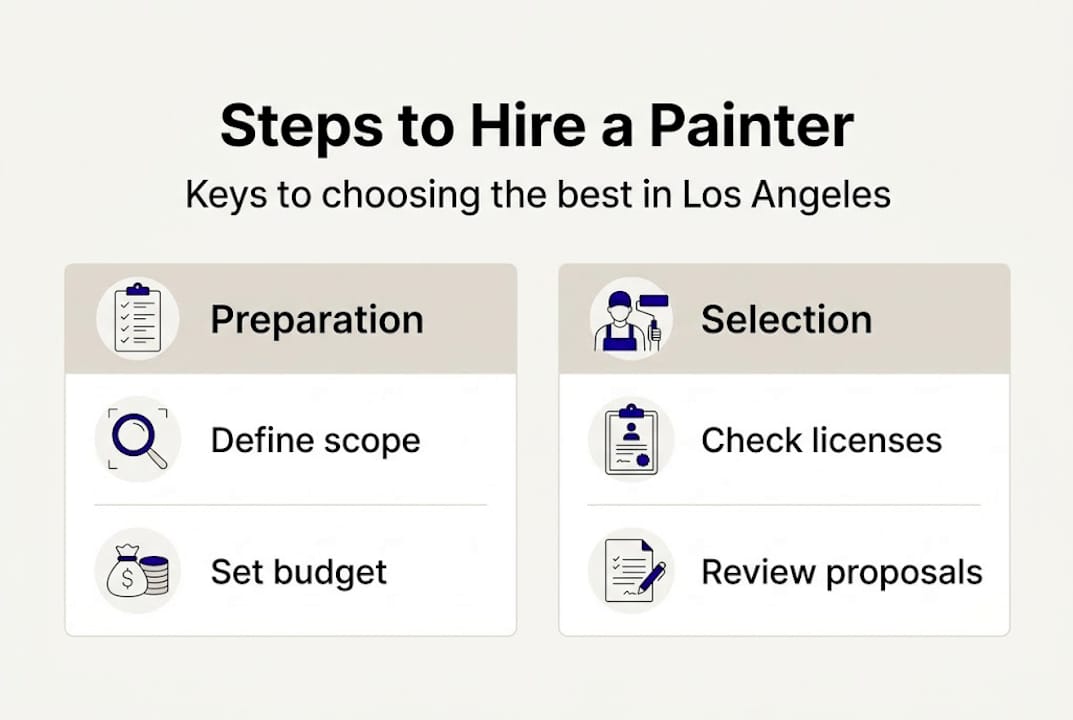
Before you contact a single painter, you need a clear picture of what you actually need. Rushing into quotes without a defined scope is one of the most common reasons projects go over budget or produce disappointing results. Take time to walk through your property and assess every surface you want painted, including walls, ceilings, trim, doors, and any exterior areas.
Here is a quick checklist to get your project scoped properly:
Identify all surfaces to be painted and note their current condition
Choose a color palette or at least narrow it down to two or three options
Measure square footage for each area so painters can give accurate bids
Note any damage like cracks, water stains, or peeling that needs repair first
Check the age of your home because pre-1978 homes require EPA Lead RRP certification to avoid lead dust hazards during renovation work
For rental properties, the preparation step includes more than just logistics. You need to document tenant permissions in writing before any work begins, and keeping color choices neutral protects your property’s appeal for future renters. These LA homeowner painting tips can help you make smarter decisions about color and finish before you commit.
Pro Tip: Clean surfaces and move furniture away from walls at least 24 hours before painters arrive. This saves time on the job and often reduces your labor costs.
“A well-prepared property is not just easier to paint. It signals to the contractor that you are a serious client who expects professional results.”
Here is a side-by-side look at how preparation differs between residential and commercial projects:
Requirement | Residential | Commercial |
Surface assessment | Room by room | Floor by floor or zone |
Color approval | Homeowner decides | May need HOA or management sign-off |
Lead certification check | Pre-1978 homes | Pre-1978 buildings |
Tenant documentation | Rentals only | Always required |
Furniture and access prep | Homeowner handles | Coordinate with tenants |
Good paint project management advice will also tell you to set a realistic timeline before you start collecting bids. Knowing your deadline helps painters plan their crews and prevents last-minute scheduling conflicts.
Researching and shortlisting painters
With your project well defined, the next step is to identify credible painters who match your needs. The LA market has thousands of contractors, so you need a reliable filter to separate the professionals from the rest.
Here is a step-by-step approach to building your shortlist:
Ask for referrals from neighbors, friends, or your property management network
Search online reviews on Google, Yelp, and the Better Business Bureau
Check contractor associations like the Painting and Decorating Contractors of America
Verify licensing through the California Contractors State License Board
Confirm insurance including general liability and workers’ compensation
When choosing professional painters, always ask about their LA-specific experience. A painter who regularly works in your neighborhood understands local building styles, climate conditions, and permit requirements. That local knowledge matters more than most homeowners realize.
Quality contractors will provide proof of EPA Lead RRP certification for older homes without hesitation. If a painter brushes off that question, that is a red flag worth taking seriously.
Here is a comparison of what to look for when screening residential versus commercial painters:
Criteria | Residential painters | Commercial painters |
License and insurance | Required | Required plus additional coverage |
Lead RRP certification | Pre-1978 homes | Pre-1978 buildings |
References | Past homeowners | Property managers, building owners |
Crew size | Small teams | Larger crews for scale |
Scheduling flexibility | Standard hours | Off-hours and weekend availability |
The professional painting service benefits go well beyond a clean finish. Licensed painters carry insurance that protects you if something goes wrong on your property. That protection alone is worth narrowing your list to verified professionals only.
Aim to shortlist three to five painters before moving to the interview stage. More than five makes comparison difficult. Fewer than three gives you too little leverage when negotiating.

Interviewing and evaluating painting contractors
Once you have identified a shortlist of painters, it is time to evaluate them through interviews and review their proposals closely. This stage is where most homeowners either build confidence in their choice or catch warning signs they would have missed otherwise.
Ask every painter these questions during the interview:
What surface preparation steps do you follow before applying paint?
What brands and finishes of paint do you recommend for this project?
How do you handle unexpected repairs or damage found during the job?
Can you provide three references from similar projects in the past year?
What is your projected timeline, and how do you handle delays?
When reviewing proposals, look beyond the bottom line. A low bid that skips surface prep or uses bargain-grade paint will cost you more in the long run. Compare each proposal on scope, materials, timeline, and payment terms.
For property managers, the interview stage needs extra attention. Property managers should phase work, schedule off-hours or weekends, and use durable paints in high-traffic areas to minimize disruptions for tenants. Ask painters directly how they handle tenant communication and access logistics.
Safety and compliance are non-negotiable. For pre-1978 homes, always require EPA Lead RRP certification before work begins. Ask to see the actual certificate, not just a verbal confirmation.
Pro Tip: Request a sample contract and a line-item cost breakdown before signing anything. A contractor who refuses to itemize their bid is one you should remove from your list.
Review the LA painting contract tips to understand what a fair and complete contract looks like. Also check the paint durability guide to verify that the products your painter recommends are appropriate for LA’s climate and your specific surfaces.
“The interview is not just about vetting the painter. It is about establishing the communication standard you expect throughout the entire project.”
Setting contracts and verifying work quality
After evaluating and selecting a contractor, make sure you have a strong contract and a clear verification process to protect your interests. A handshake agreement is not enough, regardless of how much you trust the painter.
Every painting contract should include:
Detailed scope of work: every surface, room, and finish specified in writing
Timeline: start date, estimated completion, and milestone checkpoints
Payment schedule: deposit amount, progress payments, and final payment terms
Materials list: brands, product names, and number of coats
Warranty terms: what is covered and for how long
For rental properties, conditional tenant painting must be documented in lease agreements. Neutral colors and professional standards protect both the property’s value and the landlord’s legal standing.
Here is a quick reference table for contract essentials and post-job verification:
Step | What to check | Why it matters |
Before signing | Scope, timeline, payment, warranty | Prevents disputes later |
During the job | Progress against timeline | Catches delays early |
Final walk-through | Finish quality, coverage, cleanup | Confirms work meets standards |
Payment release | All punch-list items resolved | Protects your leverage |
The commercial painting advantages of using a professional with a formal contract include warranty protection and documented accountability. For larger projects, consider getting a free painting estimate to benchmark what a fair contract should include.
Pro Tip: Hold back 10 to 15 percent of the total payment until you have completed your final walk-through and approved the work. This is standard practice and gives you real leverage to get punch-list items fixed.
During your final inspection, check every surface in different lighting conditions. Natural light reveals imperfections that indoor lighting hides. Run your hand along trim and edges to feel for drips or uneven texture. If something looks or feels off, document it with photos before the painter leaves.
Why most homeowners get painting hires wrong—and how you can avoid their mistakes
Having walked through the hiring steps, let us look at what sets exceptional hires apart from the usual mistakes. In our experience working across Los Angeles for over 16 years, the pattern is almost always the same. Homeowners rush to hire the lowest bidder, skip the contract details, and assume that a verbal agreement is good enough. Then something goes sideways and they have no recourse.
The most common failure point is not price. It is preparation and communication. Painters who do great work are not magicians. They succeed because the client gave them clear information, a well-scoped project, and a contract that left nothing to interpretation.
Another mistake we see constantly is ignoring compliance. Skipping the lead certification question on an older home is not just a safety risk. It is a liability risk for you as the property owner. The often overlooked painting tips that make the biggest difference are rarely about color or finish. They are about process, documentation, and asking the right questions before work begins.
The best hires we have seen share one trait: the homeowner treated the process like a business decision, not a favor exchange.
Connect with top-rated Los Angeles painting experts
You now have a clear, step-by-step framework for hiring a painter in Los Angeles with confidence. The next move is finding the right team to bring your project to life.

At Johnny’s Custom Painting, we bring over 16 years of LA experience, full licensing and insurance, and a commitment to quality that shows in every finished surface. Browse our exterior residential painting portfolio and interior commercial painting portfolio to see the standard we hold ourselves to. When you are ready to move forward, reach out to your trusted Los Angeles painting contractor for a free estimate and a conversation about your project.
Frequently asked questions
What certifications should a painter have for pre-1978 homes?
Painters must hold EPA Lead RRP certification to safely work on homes built before 1978. This certification ensures they follow proper containment and cleanup procedures to prevent lead dust exposure.
What contract terms are essential when hiring a painter?
Your contract must include project scope, timeline, payment schedule, materials list, and warranty terms. For rentals, lease documentation for painting helps prevent disputes and supports tenant retention.
How can property managers minimize disruptions during commercial painting?
Schedule painting during off-hours or weekends, use durable paints in high-traffic zones, and communicate timelines clearly to tenants. Phased scheduling and durable paints are the most effective ways to keep operations running smoothly.
How do I verify the quality of a finished painting job?
Inspect every surface in natural light, check for consistent color coverage, smooth finish, and clean edges before releasing final payment. Document any issues with photos immediately after your walk-through.
Can tenants paint a rental property in Los Angeles?
Yes, but only when documented in the lease with approved neutral colors and professional standards specified in writing. Without documentation, landlords have limited recourse if the property is damaged.
Recommended
Comments