
Commercial Painting Procedures for LA Properties 2026

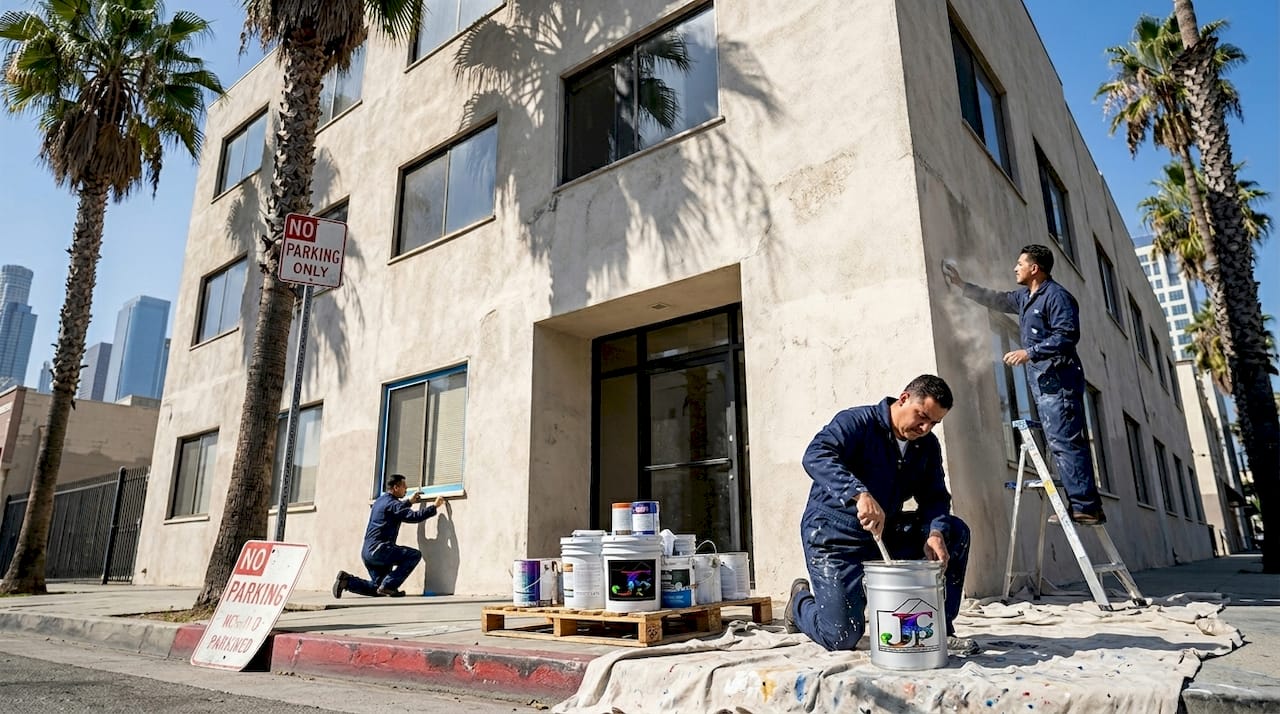
Managing a commercial property in Los Angeles means facing unique challenges when it comes to maintaining and enhancing your building’s appearance. From coastal humidity to intense sun exposure, LA’s climate demands expert painting procedures that go beyond basic application. This comprehensive guide walks you through proven commercial painting procedures, from initial assessment and surface preparation to final inspection and long-term maintenance. Whether you’re planning an interior refresh or a complete exterior transformation, understanding these professional techniques ensures your investment delivers lasting quality and visual impact for years to come.
Table of Contents
Key takeaways
Point | Details |
Surface preparation determines durability | Thorough cleaning, repairs, and priming prevent premature paint failure and extend coating life |
Experienced contractors matter | Licensed professionals familiar with LA climate conditions apply proven techniques for superior results |
Eco-friendly options benefit health | Low-VOC paints reduce emissions while meeting commercial building standards and regulatory requirements |
Post-project inspection ensures quality | Systematic evaluation of coverage, finish, and defects protects your investment and activates warranties |
Clear communication prevents mistakes | Detailed planning and ongoing dialogue about expectations, schedules, and finishes avoid costly rework |
Preparing for your commercial painting project
Successful commercial painting starts long before the first brushstroke. Your preparation phase sets the foundation for durability, appearance, and cost efficiency. Begin with a comprehensive property inspection to identify structural damage, water intrusion, or surface deterioration that requires repair before painting. Addressing these issues upfront prevents paint failure and saves money over time.
Selecting appropriate paint types is crucial for LA’s diverse microclimates. Coastal properties need moisture-resistant formulations, while inland buildings require UV-protective coatings that withstand intense heat. Interior spaces benefit from washable, low-sheen finishes that hide imperfections and resist daily wear. Choosing experienced contractors ensures adherence to recommended techniques for durable commercial painting in LA.
Consider eco-friendly painting options that reduce volatile organic compound emissions. These formulations improve indoor air quality, support LEED certification goals, and demonstrate environmental responsibility to tenants and clients. Many modern low-VOC paints match or exceed traditional products in coverage and longevity.
Create a detailed project timeline that minimizes business disruptions. Schedule work during off-hours, coordinate with tenants, and establish clear communication protocols. A well-planned schedule reduces downtime and maintains productivity throughout the painting process.
Pro Tip: Request multiple detailed estimates that break down labor, materials, and timeline. This transparency helps you compare contractors accurately and identify hidden costs before committing.
Paint selection factors for LA commercial properties:
Climate zone compatibility (coastal vs. inland)
Surface material (concrete, stucco, wood, metal)
Traffic levels and wear expectations
Maintenance budget and repainting frequency
Environmental certifications and VOC limits
Property Type | Recommended Exterior Paint | Recommended Interior Paint |
Coastal office | Moisture-resistant acrylic | Low-VOC eggshell finish |
Inland retail | UV-protective elastomeric | Washable semi-gloss |
Industrial warehouse | High-durability epoxy | Stain-resistant flat |
Medical facility | Antimicrobial coating | Zero-VOC satin |
Step-by-step commercial painting procedures
Professional execution transforms preparation into results. Understanding each procedural step helps you evaluate contractor performance and ensure quality outcomes. Surface preparation consumes roughly 70% of project time but determines 90% of final quality. Using professional surface preparation techniques prevents premature paint failure.
1. Surface cleaning and damage repair
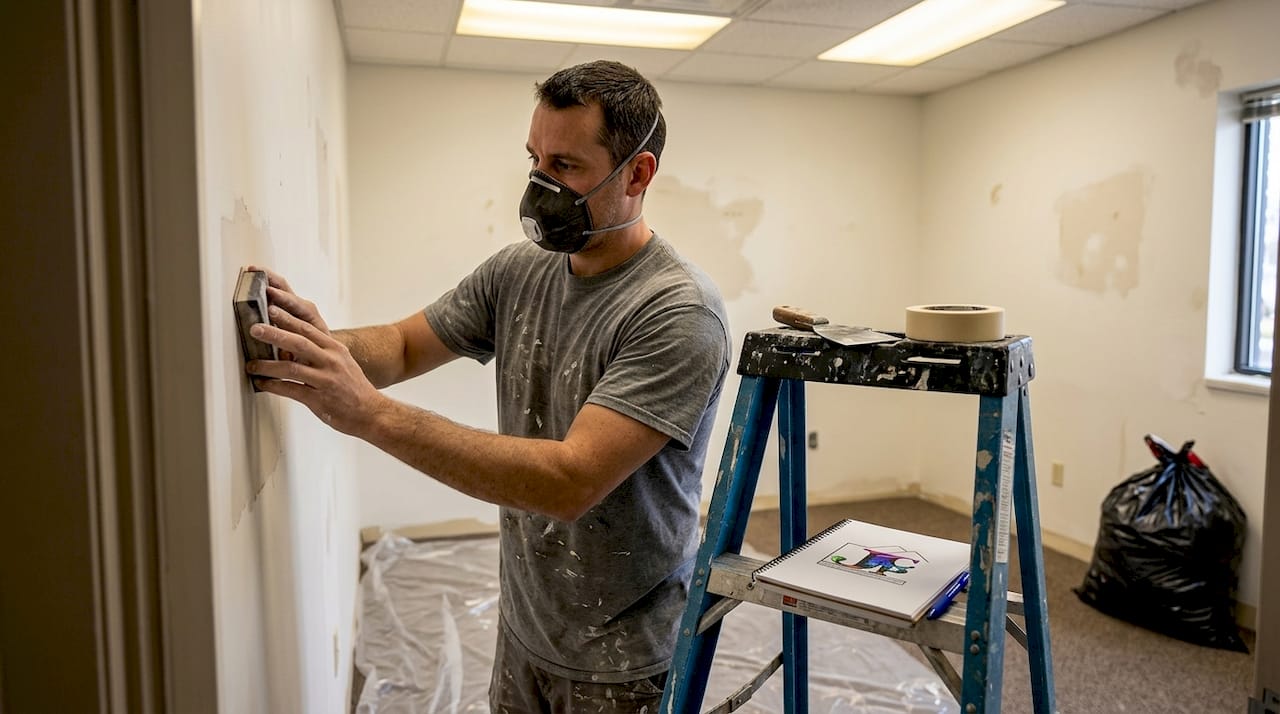
Power wash exterior surfaces to remove dirt, mildew, and loose paint. Interior walls require degreasing and patching of holes, cracks, or damaged drywall. Sand rough areas smooth and fill imperfections with appropriate compounds. This foundation ensures paint adheres properly and creates a uniform finish.
2. Masking and protection
Cover floors, fixtures, landscaping, and adjacent surfaces with drop cloths and protective sheeting. Apply painter’s tape to edges, trim, and areas requiring crisp lines. Proper masking prevents overspray damage and reduces cleanup time significantly.
3. Primer application
Apply primers matched to your surface type and topcoat. Bare wood needs stain-blocking primer, metal requires rust-inhibiting formulations, and previously painted surfaces benefit from bonding primers. Allow full drying time specified by manufacturer before proceeding.
4. First coat application
Apply paint using methods appropriate for each surface. Sprayers cover large areas efficiently, rollers work well for textured surfaces, and brushes handle detailed trim work. Maintain consistent thickness and watch for runs or sags. Exterior commercial painting techniques vary based on building materials and exposure.
5. Inspection and second coat
Examine the first coat after drying for coverage gaps, color consistency, and surface defects. Address any issues before applying the second coat. Most commercial projects require two finish coats for optimal durability and appearance.
6. Detail work and cleanup
Complete trim, edges, and touch-ups with precision. Remove masking materials carefully to avoid damaging fresh paint. Clean equipment thoroughly and dispose of materials according to local regulations.
Pro Tip: Schedule painting during mild weather (60-85°F) with low humidity. Extreme temperatures or moisture compromise paint adhesion and drying, leading to premature failure.
Application Method | Best For | Coverage Rate | Skill Level |
Airless sprayer | Large flat surfaces | 300-400 sq ft/hour | Advanced |
Roller | Textured walls | 150-200 sq ft/hour | Intermediate |
Brush | Trim and details | 50-75 sq ft/hour | All levels |
HVLP sprayer | Cabinets and doors | 100-150 sq ft/hour | Advanced |
Post-painting inspection and maintenance tips
Quality verification protects your investment and establishes baseline expectations for future maintenance. Conduct a systematic walkthrough with your contractor before final payment. Examine all painted surfaces under natural and artificial lighting to identify coverage gaps, color variations, or application defects.
Check for common issues like brush marks, roller stipple, overspray, or inadequate edge work. Verify that all agreed-upon areas received proper attention and that the finish matches specifications. Regular inspection and timely maintenance extend the life of commercial paint jobs significantly.
Address any paint defects immediately while contractors are still on site. Peeling, blistering, or poor adhesion indicate underlying problems that worsen over time. Professional painters should remedy these issues at no additional cost if they result from improper application.
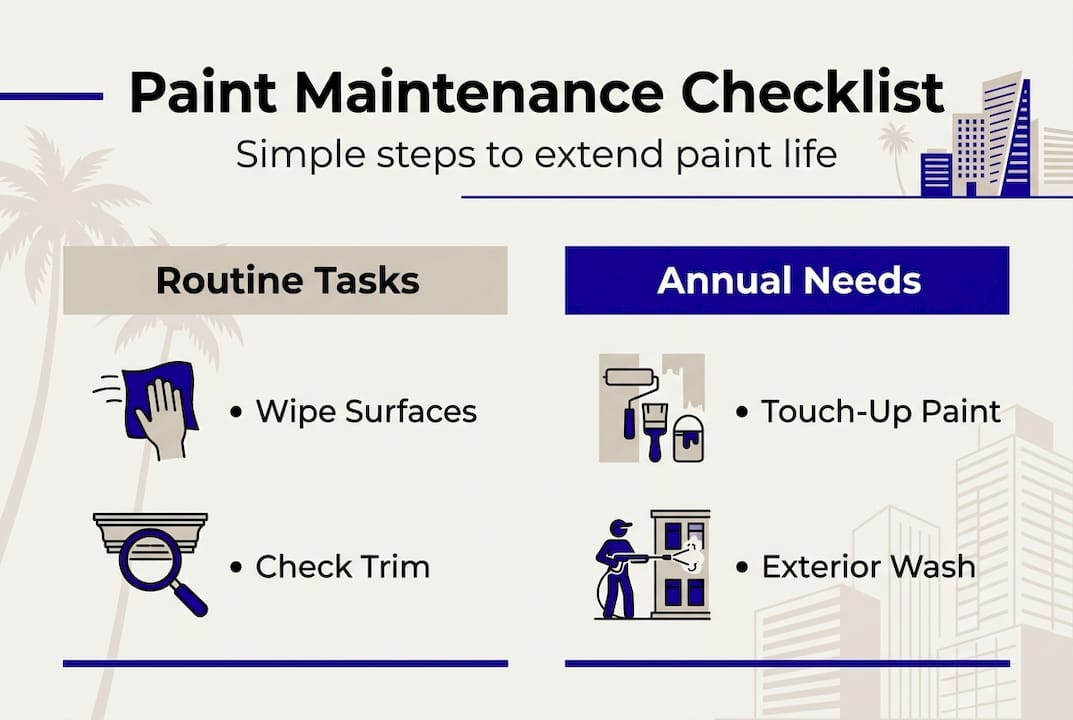
Establish a maintenance schedule based on your building’s exposure and traffic levels. High-traffic areas may need touch-ups annually, while protected surfaces can go several years between maintenance. Regular cleaning removes pollutants that degrade paint and cause premature aging.
Document everything: paint brands, colors, finish types, application dates, and warranty terms. This information streamlines future touch-ups and repainting projects. Store leftover paint properly labeled for quick access when needed.
Essential maintenance practices:
Wash painted surfaces annually with mild detergent
Inspect for damage after storms or unusual weather
Touch up chips and scratches within 30 days
Monitor high-wear areas monthly for deterioration
Schedule professional assessment every 3-5 years
“A properly maintained commercial paint job in Los Angeles typically lasts 7-10 years for exteriors and 10-15 years for interiors, but neglected surfaces may require repainting in half that time.”
Pro Tip: Photograph all painted areas after project completion. These images provide visual documentation for insurance claims, warranty disputes, or future contractor consultations.
Maintenance Task | Frequency | Estimated Cost | Impact on Longevity |
Surface cleaning | Annual | $200-500 | +2-3 years |
Touch-up painting | As needed | $150-400 | +1-2 years |
Caulk inspection/repair | Every 2 years | $300-600 | +3-4 years |
Professional assessment | Every 5 years | $0-200 | Prevents major issues |
Understand your warranty coverage completely. Most professional painters guarantee workmanship for 1-2 years and may offer extended coverage on premium products. Know what circumstances void warranties, such as unauthorized repairs or failure to maintain surfaces properly. Keep all warranty documentation accessible and note expiration dates in your facility management calendar.
Common commercial painting challenges and how to avoid them
Even well-planned projects encounter obstacles. Anticipating common challenges and implementing preventive strategies saves time, money, and frustration. Weather represents the most unpredictable variable in commercial painting. LA’s generally favorable climate still presents challenges with unexpected rain, high winds, or temperature extremes. Monitor forecasts closely and maintain flexible scheduling to avoid painting in unsuitable conditions.
Inadequate surface preparation causes 80% of premature paint failures. Rushing this phase to meet deadlines creates problems that surface within months. Insist on thorough prep work even if it extends the timeline. Clear communication and proper planning reduce costly commercial painting mistakes.
Business disruption concerns many commercial property managers. Coordinate painting schedules with tenant operations, plan work in phases, and communicate timelines clearly to all stakeholders. Weekend or evening work may cost more but prevents revenue loss from closed businesses.
Color and finish mismatches frustrate both property owners and contractors. Always approve samples on actual building surfaces before full application. Colors appear dramatically different under various lighting conditions and against different backgrounds. Test patches in multiple locations and view them throughout the day.
Protecting adjacent areas from paint damage requires diligent masking and containment. Overspray can travel surprising distances in windy conditions, damaging vehicles, landscaping, or neighboring properties. Use appropriate barriers and schedule exterior work during calm weather.
Strategies to prevent common problems:
Build weather delays into project timelines
Require detailed prep work specifications in contracts
Establish clear communication protocols with all stakeholders
Test colors extensively before committing to full application
Implement comprehensive protection and containment measures
Verify contractor insurance covers potential damage
Pro Tip: Create a punch list document before work begins. This shared checklist ensures you and your contractor agree on all deliverables, reducing disputes and forgotten details.
Budget overruns often result from discovering hidden damage during preparation. Set aside 10-15% contingency funds for unexpected repairs. This buffer prevents project delays when contractors encounter rotted wood, water damage, or structural issues requiring attention before painting.
Communication breakdowns lead to disappointed expectations and contentious relationships. Establish a single point of contact for decisions, schedule regular progress meetings, and document all agreements in writing. Clarify who handles specific tasks like furniture moving, minor repairs, or post-project cleanup to avoid assumptions and conflicts.
For additional guidance on maintaining quality standards, explore expert painting tips that address specific challenges and advanced techniques for commercial properties.
Discover expert commercial painting services in Los Angeles
Transforming your commercial property requires more than following procedures. It demands experienced professionals who understand LA’s unique conditions and deliver consistent quality. Johnny’s Custom Painting brings over 16 years of expertise to every commercial project, combining technical skill with customer-focused service.
Our licensed and insured team specializes in both interior and exterior commercial painting, minimizing disruption to your business operations through flexible scheduling and efficient execution. We offer convenient online scheduling that fits your calendar and budget constraints.
Explore our portfolio of completed projects to see the quality and attention to detail we bring to every job. Our interior commercial painting portfolio and exterior commercial painting portfolio showcase diverse applications across retail, office, industrial, and hospitality properties throughout Los Angeles.
We provide eco-friendly paint options that support your sustainability goals without compromising durability or appearance. Contact us today for a customized quote and expert consultation on your commercial painting needs.
Frequently asked questions
What are the key steps in commercial painting procedures?
Commercial painting follows a systematic process: comprehensive property inspection, surface preparation including cleaning and repairs, primer application, multiple finish coats, and final quality inspection. Each step builds on the previous one to ensure durability and professional appearance. Hiring qualified professionals ensures proper execution of these critical phases and long-term satisfaction with results.
How can I choose the best commercial painting contractor in Los Angeles?
Verify that contractors hold current California licensing, maintain adequate liability insurance, and demonstrate specific experience with LA commercial properties. Review portfolios showing projects similar to yours and read recent client testimonials for insight into reliability and quality. Request detailed written estimates that itemize labor, materials, timeline, and warranty terms to compare contractors accurately. For comprehensive guidance, see our article on selecting the best commercial painting contractors in Los Angeles.
What maintenance is needed after a commercial paint job?
Regular cleaning with mild detergent removes pollutants that degrade paint and maintains appearance between repainting cycles. Inspect surfaces quarterly for damage like peeling, cracking, or water intrusion, addressing issues promptly to prevent escalation. Document all paint specifications, application dates, and warranty information for efficient future touch-ups or full repainting projects.
Are eco-friendly paints effective for commercial buildings?
Eco-friendly paints provide durable, safe, and compliant options for commercial painting in Los Angeles. Modern low-VOC and zero-VOC formulations match traditional paints in coverage, adhesion, and longevity while significantly reducing harmful emissions. These products improve indoor air quality, support green building certifications, and meet increasingly strict California environmental regulations. Many property owners find that tenant satisfaction and reduced health complaints justify any modest premium for eco-friendly painting options.
Recommended
Comments