
Understand the paint lifecycle to maximize property value

TL;DR:
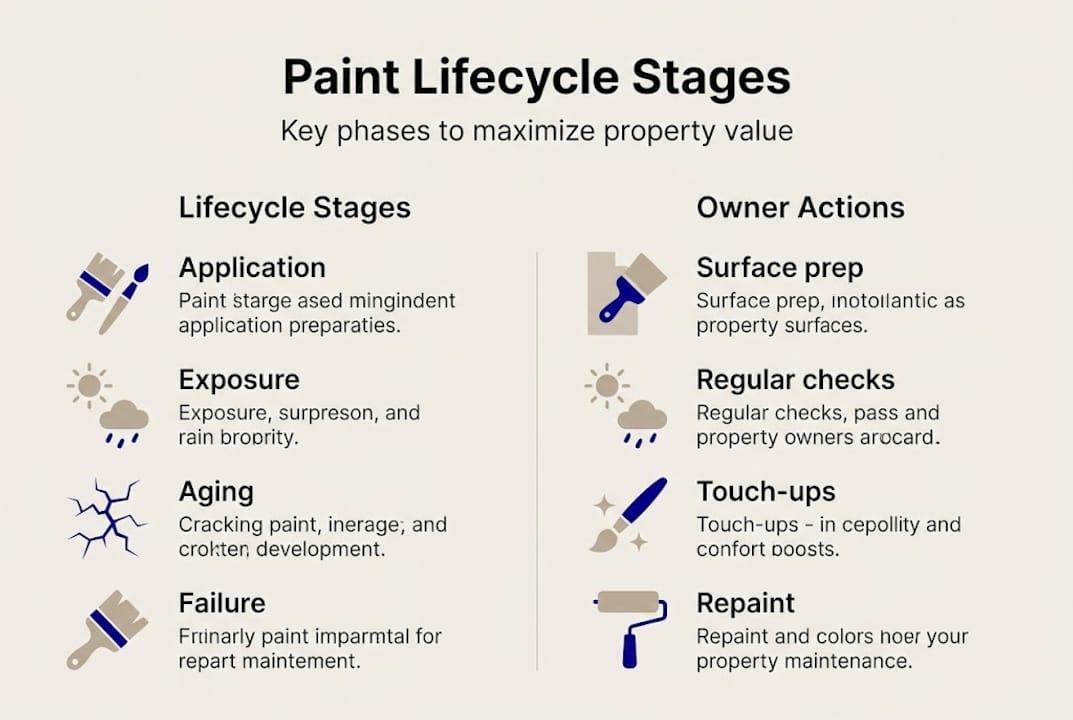
Paint undergoes five phases: application, curing, exposure, maintenance, and decline.
LA’s harsh climate shortens paint lifespan due to UV, pollution, and temperature swings.
Regular maintenance and high-quality products extend paint durability and protect property value.
Most homeowners treat paint like a light bulb: you install it, forget it, and replace it only when it burns out. But paint is far more dynamic than that. Its lifecycle moves through predictable phases, each one affecting how your property looks, how well surfaces are protected, and what you’ll spend on upkeep over the years. In Los Angeles, where intense UV exposure, smog, and temperature swings push paint harder than almost anywhere else, paint durability depends on weather, surface quality, and ongoing maintenance. Understanding the full lifecycle is how smart property owners stay ahead of costly surprises.
Table of Contents
Key Takeaways
Point | Details |
Paint lifecycle explained | Understanding each phase helps you plan maintenance and protect property value. |
LA factors matter | Sun, smog, and application quality shorten or lengthen paint life in Los Angeles. |
Early action saves money | Spotting and fixing paint wear promptly prevents costly repairs. |
Maintenance extends life | Routine cleaning and touch-ups can give your paint job years of extra life. |
What is the paint lifecycle?
The paint lifecycle refers to the complete journey a painted surface goes through from the moment the first coat is applied to the point where the coating can no longer protect or look presentable. In both residential and commercial contexts, this lifecycle follows a consistent pattern that every property owner should understand.
The five core phases are:
Application: The initial coating process, including surface prep, priming, and finish coats.
Curing: The period after application when paint chemically hardens and bonds to the surface. This can take days to weeks depending on the product.
Exposure: The longest phase, during which paint faces weather, UV rays, moisture, and physical wear.
Maintenance: Cleaning, touch-ups, and minor repairs that extend the coating’s effective life.
Decline: Visible deterioration including fading, cracking, and peeling that signals the end of the coating’s useful life.
Understanding paint warranty and aging is essential here because paint ages through predictable phases including application, curing, wear, and eventual failure. Knowing which phase your property is in helps you plan maintenance budgets, avoid emergency repairs, and protect your investment proactively.
Here’s a quick reference for each phase and what it means for you as a property owner:
Lifecycle stage | What happens | Action for owner/manager |
Application | Paint is applied to prepared surfaces | Verify proper prep and primer use |
Curing | Paint hardens and bonds | Avoid washing or heavy contact for 30 days |
Exposure | Paint faces daily environmental stress | Monitor for early wear signs seasonally |
Maintenance | Cleaning and touch-ups slow decline | Schedule annual inspections and cleanings |
Decline | Coating fails visibly | Plan and budget for full repaint |
Thinking of paint as a system with distinct phases, rather than a one-time purchase, changes how you approach property care entirely.
What impacts the paint lifecycle in Los Angeles?
Los Angeles is not an easy environment for paint. The combination of intense sunlight, urban smog, coastal humidity in some neighborhoods, and dry Santa Ana winds creates a uniquely demanding set of conditions. Variables like sunlight, humidity, and pollution dramatically affect paint durability in LA, often cutting expected lifespans shorter than manufacturer estimates suggest.
Here are the most common stressors and how they affect your paint:
UV radiation: LA gets over 280 sunny days per year. Constant UV exposure breaks down paint binders, causing fading and chalking faster than in cooler or cloudier climates.
Smog and airborne pollutants: Particulates settle into paint surfaces, degrading the finish and trapping moisture.
Temperature swings: Hot days and cooler nights cause surfaces to expand and contract repeatedly, stressing paint films and creating micro-cracks.
Coastal salt air: Properties near the coast face salt-laden air that accelerates corrosion on metal surfaces and degrades paint adhesion.
Understanding paint fading factors specific to your neighborhood helps you choose the right product from the start.
LA climate stressor | Estimated lifecycle reduction | Most affected surfaces |
High UV exposure | 1 to 3 years | South and west-facing exteriors |
Smog and pollution | 6 to 18 months | Light-colored surfaces |
Salt air (coastal) | 1 to 2 years | Metal trims, wood siding |
Temperature swings | 6 to 12 months | Stucco, wood, concrete |
Surface preparation quality also plays a massive role. Paint applied over dirty, cracked, or improperly primed surfaces will fail years ahead of schedule, no matter how premium the product is. Choosing eco-friendly paint formulas with UV-resistant pigments and flexible binders can also offset some of LA’s harshest effects.
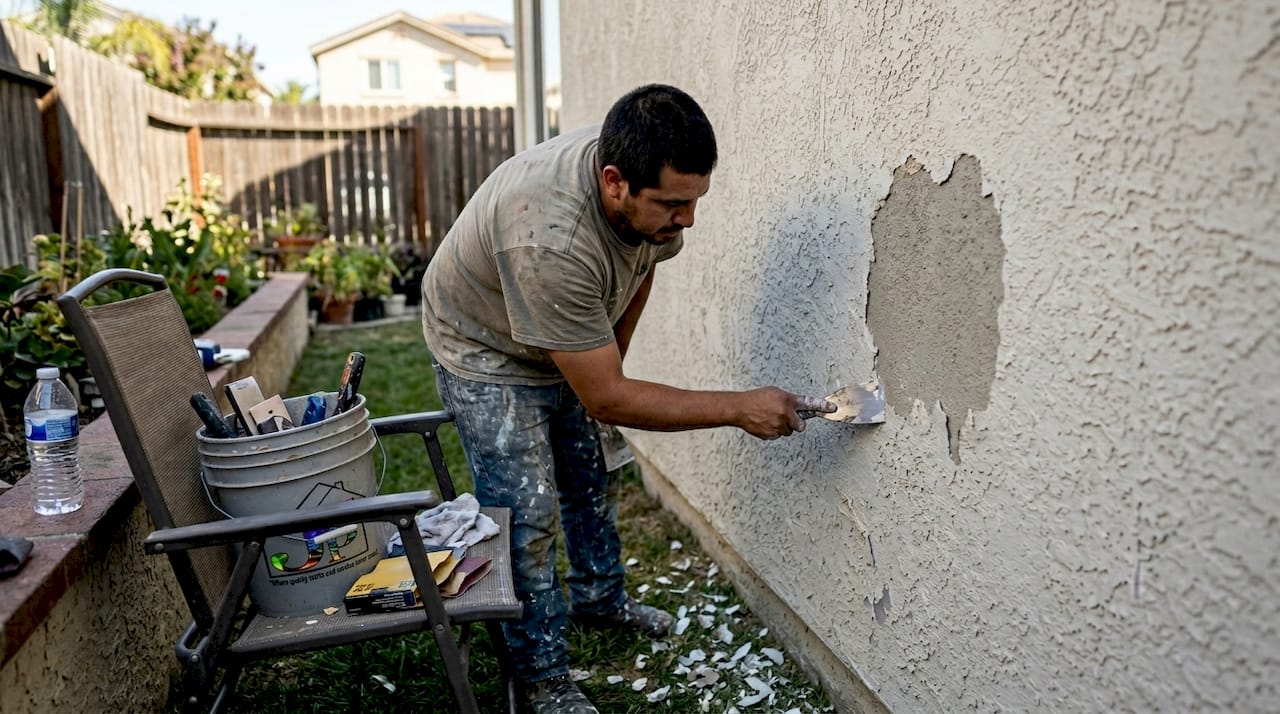
Pro Tip: For south and west-facing exterior walls in LA, always request a paint product with a minimum 15-year fade resistance rating. This single specification can add two or more years to your paint’s effective life without any additional maintenance effort.
Signs your paint needs attention: When to act
Catching paint wear early is the difference between a simple touch-up and a full, expensive repaint. The good news is that paint gives you clear warning signs before it fails completely. You just need to know what to look for.
The most common indicators of paint wear include:
Fading: Colors look washed out or uneven, especially on sun-exposed walls.
Chalking: A powdery residue appears when you rub your hand across the surface. This means the paint binder is breaking down.
Bubbling or blistering: Moisture is trapped beneath the surface, separating the paint film from the substrate.
Cracking or flaking: The paint film has lost flexibility and is physically separating from the surface.
Mold or mildew growth: Dark staining that signals moisture intrusion and poor paint adhesion.
Here’s how to do a systematic seasonal check:
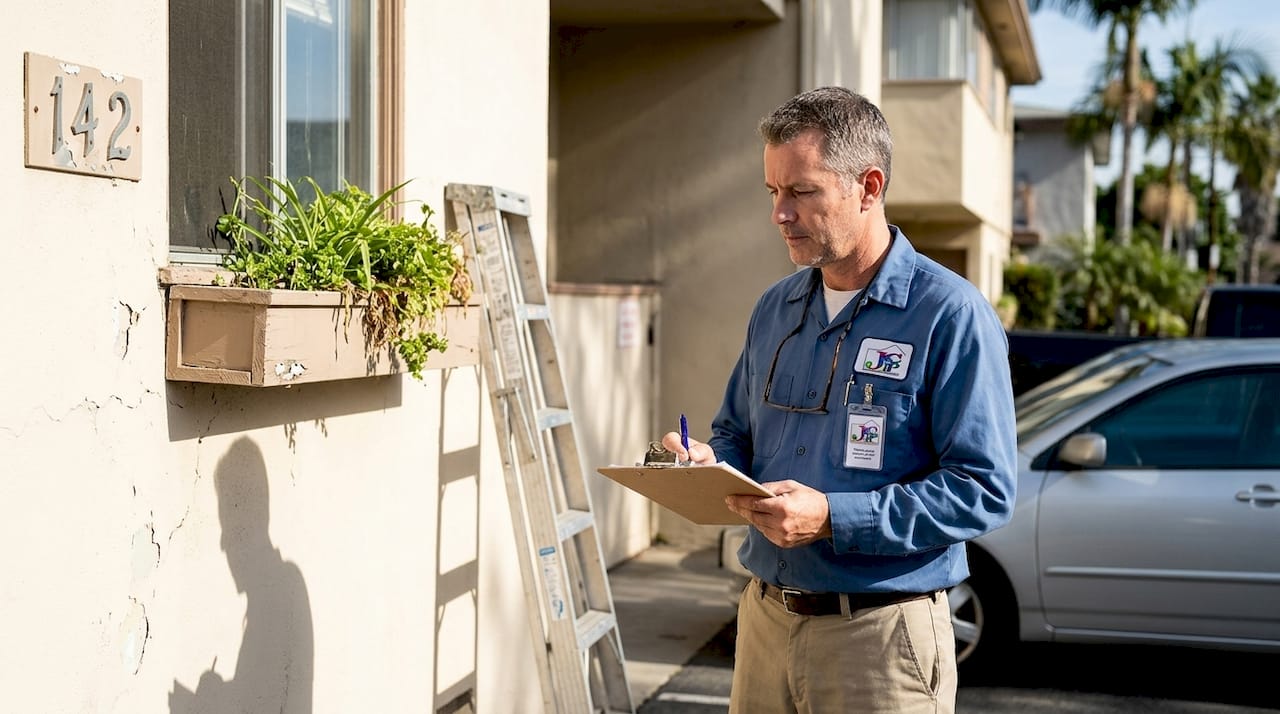
Walk the full perimeter of the property and note any discoloration or texture changes.
Run your hand across exterior walls to test for chalking.
Inspect caulking around windows, doors, and trim for gaps or shrinkage.
Check shaded areas and north-facing walls for mold or mildew.
Look at wood trims and metal fixtures for rust staining or paint separation.
“Delaying paint maintenance can result in underlying property damage and increased costs.” Acting early keeps a manageable maintenance task from becoming a structural repair bill.
Good paint application and protection practices from the start reduce how often you’ll face these warning signs, but no paint lasts forever. The goal is to catch decline at the maintenance stage, not after it reaches failure.
Pro Tip: Do the “tape test” to check paint adhesion. Press a strip of painter’s tape firmly onto the surface, then pull it off quickly. If paint comes with it, adhesion has failed and a repaint is overdue, not optional.
Extending paint life: Best maintenance practices
The best investment you can make after a quality paint job is a consistent maintenance routine. Routine cleaning and surface inspections are critical for maximizing paint durability, especially in tough LA environments. The effort is far less than people expect, and the payoff in extended paint life is significant.
Here are the most effective practices to keep your paint performing longer in Los Angeles:
Wash exterior surfaces annually using a low-pressure rinse and mild detergent to remove smog residue, dirt, and biological growth.
Inspect and re-caulk around windows, doors, and penetrations every one to two years. Failed caulk is one of the top causes of moisture intrusion.
Touch up chips and scratches promptly. Even small bare spots expose the substrate to moisture and UV, accelerating localized failure.
Treat mold and mildew immediately with an appropriate cleaner before it spreads beneath the paint film.
Trim vegetation away from painted surfaces to prevent moisture retention and physical abrasion.
Check gutters and downspouts to ensure water is directed away from painted walls and foundations.
For property managers overseeing multiple buildings, create a simple maintenance calendar that assigns each property a seasonal inspection slot. Stagger the schedule so you’re not overwhelmed, and keep a log of each property’s last paint date, product used, and any touch-up work completed. Good surface prep tips before any touch-up work also ensure new paint bonds properly to existing coatings.
Pro Tip: Color-code your property maintenance log by lifecycle stage. Green means the paint is in the exposure phase and healthy. Yellow means you’re in active maintenance mode. Red means decline has started and a repaint should be budgeted within 12 months. This visual system makes it easy to prioritize across a portfolio.
Using quality exterior painting techniques from the start also reduces how much maintenance intervention you’ll need later. The relationship between application quality and long-term durability is direct and measurable.
A smarter approach to paint lifecycle management
Here’s something most property owners never hear from a contractor: the cheapest paint job is rarely the most affordable one. When you focus only on the upfront cost, you miss the total lifecycle cost, which includes touch-ups, early repaints, and any substrate damage that happens when paint fails prematurely.
In Los Angeles, this mistake is especially costly. The climate accelerates every phase of the lifecycle. Cutting corners on surface prep or product quality doesn’t save money. It just moves the expense forward, usually at a worse time and a higher price.
We’ve seen properties where a slightly higher investment in premium paint and thorough prep extended the repaint cycle by three or four years. Over a decade, that’s one or two fewer full paint jobs, which easily offsets the original price difference. The paint durability insights are clear: quality materials and proper application are the highest-return decisions you can make.
Think of paint as a protective system, not a cosmetic product. When you manage it as a system with defined phases, clear inspection triggers, and a maintenance schedule, it stops being a reactive expense and becomes a predictable part of your property management strategy.
Upgrade your property with expert painting services
Managing the paint lifecycle on your own is possible, but it’s much easier when you have a professional partner who understands LA’s specific conditions and knows exactly which products and techniques deliver lasting results.
At Johnny’s Custom Painting, we’ve spent over 16 years helping Los Angeles homeowners and property managers get more life out of every paint job. From our exterior residential painting projects to our detailed interior painting portfolio, every project starts with thorough surface preparation and premium materials chosen for LA’s climate. As your trusted Los Angeles painting contractor, we offer free consultations to help you assess where your property is in its paint lifecycle and what the smartest next step looks like for your budget and goals.
Frequently asked questions
How long does paint typically last on Los Angeles homes?
Most exterior paint jobs in Los Angeles last 5 to 8 years depending on prep, materials, and exposure. Climate impacts paint durability in LA areas, so south-facing walls and coastal properties often fall on the shorter end of that range.
What are the first signs my property’s paint is failing?
Look for fading, chalky residue, blisters, peeling, or visible cracks as the earliest warning signs. Early signs like fading and chalking indicate declining paint protection before structural damage occurs.
Can maintenance really extend paint’s lifespan?
Yes, regular cleaning and touch-ups can add several years to your paint’s effective life, especially in LA’s climate. Routine care stretches the value of professional painting projects significantly.
Is eco-friendly paint a better investment for LA properties?
Eco-friendly paints often resist fading and air pollution better, providing longer protection in urban environments. Eco-friendly paint formulas can offer superior durability in adverse environments like Los Angeles.
Recommended
Comments