
Commercial painting standards for LA properties explained
- Jonathan Hernandez
- Mar 21
- 8 min read

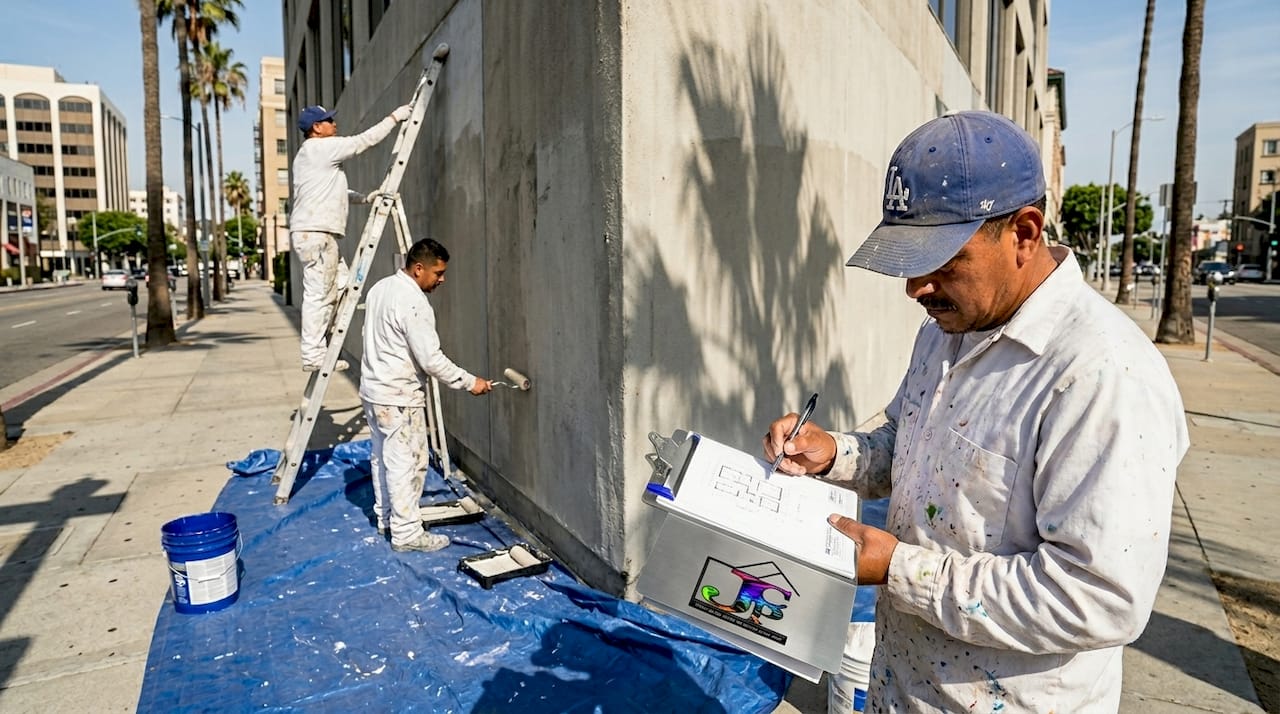
Most commercial property owners assume a fresh coat of paint is enough to maintain their building’s appearance and value. However, without proper adherence to established painting standards, even expensive paint jobs can fail within months, leading to peeling, fading, and costly repairs. Understanding commercial painting standards enables you to manage projects confidently, ensure quality results, and protect your investment. This guide clarifies the essential standards that govern surface preparation, material selection, application methods, and compliance requirements specific to Los Angeles commercial properties.
Table of Contents
Key Takeaways
Point | Details |
Surface prep matters | Thorough cleaning, crack repair, and priming are required to ensure adhesion and long lasting paint performance. |
Use approved materials | Primers and coatings must match the substrate and environmental conditions to optimize durability and safety. |
VOC rule compliance | Projects must align with local VOC limits and related environmental standards to protect air quality and performance. |
Qualified contractors matter | Hiring contractors who follow established standards delivers predictable results and reduces long term maintenance costs. |
Understanding commercial painting standards
Commercial painting standards are established guidelines that define the processes, materials, and quality benchmarks required for professional painting projects. These standards exist to ensure durability, safety, and aesthetic consistency across commercial properties. Unlike residential painting, commercial work faces higher traffic, greater environmental exposure, and stricter regulatory requirements.
The scope of these standards covers several critical areas. Surface preparation requirements specify how to clean, repair, and prime different substrates before painting. Material specifications identify approved paint types, primers, and coatings suitable for commercial applications. Application methods detail proper techniques for achieving uniform coverage and optimal adhesion. Environmental and safety standards address ventilation, chemical handling, and compliance with local regulations.
In Los Angeles, commercial painting projects must align with South Coast Air Quality Management District (SCAQMD) regulations that limit volatile organic compound (VOC) emissions. These environmental standards protect air quality while maintaining paint performance. Standards also address fire safety, particularly for interior applications in multi-tenant buildings or high-occupancy spaces.
Typical commercial painting standards include:
Thorough surface cleaning to remove dirt, grease, and contaminants that compromise adhesion
Repair of cracks, holes, and damaged areas before primer application
Use of appropriate primers matched to substrate type and environmental conditions
Application of multiple coats with proper drying time between layers
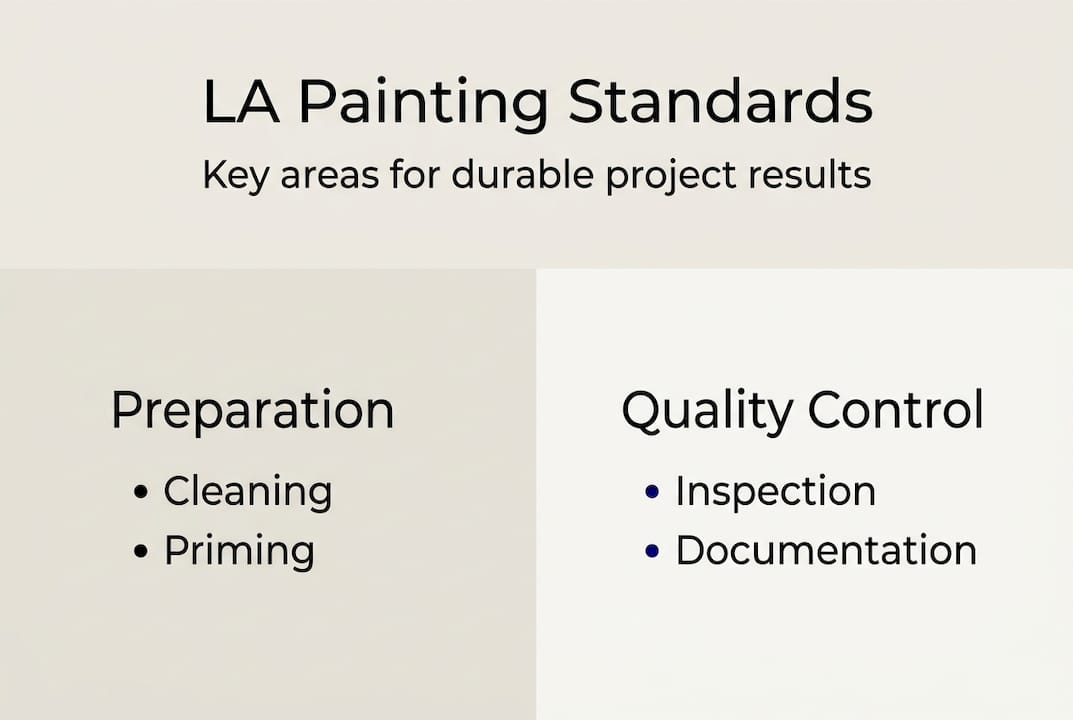
Quality control inspections at each project phase
Understanding these standards helps you evaluate contractor proposals, identify potential shortcuts, and ensure your project delivers lasting value. When contractors follow established standards, you get predictable results, extended paint life, and reduced maintenance costs over time.
Core painting materials and methods required by standards
The materials and application techniques used in commercial painting directly impact durability, appearance, and compliance with quality standards. Selecting the right primers, paints, and methods ensures your project meets performance expectations and withstands Los Angeles’s unique environmental conditions.
Primers form the foundation of any quality paint job. Standards specify primer selection based on substrate type: alkyd primers for wood surfaces, epoxy primers for metal, and acrylic primers for masonry and drywall. Each primer type provides specific benefits like stain blocking, corrosion resistance, or improved adhesion on porous surfaces. Proper primer application creates a uniform base that enhances topcoat performance.
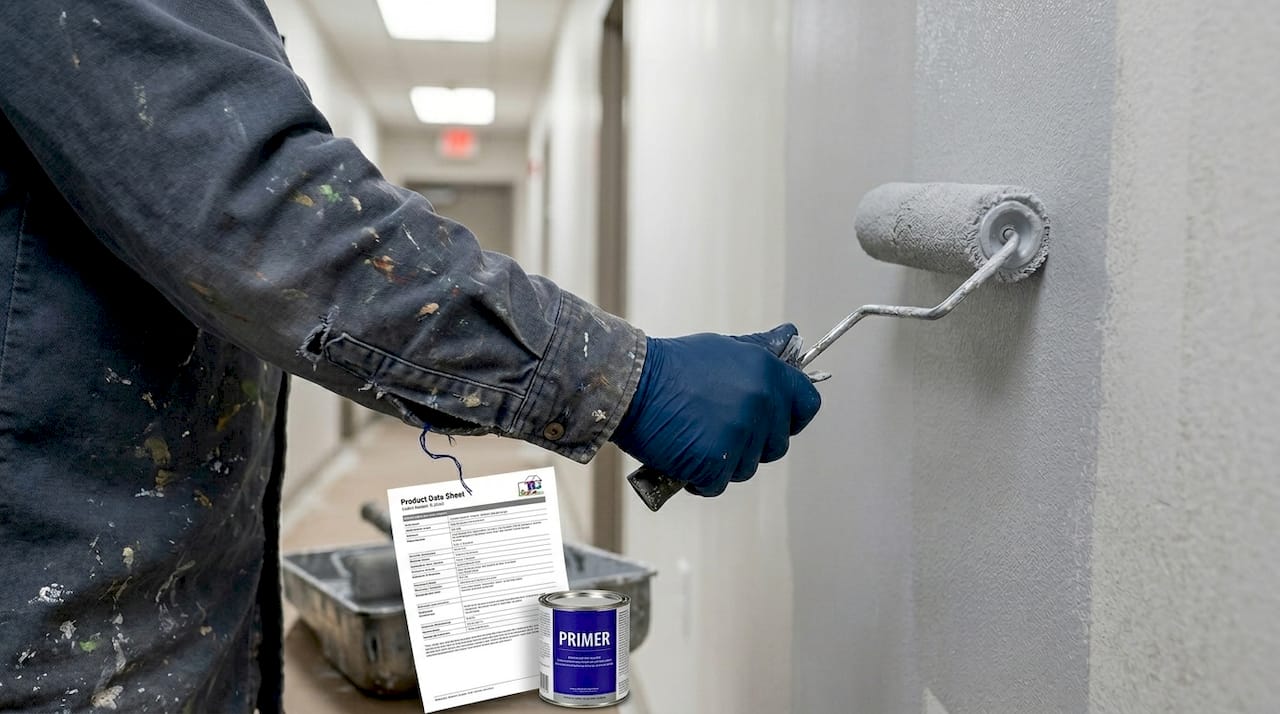
Commercial-grade paints differ significantly from residential options. These formulations contain higher solids content, superior pigments, and advanced binders that deliver enhanced paint durability. Acrylic latex paints dominate commercial applications due to their flexibility, fade resistance, and low VOC content. For high-traffic areas, epoxy or urethane coatings provide exceptional abrasion resistance.
Paint Type | Best Applications | Key Benefits |
Acrylic Latex | Exterior walls, interior offices | UV resistance, breathability, easy maintenance |
Epoxy | Floors, industrial areas | Extreme durability, chemical resistance |
Urethane | High-traffic interiors | Abrasion resistance, washability |
Elastomeric | Stucco, concrete | Waterproofing, crack bridging |
Application methods significantly affect final results. Spray application delivers uniform coverage on large surfaces and reaches difficult areas, making it ideal for commercial painting projects. Brush and roller techniques work better for detailed areas and provide better control on textured surfaces. Standards typically require multiple coats with specific dry times between applications, usually 24 hours minimum for proper curing.
Los Angeles environmental codes mandate low-VOC paints for most commercial applications. These water-based formulations emit fewer harmful chemicals while maintaining performance characteristics. Compliance with SCAQMD regulations protects indoor air quality and demonstrates environmental responsibility.
Pro Tip: Always verify that proposed materials meet both performance standards and local environmental regulations. Request product data sheets showing VOC content, coverage rates, and recommended application procedures.
Temperature and humidity during application also fall under standards. Most paints require application between 50°F and 90°F with relative humidity below 85%. Los Angeles’s mild climate generally supports year-round painting, but coastal properties may face morning fog that delays start times. Following manufacturer specifications for environmental conditions ensures proper curing and adhesion.
Common commercial painting quality issues and how standards prevent them
Even expensive painting projects can fail quickly when contractors ignore established standards. Understanding common quality issues helps you recognize warning signs and ensure your project avoids these costly problems.
Peeling and flaking occur when paint loses adhesion to the substrate. This failure typically results from inadequate surface preparation, particularly when contractors skip cleaning or fail to remove loose existing paint. Standards require thorough washing, scraping, and sanding before primer application. Moisture trapped beneath the paint film also causes peeling, which is why standards mandate proper substrate drying and vapor barrier installation where needed.
Bubbling and blistering appear as raised areas in the paint film, usually caused by painting over damp surfaces or applying paint in direct sunlight when surface temperatures exceed recommended limits. Standards prevent these issues by specifying moisture testing procedures and appropriate application conditions. Proper ventilation during interior painting also reduces solvent entrapment that leads to bubbling.
Fading and chalking diminish appearance over time, especially on exterior surfaces exposed to Los Angeles’s intense UV radiation. These problems arise when contractors use inferior paints or skip primer coats. Standards address this by requiring UV-resistant formulations and proper surface sealing. Quality commercial-grade paints maintain color integrity far longer than economy options.
Uneven coverage and visible lap marks result from improper application techniques. Standards specify wet edge maintenance, consistent spray patterns, and appropriate roller techniques to ensure uniform appearance. Multiple thin coats produce better results than single heavy applications that sag or run.
Key quality issues standards prevent:
Premature paint failure from inadequate surface preparation
Adhesion loss due to incompatible primers or paints
Moisture damage from painting over damp substrates
Color inconsistency from improper mixing or application
Reduced lifespan from using substandard materials
Ignoring preparation and application standards leads to peeling, cracking, and reduced lifespan, often requiring complete removal and repainting within two to three years. Following standards typically extends paint life to seven to ten years or more, depending on exposure and maintenance.
Drying time violations represent another common problem. Rushing between coats prevents proper curing, weakening the paint film and reducing durability. Standards specify minimum recoat times based on temperature, humidity, and paint type. Contractors who follow these guidelines deliver stronger, longer-lasting finishes.
Pro Tip: Request a detailed surface preparation plan before work begins. This document should outline cleaning methods, repair procedures, primer selection, and application techniques specific to your property’s conditions.
Environmental conditions during application also affect quality. Painting during temperature extremes, high humidity, or windy conditions compromises results. Standards provide clear parameters for acceptable working conditions, protecting your investment from weather-related failures.
Ensuring quality compliance in your Los Angeles commercial painting project
Protecting your investment requires active oversight throughout the painting process. Following these practical steps helps ensure your contractor adheres to commercial painting standards and delivers quality results.
Contractor vetting starts before you sign any agreement. Verify licensing, insurance, and bonding status through California’s Contractors State License Board. Request references from recent commercial projects similar in scope to yours. Ask specific questions about surface preparation procedures, material specifications, and quality control processes. Experienced contractors readily discuss their methods and provide detailed written proposals.
Your contractor selection checklist should include:
Verify active contractor license and liability insurance
Review portfolio of completed commercial projects
Request detailed written proposal with material specifications
Confirm knowledge of SCAQMD regulations and VOC compliance
Check references and inspect previous work when possible
Ensure contract includes warranty terms and maintenance recommendations
Inspection points during the project protect quality at each phase. Before painting begins, verify that surfaces are properly cleaned, repaired, and primed. Check that contractors use drop cloths, masking tape, and protective coverings to prevent damage. During application, observe coating thickness, coverage uniformity, and adherence to specified dry times between coats.
Documentation provides proof of compliance and supports warranty claims if issues arise. Request copies of product data sheets for all materials used, including primers, paints, and specialty coatings. Obtain written confirmation of surface preparation steps completed, environmental conditions during application, and number of coats applied. Photographic documentation at each project stage creates a valuable record.
Project Phase | Key Documentation | Purpose |
Pre-work | Surface condition assessment, material specifications | Establishes baseline, confirms approved products |
Preparation | Cleaning and repair completion report | Verifies proper substrate preparation |
Application | Daily logs with temperature, humidity, coats applied | Confirms compliance with standards |
Completion | Final inspection report, warranty certificate | Protects investment, enables future claims |
Timeline management affects quality outcomes. Proper repainting of commercial buildings requires adequate time for each phase. Rush jobs that compress schedules often skip critical steps or violate drying time requirements. Establish realistic timelines that allow for weather delays and proper curing between coats.
Maintenance planning extends the life of your paint job. Standards-compliant projects typically require only periodic washing and minor touch-ups for years. Develop a maintenance schedule that includes annual inspections, prompt repair of any damage, and cleaning to remove dirt and pollutants. Los Angeles’s urban environment deposits particulates that gradually dull paint, but regular washing restores appearance without repainting.
Final acceptance inspection should occur only after complete curing, typically 30 days after final coat application. Walk the entire property in good lighting, checking for missed areas, drips, uneven coverage, or damage to adjacent surfaces. Quality contractors welcome thorough inspection and promptly address any deficiencies.
Explore expert commercial painting services in Los Angeles
Now that you understand the critical role standards play in commercial painting quality, connecting with professionals who consistently meet and exceed these requirements becomes your next step. Johnny’s Custom Painting brings over 16 years of experience delivering standards-compliant commercial painting throughout Los Angeles. Their team strictly follows surface preparation protocols, uses premium low-VOC materials, and applies proven techniques that ensure lasting results.
Whether you need interior commercial painting for office spaces, retail locations, or multi-tenant buildings, or exterior commercial painting to refresh your property’s curb appeal, their portfolio demonstrates consistent quality across diverse projects. As a licensed and insured Los Angeles painting contractor, they provide detailed proposals, transparent communication, and warranties that protect your investment. Request a free estimate to discuss how professional painting services aligned with industry standards can enhance your property’s value and appearance.
FAQ
What are the key commercial painting standards for LA properties?
Commercial painting standards in Los Angeles focus on three primary areas: thorough surface preparation including cleaning and repair, use of approved low-VOC paints that comply with SCAQMD regulations, and proper application techniques with adequate drying time between coats. These standards ensure durability, protect air quality, and deliver consistent aesthetic results across commercial properties.
How can I verify my contractor follows painting standards?
Request documentation including product data sheets for all materials, written surface preparation plans, and daily application logs showing environmental conditions and coats applied. Check contractor licensing through California’s Contractors State License Board and ask for references from recent commercial projects. Inspect previous work in person when possible to evaluate quality and attention to detail.
Why is surface preparation critical in commercial painting?
Proper surface preparation creates the foundation for paint adhesion and longevity. Thorough cleaning removes contaminants that prevent bonding, while repairs eliminate defects that telegraph through paint layers. Skipping preparation steps leads to premature peeling, bubbling, and paint failure, often requiring complete removal and repainting within just a few years.
What common mistakes do property managers make regarding painting standards?
Many property managers select contractors based solely on lowest bid, overlooking qualifications and material specifications. Other frequent errors include accepting rushed timelines that compress necessary drying periods, failing to verify VOC compliance with local regulations, and not requiring detailed documentation of preparation and application procedures. These shortcuts compromise quality and increase long-term costs through premature repainting needs.
Recommended
Comments