
Paint warranty explained: protect your home investment


Most Los Angeles homeowners assume that once a painter finishes the job, they’re fully covered if anything goes wrong. That assumption can be expensive. Paint warranties differ widely in coverage, duration, and enforceability, meaning two homeowners on the same block could have very different levels of protection after a fresh coat. Understanding what your warranty actually says before you sign a contract is one of the smartest moves you can make to protect your home’s value and appearance for years to come.
Table of Contents
Key Takeaways
Point | Details |
Know your warranty type | Paint warranties may cover the product or the painter’s workmanship—clarify which applies to your project. |
Read the coverage details | Most warranties list clear exclusions; reading these prevents unwelcome surprises if you need to file a claim. |
Warranty length varies | Expect 1–3 years workmanship coverage and up to a lifetime for premium paint products. |
Prep and documentation matter | Proper application, maintenance, and keeping records are essential to maintain warranty protection. |
What is a paint warranty really?
A paint warranty is a legal agreement that defines the quality and durability promise attached to a paint job. It tells you who is responsible if the paint fails, for how long, and under what conditions. Without reading it carefully, you’re essentially guessing at your own protection.
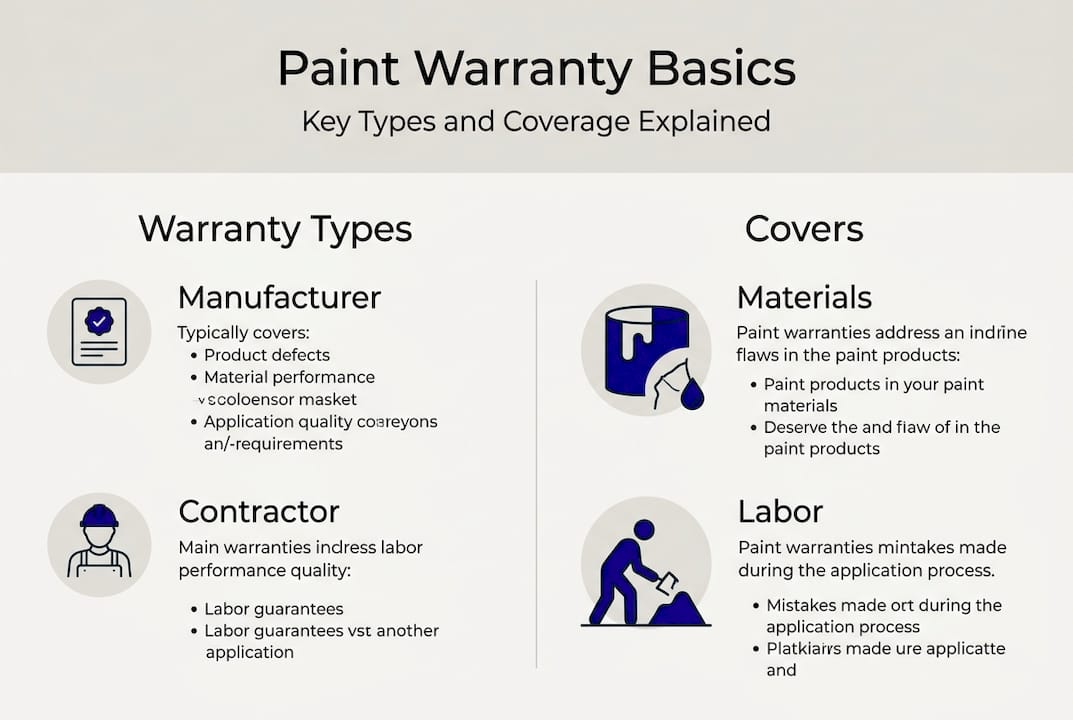
There are two main types of paint warranties, and they come from two very different sources. The first is a manufacturer warranty, which covers the paint product itself. The second is a contractor workmanship warranty, which covers how the paint was applied. Both matter, and both have different terms.
Here’s a quick comparison to make the difference clear:
Feature | Manufacturer warranty | Contractor workmanship warranty |
Who provides it | Paint brand (e.g., Sherwin-Williams) | Your painting contractor |
What it covers | Product defects, premature fading | Peeling, bubbling, poor adhesion from application |
Typical length | 5 years to lifetime | 1 to 3 years |
How to claim | Contact manufacturer directly | Contact your painter |
As a general benchmark, workmanship warranties run 1 to 3 years, while manufacturer warranties on premium paints can stretch from 5 years to a lifetime. Knowing which type you have tells you exactly who to call when something goes wrong.
Here’s what each type typically covers at a glance:
Manufacturer warranty: Premature fading, color inconsistency, product defects, and failure under normal conditions
Workmanship warranty: Peeling, flaking, blistering, uneven coverage, and adhesion failures caused by improper application
For LA homeowners, understanding the types of paint warranties available is the foundation of making a smart hiring decision. Don’t skip this step.
Key terms and coverage: What’s really included?
Knowing the types is a start. Now you need to understand the language inside those warranties, because the fine print is where most homeowners get surprised.
Coverage period is the length of time the warranty is active. Labor vs. materials tells you whether the warranty covers just the paint product, just the application work, or both. Proration means the warranty value decreases over time, so a claim in year four of a five-year warranty might only cover a fraction of the repair cost. Transferability refers to whether the warranty passes to a new owner if you sell your home. Exclusions are the situations where the warranty simply does not apply.
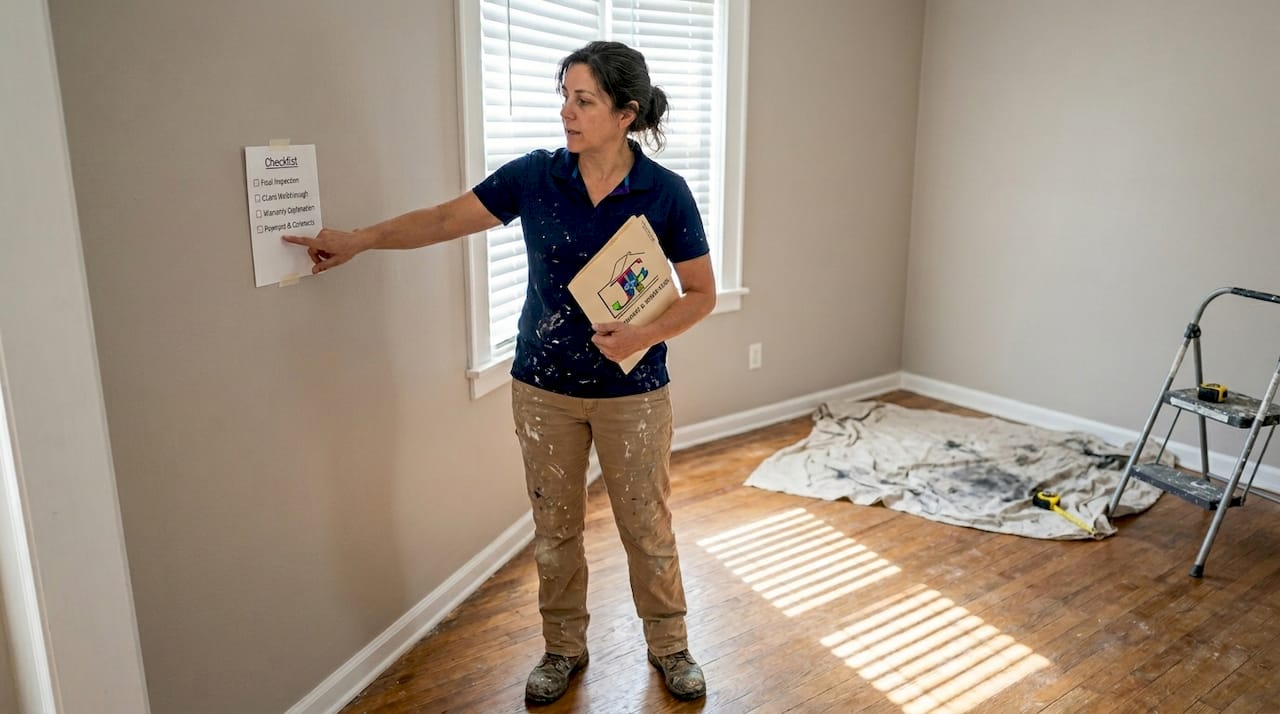
Here’s a breakdown of what’s typically covered versus what’s commonly excluded:
Usually covered:
Peeling, blistering, and flaking within the coverage period
Adhesion failure not caused by homeowner damage
Color fading beyond normal wear (with premium products)
Defective materials confirmed by the manufacturer
Commonly excluded:
Damage from accidents, impact, or moisture intrusion from structural issues
Failure due to improper surface preparation before painting
Substrate failure (the wall itself cracking or shifting)
Damage from incompatible cleaning products
Normal wear and fading from sunlight exposure
In California, interior paint useful life typically aligns with 2 to 3 years, while exterior paint can last 5 to 12 years depending on climate conditions. That range matters when you’re evaluating whether a short warranty is a red flag or simply realistic.
Understanding painting contract essentials before you hire helps you spot gaps in warranty language before they become problems. And if your painter recommends upgrading materials, learning about premium paint benefits can help you decide if the longer coverage is worth the added cost.
Pro Tip: Always request written warranty documentation before work begins. A verbal promise from a painter is not legally enforceable in California, and without written proof, you have no recourse if something fails.
Paint warranty length: How long should it last?
Los Angeles has a unique climate that directly affects how long paint lasts and how long a warranty should reasonably cover your home. Intense UV exposure, coastal salt air in areas like Santa Monica and Venice, and urban pollution all accelerate paint degradation faster than in milder climates.
Here’s a practical reference for typical warranty lengths based on paint type and location:
Paint application | Standard warranty length | Premium paint warranty |
Interior walls | 1 to 2 years (workmanship) | Up to 5 years (manufacturer) |
Exterior walls | 2 to 3 years (workmanship) | 5 to 15 years (manufacturer) |
Exterior stucco | 2 to 3 years (workmanship) | Up to 10 years (manufacturer) |
Cabinets and trim | 1 to 2 years (workmanship) | 3 to 5 years (manufacturer) |
The data is clear: exterior paint in LA lasts 5 to 12 years under normal conditions, while interior paint in rental or high-traffic settings may need refreshing every 2 to 3 years. That’s your baseline for judging whether a warranty offer is reasonable or suspiciously short.
One thing many homeowners don’t realize: longer warranties often come with stricter requirements. A 15-year manufacturer warranty might require you to use only their approved primers, apply a specific number of coats, and document the entire process. Skipping any step can void the warranty entirely.
For a deeper look at how LA’s environment affects your paint job, the guide on paint durability in LA is worth reading before you commit to any product. If your home has stucco siding, the specific considerations around exterior stucco painting also affect which warranties apply.
The fine print: Common pitfalls and how to protect yourself
Even a solid warranty can fail you if you overlook the details. Here are the most common mistakes LA homeowners make that lead to denied claims:
Failing to register the warranty. Some manufacturer warranties require online registration within 30 to 60 days of the job’s completion. Miss that window and the warranty is void.
Skipping required maintenance. Many warranties require periodic cleaning or touch-up inspections. Ignoring this can be used to deny your claim.
Using incompatible cleaning products. Harsh chemical cleaners can break down paint film and void coverage. Always check the approved cleaning methods listed in your warranty.
Not documenting the original work. Without before-and-after photos and a signed contract, proving that a failure is covered becomes nearly impossible.
Assuming the painter’s warranty covers product defects. If the paint itself is faulty, that’s a manufacturer claim, not a contractor claim. Mixing these up wastes time and delays repairs.
Real situations like these happen regularly in Los Angeles. A homeowner in Pasadena had exterior paint peel within 18 months, only to find the claim denied because the painter hadn’t properly primed the surface and the workmanship warranty excluded prep-related failures. Another homeowner in Silver Lake lost manufacturer coverage after using a bleach-based cleaner on painted siding.
A warranty is only as strong as the documentation behind it and the quality of the original application. Without both, even the most generous coverage terms won’t protect you.
Proper exterior surface preparation is one of the biggest factors in whether a warranty claim will be honored. And for a broader look at how warranties work across different service types, the handyman warranty insights page offers useful context.
Pro Tip: Save every receipt, take dated before-and-after photos, and keep all warranty paperwork in a dedicated folder. If you ever need to file a claim, this documentation is your strongest asset.
How to choose the right paint warranty for your home
With the pitfalls in mind, evaluating a warranty offer becomes a straightforward process. Here’s how to approach it step by step.
Ask the painter for written warranty terms upfront. Before any work begins, request a document that specifies the coverage period, what’s included, and what voids the warranty.
Read the exclusions first. Most warranty problems come from exclusions, not coverage. Know exactly what isn’t covered before you assume you’re protected.
Check the painter’s references and license. A warranty from an unlicensed contractor has limited legal weight in California. Verify their license number with the Contractors State License Board.
Compare manufacturer warranty options. Ask your painter which paint brands they use and look up the manufacturer’s warranty terms directly. Premium paints may offer much longer warranty terms and lower claim rates when applied correctly.
Confirm transferability if you plan to sell. If there’s any chance you’ll sell your home within the warranty period, verify in writing whether the coverage transfers to the new owner.
Watch for these red flags when reviewing a warranty offer:
Vague language like “we stand behind our work” with no defined coverage period
No written documentation, only a verbal promise
Exclusions that cover nearly every realistic failure scenario
No mention of what happens if the contractor goes out of business
Overly broad promises that seem too good to be true
Upgrading to premium paint is often worth the investment when you factor in extended coverage. The guide on upgrading to premium paint breaks down the cost-benefit clearly. For commercial property owners, the painting investment advantages article shows how warranty-backed work protects larger assets too.
Trust your Los Angeles home to proven professionals
Understanding paint warranties puts you in a much stronger position as a homeowner. But the best warranty in the world only works when the job is done right from the start.
At Johnny’s Custom Painting, we back every project with clear, written warranty terms and over 16 years of professional experience serving Los Angeles homeowners. Our team is fully licensed and insured, and we use premium, low-VOC paints that come with strong manufacturer coverage. Browse our exterior residential painting gallery and interior painting examples to see the quality we deliver on every job. When you’re ready to protect your investment with a painting contractor in Los Angeles you can trust, we’re here to help with a free estimate and honest answers about every warranty we offer.
Frequently asked questions
Does a paint warranty cover fading in Los Angeles sun?
Most warranties exclude normal fading from intense sunlight unless you specifically chose a premium UV-resistant paint with explicit fade coverage. Always check the exclusions section for sunlight-related language before assuming you’re protected.
Who handles my claim if there’s a problem, the manufacturer or the painter?
Product defects go to the manufacturer, while application or workmanship issues are handled directly by your painter. Knowing which type of failure you have determines who issues the warranty and who you contact first.
How long does paint last on an LA home before it needs repainting?
Most exterior paint projects last about 5 to 12 years in LA, while interior paint in high-use areas may need refreshing every 2 to 3 years depending on traffic and cleaning habits.
If I sell my house, does the paint warranty transfer to the new owner?
Some warranties are transferable to new owners, but many are not, so verify transferability terms in writing before you sign any contract or finalize a home sale.
Recommended
Comments