
Stucco painting: the essential guide for LA homeowners

TL;DR:
Proper stucco painting involves thorough surface repairs, specialized primers, and quality coatings to ensure durability against moisture, UV rays, and temperature fluctuations in Los Angeles. Skipping critical prep steps leads to cracking, peeling, and premature failure, making expert application essential for long-lasting, eco-friendly results. Choosing low-VOC, flexible paints like elastomeric or acrylic latex enhances energy efficiency, protects the stucco, and maintains curb appeal over a decade or more.
Most Los Angeles homeowners assume that painting stucco is just like painting any other exterior surface. They grab a roller, pick a color they love, and get to work. That assumption leads to cracking, peeling, and moisture damage within just a year or two, and often means wasting hundreds of dollars on paint and labor that didn’t have to fail. Stucco is a living, breathing surface with unique needs, and skipping even one critical step creates problems that go far beyond appearance. This guide walks you through everything you need to know before touching a brush to your stucco walls, with a focus on quality results and eco-friendly choices that make sense for LA’s climate.
Table of Contents
Key Takeaways
Point | Details |
Proper stucco prep | Inspect, repair, and cure surfaces thoroughly before priming or painting for great results. |
Eco-friendly paint choices | Select low-VOC, water-based, or certified green paints to protect your home and the environment. |
Best paints for LA | Acrylic latex and elastomeric paints work best for Los Angeles stucco’s durability and weather demands. |
Avoid common mistakes | Don’t skip steps like cleaning, drying, or curing—these are essential for long-lasting, beautiful finishes. |
Expert help pays off | Professional painters deliver eco-conscious quality and value, saving time and hassle for homeowners. |
Understanding stucco painting: what it really is and why it matters
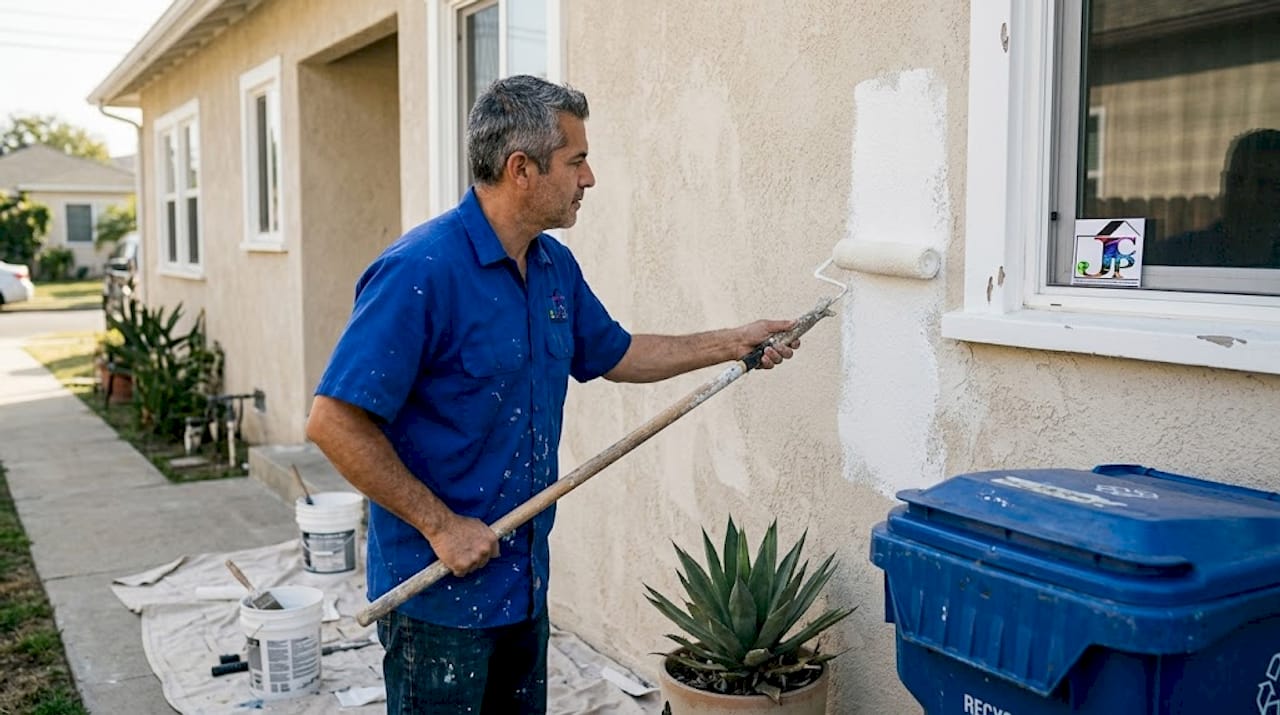
Most people think stucco painting means picking a color and rolling it on. In reality, it’s a layered process that starts long before you open a can of paint. Stucco painting involves surface repairs, specialized primers, and coatings built specifically for long-term durability. You’re not just decorating your home’s exterior. You’re creating a protective barrier against moisture, UV rays, and temperature swings that are very real in Southern California.
Stucco is both textured and porous, which means ordinary paints applied without proper prep simply sit on the surface without bonding. Over time, they flake. Water gets underneath. Mold follows. Compare this to a professional approach, where the right primer soaks into the stucco and creates a genuine bond, and you can immediately see why the process matters so much.
Here’s what proper stucco painting actually protects against:
Moisture intrusion that leads to mold growth inside wall cavities
UV degradation that fades and weakens unprotected stucco in the LA sun
Thermal cracking caused by the city’s significant temperature swings between day and night
Salt air damage for homes in coastal areas like Santa Monica or Malibu
Your stucco is a big part of your home’s character, and protecting it properly pays dividends in curb appeal and resale value. As one overview of exterior stucco painting explains, the finish coat is only as good as the work that comes before it. Homeowners who invest in the prep phase enjoy results that last 10 to 15 years rather than 3 to 5.
“Painting stucco the right way means treating it as the architectural material it is, not as a blank canvas waiting for color.”
It’s also worth noting that curb appeal improvement through properly painted stucco ranks among the highest-return home investments. And for those interested in a broader exterior update, complementary exterior services like trim and fascia work pair well with a fresh stucco paint job.
Essential steps for quality stucco painting
Understanding what stucco painting entails sets the stage. Now let’s walk through each essential step to ensure a durable, attractive finish.
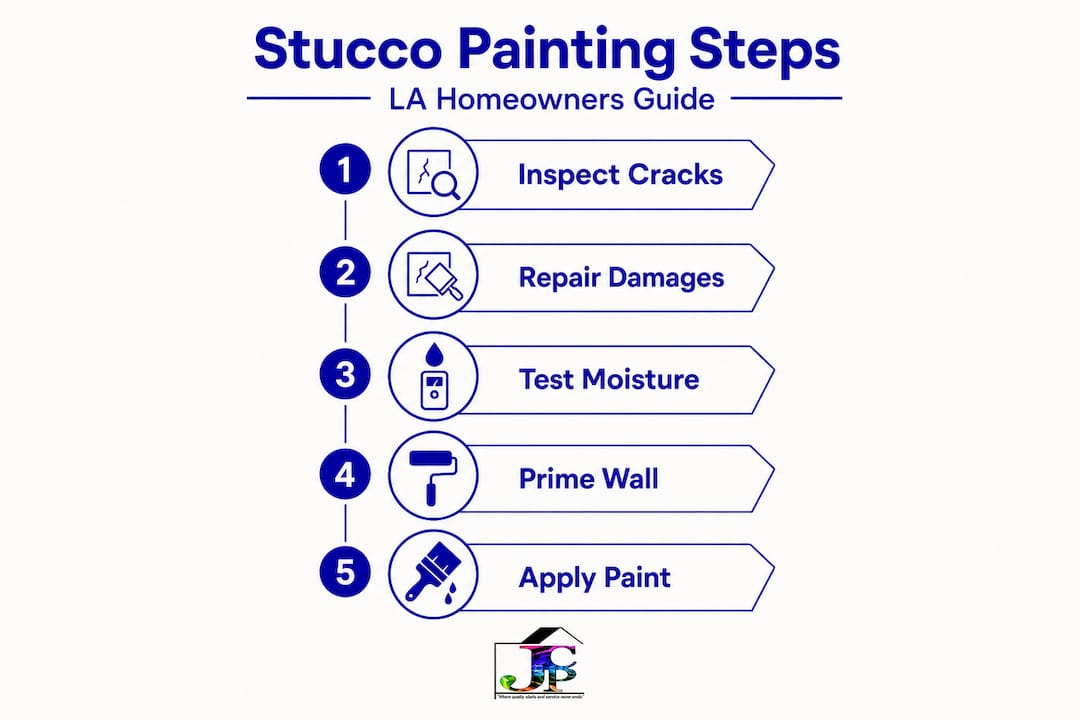
Inspect and repair all cracks. Start with a thorough inspection of the entire stucco surface. Hairline cracks smaller than 1/16 of an inch can be filled with a quality caulk. Larger cracks need patching with elastomeric caulk or a stucco compound, and those repairs must cure for at least 7 days before any painting begins. This step is non-negotiable. Painting over unrepaired cracks traps moisture and leads to rapid failure.
Clean the surface thoroughly. Power washing at 2,500 to 3,000 PSI removes dirt, chalking, mold, and any loose paint or coating. Treat any visible mold with a bleach and water solution before washing. After cleaning, the stucco needs a full 24 to 48 hours to dry down to below 12% moisture content. You can check this with an inexpensive moisture meter from any hardware store.
Apply a breathable masonry primer. Stucco needs to breathe. A primer designed for masonry surfaces penetrates the pores and creates adhesion without sealing off the surface entirely. This is where a lot of DIY jobs fail. Standard drywall primer or all-purpose primer simply doesn’t perform the same way on stucco’s alkaline surface.
Apply two coats of finish paint. Two coats are standard on stucco. Single-coat coverage looks thin and wears faster. You can use a brush, a thick-nap roller, or an airless sprayer, though you’ll need to back-roll sprayed coats to work paint into the texture.
Here’s a quick reference for timing and product choices:
Step | Key requirement | Time needed |
Crack repair | Elastomeric caulk or stucco compound | 7-day cure minimum |
Cleaning | Power wash at 2,500 to 3,000 PSI | 24 to 48 hours drying time |
Priming | Breathable masonry primer | 4 to 6 hours dry before paint |
First coat | Acrylic latex or elastomeric paint | 4 to 6 hours before second coat |
Second coat | Same paint product as first coat | Full cure in 7 to 14 days |
For detailed guidance on step-by-step stucco repair, including how to identify structural vs. cosmetic cracks, it’s worth doing your homework before you start. Getting your surface prep techniques right will ultimately determine whether your paint job lasts a decade or starts peeling within two years.
Pro Tip: Rent a calibrated moisture meter before you prime. If moisture reads above 12%, wait longer. Painting over damp stucco is one of the leading causes of paint failure in coastal and hillside LA neighborhoods where marine fog lingers well into the morning.
Choosing eco-friendly paints and materials for Los Angeles homes
The painting process only works as well as the products you use. Here’s how to make homeowner- and planet-friendly choices that also perform better in LA’s specific conditions.
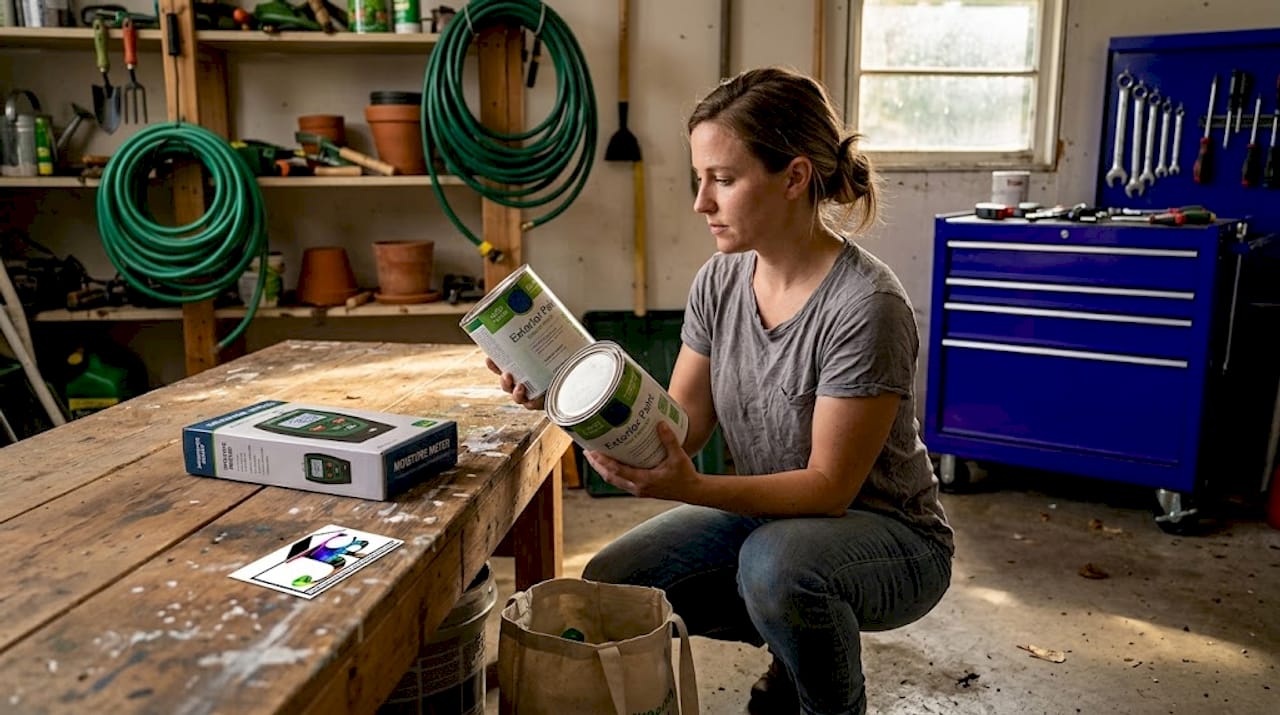
Los Angeles has strong air quality regulations, and for good reason. Traditional paints release volatile organic compounds (VOCs) into the air, contributing to smog and indoor air pollution. Low-VOC and zero-VOC paints have come a long way in recent years and now match the performance of their older counterparts in most applications.
For stucco specifically, acrylic latex and elastomeric paints are the two main options worth considering. Here’s how they compare:
Paint type | Best for | VOC level | Flexibility | Cost range per gallon |
Acrylic latex | Smooth to medium texture stucco | Low to zero VOC available | Moderate | $30 to $60 |
Elastomeric | Cracked or rough stucco, coastal areas | Moderate, varies by brand | Very high | $55 to $90 |
Elastomeric paint is the heavy hitter. It stretches across small cracks as they open and close with temperature changes, which makes it an excellent choice for older stucco homes. Acrylic latex is lighter and easier to apply, works beautifully on newer or recently repaired stucco, and is widely available in low-VOC formulas.
When selecting materials, look for these indicators:
Green Seal or GREENGUARD Gold certification on paint products
“Low-VOC” or “zero-VOC” labeling on both paint and primer
Water-based formulas rather than oil-based primers, which off-gas more heavily
California VOC compliance labeling, which meets South Coast Air Quality Management District (SCAQMD) standards specific to our region
Understanding the full range of types of exterior paint helps you ask the right questions at the supply house and make a genuinely informed decision rather than just grabbing the most popular can on the shelf.
Pro Tip: Pairing a certified low-VOC primer with a GREENGUARD Gold certified topcoat doesn’t just protect air quality indoors and out. It also tends to produce a more consistent finish because both products are formulated to work within similar pH and adhesion ranges.
Common stucco painting mistakes to avoid
Even the best products and steps can fall short if you don’t avoid these frequent pitfalls. Learning from others’ mistakes is the fastest way to protect your investment.
Here are the most common errors LA homeowners make when tackling stucco painting:
Painting over new stucco too soon. New stucco needs 28 to 60 days to fully cure and off-gas lime. Paint applied too early traps alkaline compounds that discolor and degrade the finish from the inside out.
Using interior paint or standard exterior paint not rated for masonry. These products lack the flexibility and alkaline resistance stucco demands. They look fine for the first season and then begin cracking along every texture ridge.
Ignoring hairline cracks because they seem minor. Hairline cracks are small today. After one season of LA’s temperature swings, they widen. Water enters, expands when temperatures drop at night, and the crack becomes a visible fault line.
Painting in direct midday sun. Hot stucco causes paint to dry too fast, leaving brush marks, lap lines, and poor penetration. Early morning or late afternoon are ideal windows in Los Angeles.
Skipping the moisture test after cleaning. As mentioned earlier, skipping proper cleaning, repairs, or primer often leads to rapid paint failure and wasted materials. Moisture trapped under paint is almost always the culprit when paint blisters or peels.
“Proper surface prep, repair, and priming are non-negotiable for results that last.”
Hiring someone who understands these nuances matters. Understanding the value of hiring a skilled stucco painter isn’t just about getting a prettier finish. It’s about avoiding the $3,000 to $8,000 in repair and repainting costs that come with a job done without the right knowledge.
Humidity also plays a role that surprises many homeowners. While LA is generally dry, marine layer mornings in coastal neighborhoods mean moisture levels can swing dramatically between 6 AM and noon. A professional painter tracks this. A rushed weekend painter typically doesn’t.
What most Los Angeles homeowners miss about stucco painting
After warning about common missteps, let’s dig into why great stucco painting is about more than meets the eye.
Here’s a perspective that surprises most homeowners we’ve worked with over the past 16 years: quality stucco painting is actually an energy efficiency upgrade. A well-applied elastomeric coat adds a slight thermal buffer to your exterior walls. Lighter colors reflect rather than absorb solar radiation. In a city where cooling costs spike hard in summer, that reflection effect reduces the load on your HVAC system in a measurable way.
The eco-friendly angle goes deeper than many people expect. When you use low-VOC, water-based products and apply them correctly, you dramatically reduce how often you need to repaint. A properly executed job in LA’s climate lasts 10 to 15 years. A rushed job with cheap products might need full repainting in 3 to 5 years. That means twice the product waste, twice the labor energy, and twice the environmental footprint over a 15-year period. Doing it right the first time is the green choice.
We’ve also seen homeowners skip the eco-friendly step thinking it costs more. Sometimes the upfront price per gallon is slightly higher for certified low-VOC products, but the difference is almost always offset by longer lifespan and reduced maintenance. A home painted with quality green products also tends to hold its value better in the LA real estate market, where buyers and inspectors increasingly note the condition of the exterior stucco.
Investing in expert exterior painting techniques reframes the entire project. It’s not just cosmetic maintenance. It’s a structural protection investment, an energy efficiency upgrade, and a contribution to better air quality in your neighborhood. Most paint is just paint. The right paint, applied the right way on stucco, is a whole different outcome.
Upgrade your stucco with help from Los Angeles experts
If you’re ready to see real results and skip the learning curve, connect with local specialists who can deliver a beautiful and sustainable finish.
At Johnny’s Custom Painting, we’ve spent over 16 years working specifically in the Los Angeles market, and stucco is one of the most common and most rewarding surfaces we work with. We use only certified low-VOC, eco-friendly products that meet California’s strict air quality standards, and every project starts with the thorough prep work that makes paint last.

Our exterior stucco painting services cover everything from initial inspection and crack repair through final coating, and we back every job with our customer satisfaction commitment. Whether you’re refreshing a single-family home or a larger property, we bring the same level of care to every wall. Contact us today for a free estimate from a trusted Los Angeles painting contractor and find out how affordable a professional, eco-conscious stucco job can be.
Frequently asked questions
How is stucco painting different from regular exterior painting?
Stucco painting requires specialized surface prep, breathable primers, and flexible coatings because stucco’s textured, porous surface bonds differently than wood or siding and needs coatings that allow moisture to escape.
How long should I wait between repairing stucco and painting?
Repairs with stucco compound or elastomeric caulk need a minimum 7-day cure period before priming or painting to ensure the patch fully bonds and won’t shift or crack under the new coating.
What type of paint should I use for stucco in Los Angeles?
Acrylic latex or elastomeric paint is the best choice for LA stucco, with elastomeric being ideal for older or cracked surfaces and acrylic latex working well for newer, smoother stucco in good condition.
Can I paint over dirty or damp stucco?
No. Stucco must be fully cleaned and allowed to dry below 12% moisture before any primer is applied, otherwise you risk paint failure, peeling, and mold growth underneath the new finish coat.
Recommended
Comments