
What is low VOC paint? A guide for LA homeowners

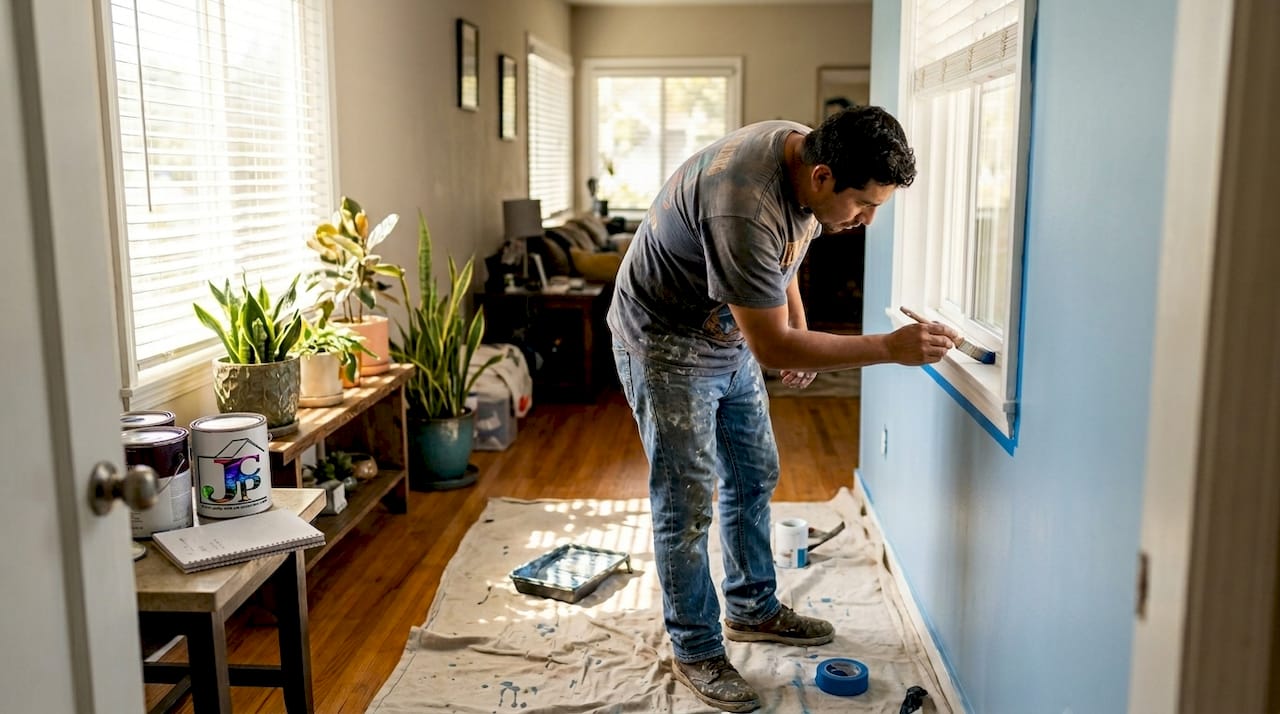
You might assume that strong paint smell means a quality product, but those fumes signal harmful chemicals evaporating into your home’s air. Many homeowners confuse paint odors with harmless side effects of freshly applied coatings, unaware these emissions can trigger respiratory issues and degrade indoor air quality for weeks. Low-VOC paints are engineered to minimize these risks while meeting California’s strict environmental standards. This guide explains what low-VOC paint is, how it differs from traditional and zero-VOC options, why Los Angeles regulations make it essential for your project, and practical tips for choosing and applying these eco-friendly coatings in your home.
Table of Contents
Key Takeaways
Point | Details |
Low VOC definition | Low VOC paints reduce indoor air pollution by limiting volatile organic compounds compared to traditional paints. |
CARB compliance matters | CARB standards require architectural coatings to stay under 50 g/L for flat finishes in California, with stricter local rules enforced in Los Angeles. |
LA regulation impact | LA regulations require selecting CARB compliant low VOC products to protect health and the regional airshed. |
Ventilation guidance | Ventilation and proper application practices maximize the benefits of low VOC coatings during and after painting. |
Understanding what low-VOC paint is and how it works
Volatile organic compounds (VOCs) are carbon-based chemicals that evaporate at room temperature, causing off-gassing during paint drying and creating those familiar strong odors. Traditional paints often contain over 250 grams per liter of these compounds, while low-VOC formulations typically stay under 50 g/L for flat finishes. This dramatic reduction matters because breathing VOCs can trigger immediate symptoms like headaches, dizziness, and eye irritation, plus contribute to longer-term respiratory problems.
Research shows VOC exposure links to respiratory symptoms and reduced lung function measured by FEV1/FVC ratios. Children, elderly residents, and anyone with asthma face heightened vulnerability to these airborne pollutants. Low-VOC paints address these health concerns by replacing solvent-heavy formulas with waterborne or advanced polymer systems that require fewer volatile chemicals to achieve proper flow, adhesion, and durability.
These reformulated paints work differently than their traditional counterparts. Instead of relying on petroleum-based solvents to carry pigments and binders, modern low-VOC coatings use water as the primary carrier liquid. Manufacturers add sophisticated acrylic or urethane polymers that bind pigments effectively without the toxic fumes. The result is a coating that dries through water evaporation rather than solvent off-gassing, dramatically cutting indoor air contamination.
Key characteristics that define quality low-VOC paints include:
Waterborne acrylic or latex base formulations
VOC content certified below 50 g/L for flat sheens
Advanced polymer technology replacing traditional solvents
Minimal odor during application and curing
Compliance with California Air Resources Board standards
Choosing eco-friendly painting options means understanding these technical differences and recognizing how they translate to safer indoor environments. The shift from solvent-based to waterborne chemistry represents the paint industry’s response to mounting health evidence and regulatory pressure, giving you access to coatings that protect both your family and the broader Los Angeles airshed.
Low-VOC paint regulations and standards in Los Angeles
California leads the nation in air quality protection, and Los Angeles faces particularly strict oversight due to its history of smog challenges. The California Air Resources Board (CARB) sets statewide VOC limits for architectural coatings, while the South Coast Air Quality Management District (SCAQMD) enforces even tighter local rules through Rule 1113. These regulations aren’t suggestions, they’re legal requirements that affect every paint can sold in LA County.
CARB mandates architectural coatings meet specific VOC thresholds based on finish type and application. Flat interior paints must stay at or below 50 g/L, while non-flat finishes like satin or semi-gloss face slightly higher but still restrictive limits. These thresholds apply to the base paint before tinting, meaning the actual VOC content in your finished gallon might vary depending on colorant additions. SCAQMD goes further by recommending super-compliant products that exceed minimum standards, especially during peak smog season from July through September.
Understanding the regulatory landscape helps you make informed choices:
Paint category | VOC limit (g/L) | Regulatory status |
Traditional paint | >250 | Non-compliant in LA |
Low-VOC paint | <50 | CARB/SCAQMD compliant |
Zero-VOC paint | <5 | Super-compliant |
Super-compliant recommended | <10 | SCAQMD preferred July-Sept |
These strict VOC limits exist because paint emissions contribute significantly to ground-level ozone formation. When VOCs react with nitrogen oxides in sunlight, they create the photochemical smog that blankets the LA basin on hot days. By cutting VOC content in architectural coatings, regulators reduce one controllable source of ozone precursors, protecting public health and helping the region meet federal Clean Air Act standards.
For homeowners and property managers, compliance is automatic when you purchase paint from California retailers. Stores cannot legally sell non-compliant products, so any interior paint on local shelves already meets CARB requirements. However, knowing these standards helps you evaluate product claims and understand why low-VOC paint options in Los Angeles differ from those sold in less regulated states. Premium brands often exceed minimum requirements, delivering even cleaner formulations that support your indoor air quality goals while satisfying regulatory mandates.
Choosing and applying low-VOC paints for your Los Angeles property
Selecting the right low-VOC paint requires balancing environmental benefits with performance demands specific to Southern California’s climate. Waterborne acrylics dominate the residential market, offering excellent durability and color retention under LA’s intense UV exposure. Urethane-fortified low-VOC paints provide enhanced hardness for high-traffic areas like hallways and kitchens. Advanced formulations minimize solvents while maintaining the flow, leveling, and adhesion properties that painters expect from premium coatings.

Not all low-VOC paints deliver equal results. Economy versions may compromise leveling and adhesion in demanding conditions like LA’s occasional humidity spikes during marine layer events. Premium formulations from established manufacturers typically match or exceed traditional paint durability while keeping emissions minimal. The quality difference becomes apparent in coverage, hide, and long-term color stability, making the upfront investment worthwhile for lasting results.
Key criteria when selecting low-VOC paints for your project:
Verified CARB and SCAQMD compliance labels
Manufacturer durability ratings for your specific application
Colorant VOC contributions listed separately from base
Washability and stain resistance for interior walls
UV resistance and moisture protection for exteriors
Proper application techniques maximize low-VOC paint performance. Surface preparation remains critical, clean and properly primed substrates ensure optimal adhesion regardless of VOC content. Use high-quality synthetic brushes and roller covers designed for waterborne coatings, as these tools release less lint and provide smoother finishes than natural-bristle alternatives. Maintain adequate ventilation during application even though odors are minimal, air movement helps water evaporate efficiently and prevents extended drying times.
SCAQMD recommends buying only the amount you need and recycling leftovers through PaintCare drop-off sites throughout LA County. This approach minimizes waste and prevents improper disposal that can contaminate soil and water. Store partial cans properly sealed in moderate temperatures, and check expiration dates before using older inventory, as waterborne formulas have shorter shelf lives than solvent-based predecessors.
Pro Tip: Always ventilate spaces well during and after painting to reduce lingering VOC effects despite low-emission formulations. Open windows, run fans, and allow 48-72 hours of air exchange before occupying freshly painted rooms, especially nurseries or spaces used by sensitive individuals.
Working with experienced professionals who understand applying low-VOC paint in LA ensures you get both environmental benefits and the flawless finish your property deserves. Proper technique, quality materials, and attention to surface prep make the difference between a coating that performs beautifully for years and one that disappoints within months.
Comparing low-VOC paint with zero-VOC and traditional options
Zero-VOC paints represent the cleanest option available, containing less than 5 g/L of volatile organic compounds in the base formula. This ultra-low threshold appeals to chemically sensitive individuals and projects where air quality takes absolute priority. However, the zero-VOC designation applies only to untinted base paint. Adding colorants introduces additional VOCs, sometimes pushing the final mixed product into low-VOC territory depending on pigment concentration and color depth.
Traditional paints with VOC levels exceeding 250 g/L are no longer sold in California for residential use, but understanding their characteristics helps contextualize modern alternatives. These older formulations relied heavily on petroleum solvents for flow and durability, creating strong odors and significant off-gassing that could persist for weeks. They often provided excellent leveling and hide, but at the cost of indoor air quality and environmental impact that current regulations no longer tolerate.
Paint type | VOC content | Odor level | Durability | Best use case |
Traditional | >250 g/L | Very strong | Excellent | Non-compliant in CA |
Low-VOC | <50 g/L | Minimal | Very good to excellent | Most residential projects |
Zero-VOC | <5 g/L | Nearly none | Good to very good | Sensitive occupants, nurseries |
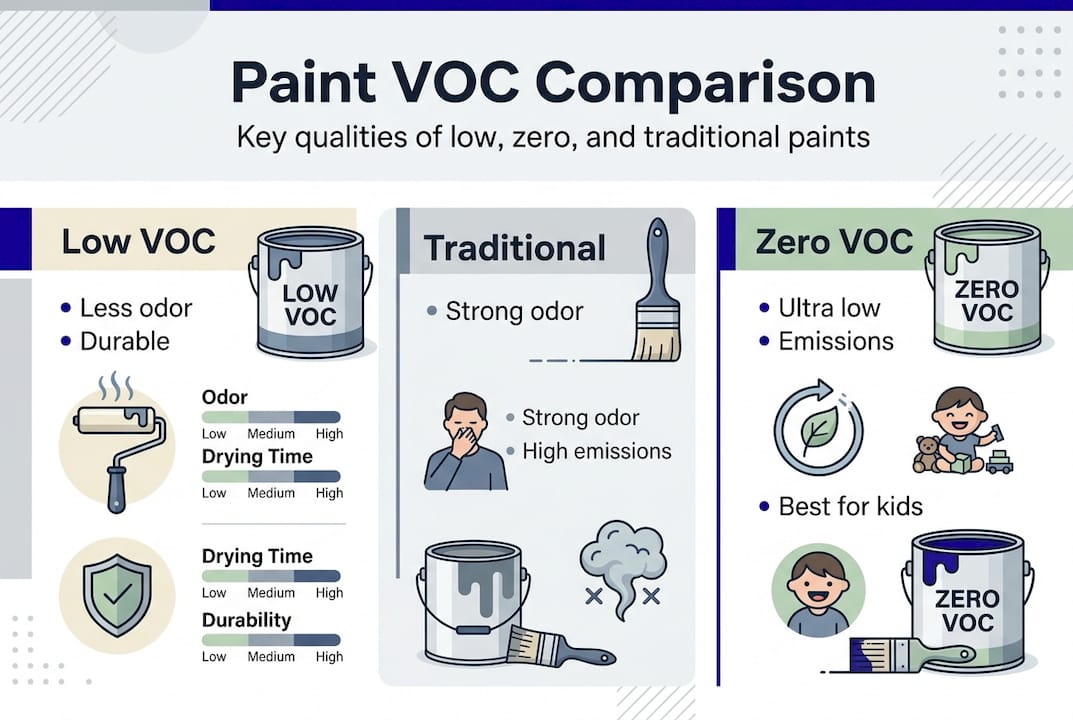
Performance differences between these categories have narrowed dramatically as manufacturers refine waterborne chemistry. Premium low-VOC paints now match traditional coatings in durability, washability, and color retention. Zero-VOC formulas may lag in cold climates or demanding exterior applications without premium additives, though top-tier brands have largely closed this gap for interior residential use.
Considerations when comparing paint types:
Off-gassing duration: traditional paints release VOCs for weeks; low-VOC emissions drop sharply after 48 hours; zero-VOC reaches baseline fastest
Color intensity: deep, saturated hues require more pigment, potentially adding VOCs even to zero-VOC bases
Climate performance: LA’s mild temperatures favor waterborne chemistry; extreme heat or cold can challenge lower-VOC formulations
Cost differential: zero-VOC typically costs 10-20% more than low-VOC; both exceed traditional paint pricing
Pro Tip: For LA homes, premium low-VOC paints often provide the best balance of durability and low emissions. They handle the region’s UV intensity and occasional moisture while keeping indoor air clean.
Your choice depends on specific project needs. Nurseries and bedrooms benefit from zero-VOC formulations that minimize any chemical exposure. High-traffic areas like kitchens and bathrooms may perform better with premium low-VOC paints engineered for washability and moisture resistance. Exterior surfaces demand UV-stable, weather-resistant coatings where low-VOC technology has proven highly effective. Consulting with professionals who offer diverse eco-friendly painting options helps match paint chemistry to your property’s unique requirements and your family’s health priorities.
Transform your space with expert low-VOC painting services
Choosing the right paint is only half the equation. Professional application ensures you get the full benefit of low-VOC technology without compromising on finish quality or durability. Johnny’s Custom Painting specializes in eco-friendly, low-VOC painting tailored specifically for Los Angeles homes and commercial properties, combining 16 years of industry experience with deep knowledge of CARB and SCAQMD compliance requirements.

Explore their interior residential painting portfolio to see how premium low-VOC paints deliver stunning results across diverse LA properties. From Venice beach cottages to Pasadena craftsman homes, their work demonstrates that environmental responsibility and aesthetic excellence go hand in hand. Their exterior residential painting portfolio showcases weather-resistant, UV-stable low-VOC coatings that protect your investment while keeping emissions minimal.
As a licensed, insured Los Angeles painting contractor, Johnny’s Custom Painting handles every aspect of your project with meticulous attention to surface preparation, material selection, and application technique. Their commitment to eco-friendly practices and customer satisfaction makes them the trusted choice for homeowners and property managers who refuse to compromise on health, quality, or environmental stewardship.
Frequently asked questions about low-VOC paint
Why is low-VOC paint important for indoor air quality?
Low-VOC paint dramatically reduces harmful chemical emissions that accumulate in enclosed spaces, protecting respiratory health and preventing symptoms like headaches and eye irritation. These formulations allow families to reoccupy painted rooms sooner with minimal odor or air contamination.
Are all low-VOC paints the same quality and durability?
No, quality varies significantly between economy and premium low-VOC formulations. Top-tier brands match traditional paint durability while maintaining low emissions, whereas budget options may sacrifice leveling, adhesion, or longevity to hit lower price points.
How do colorants affect VOC levels in low-VOC paints?
Colorants add VOCs to the base paint formula, sometimes significantly depending on pigment type and color depth. Deep, saturated hues require more tinting, which can push a zero-VOC base into low-VOC territory after mixing, though the final product still remains far cleaner than traditional paints.
Can low-VOC paint be used for exterior surfaces in Los Angeles?
Absolutely. Modern low-VOC exterior paints perform excellently in LA’s climate, offering superior UV resistance, color retention, and weather protection. Premium formulations handle the region’s intense sun exposure and occasional moisture without compromising durability or environmental benefits.
How should I dispose of leftover low-VOC paint responsibly?
Use PaintCare drop-off locations throughout LA County to recycle unused paint properly. These free collection sites prevent environmental contamination and support California’s product stewardship programs, ensuring paint waste gets reprocessed or disposed of safely rather than entering landfills or waterways.
Recommended
Comments